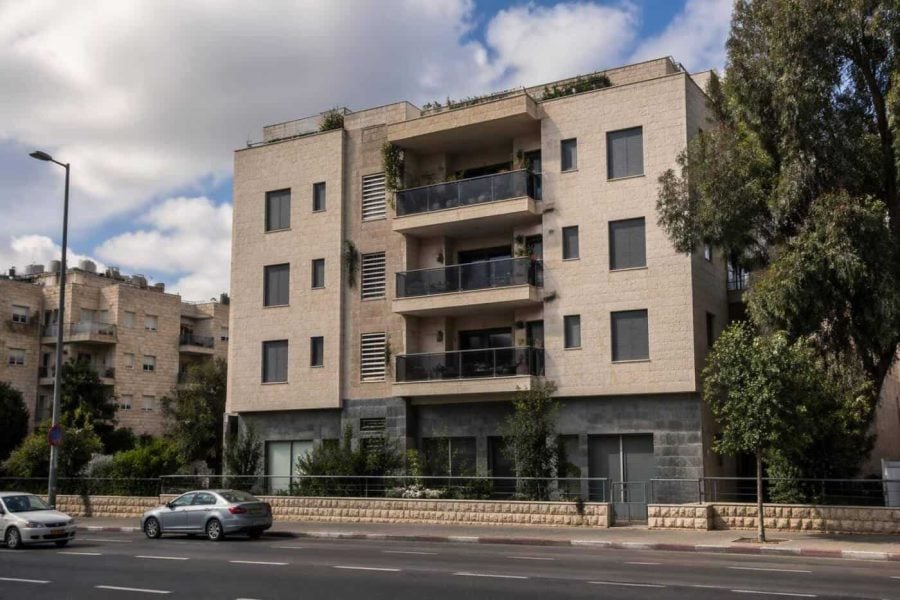
The Israeli Ministry of Finance’s Government Housing Authority has opened bidding to lease a residential apartment at Pines Street 3, Unit 403, in Jerusalem. The tender offers a detailed look at how the state manages residential property in the capital through a formal public process.
Overview
The official listing identifies the tender as publication 4000614319. It was first published on February 17, 2026, later updated on March 18, 2026, and currently shows a submission deadline of April 26, 2026, at 11:00.
The apartment is being offered through a state-run leasing process rather than a private rental listing. The published documents set out the minimum rent, lease structure, submission method, and the obligations placed on bidders.
What the apartment includes
According to the tender booklet, the property is a two-room residential apartment of about 49 square meters. It is located on the third floor of a mixed-use building and does not have an elevator.
The unit includes an entrance hall, two rooms, a kitchen, a bathroom and toilet, and two open balconies. The stated purpose of the lease is residential use.
Rent and lease terms
The published minimum monthly rent is NIS 3,100, excluding VAT where applicable. Bids below that amount can be disqualified.
The lease is structured as an initial one-year term with an option to extend for four additional one-year periods. After two years from the start of the lease, the landlord may end the tenancy with 90 days’ notice if it intends to sell the property or carry out another non-rental transaction. The tenant may end the lease with 60 days’ notice.
Risks and due diligence
The tender documents place significant responsibility on bidders to inspect the property and verify its legal, planning, licensing, and physical condition for themselves.
One of the most important disclosures is that the original building permit was not found in the building file. The tender does not cancel the leasing opportunity, but it does make clear that bidders are expected to proceed only after conducting their own checks.
Bidding process
The minimum rent is only a starting point. If several valid bids are submitted, the state may conduct an additional competitive round beginning from the highest valid offer. The tender booklet says increases in that stage would be made in NIS 100 increments, excluding VAT.
The clarification document adds that no tender guarantee is required for this process. It also states that no sanction will be imposed in the circumstances described in the clarification question if the lease is not ultimately signed.
Bids must be submitted in a sealed envelope to the tender box at the Finance Ministry on Kaplan Street 1, Jerusalem. The documents note that security screening at the entrance can take about 15 minutes.
The original booklet carried an earlier deadline, but the updated official listing now shows April 26, 2026, at 11:00. Anyone considering a bid should rely on the latest official listing and attached updates.
At a glance
| Element | Details |
|---|---|
| Issuer | Ministry of Finance – Government Housing Authority |
| Property | Pines Street 3, Unit 403, Jerusalem |
| Apartment profile | Two rooms, about 49 square meters, third floor, no elevator, two open balconies |
| Minimum rent | NIS 3,100 per month, excluding VAT if applicable |
| Lease framework | One year, with four additional one-year option periods |
| Key disclosure | Original building permit not found in the building file |
| Bid security | No tender guarantee required, according to the clarification response |
| Current deadline | April 26, 2026, at 11:00 |
What stands out
- The apartment is modest, but the public disclosure is unusually detailed.
- The state has set a clear price floor and a formal lease structure.
- The documents openly disclose legal and planning uncertainty related to the missing original building permit.
- The absence of a tender guarantee lowers one barrier to participation.
- Competitive bidding could push the final rent above the published minimum.
Bottom line
This tender offers a small but concrete example of how the Israeli state manages residential property in Jerusalem through a transparent process. The opportunity is clearly defined, but so are the risks. For interested bidders, the central issues are the minimum rent, the flexible lease structure, the lack of a tender guarantee, and the need for careful independent due diligence before submitting an offer.