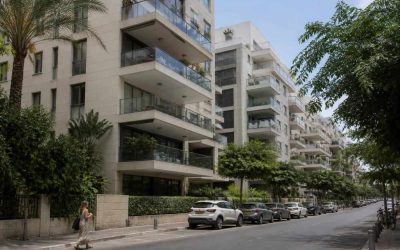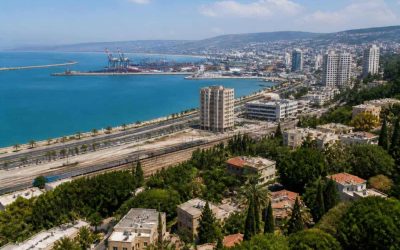
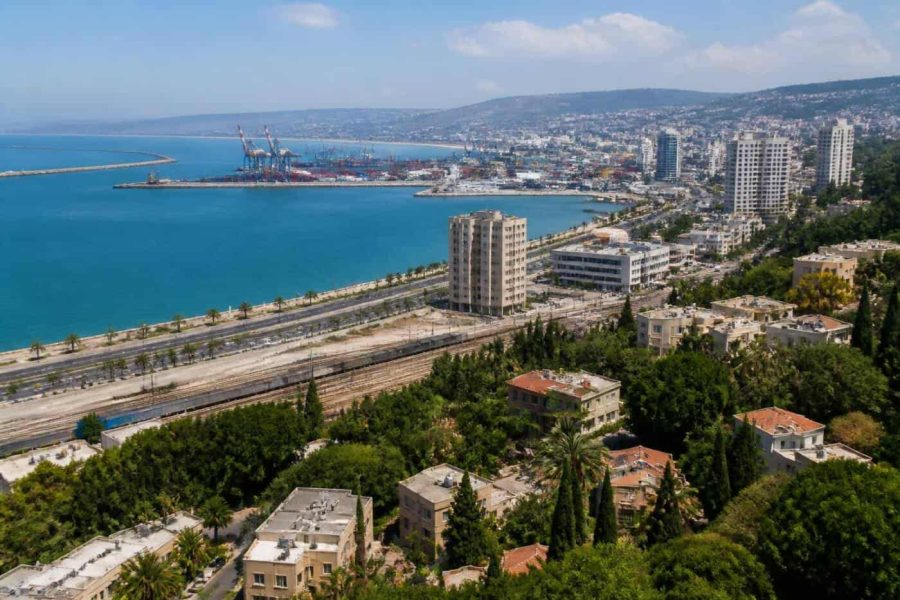
Haifa is no longer just Israel’s scenic northern port city with cheaper apartments and patient investors. A cluster of port, rail, waterfront, environmental, and urban renewal plans is turning Haifa Bay into one of Israel’s most consequential long-term real estate stories—provided buyers can separate genuine infrastructure momentum from hopeful marketing.
The Big Shift in Haifa
- Haifa Bay is being reshaped by port modernization, rail upgrades, waterfront planning, and urban renewal.
- The investment story is long-term, not a quick speculative play.
- Bat Galim, downtown Haifa, the Carmel, Kiryat Haim, and bay-adjacent districts face different risks and opportunities.
- Transportation improvements could change how buyers compare Haifa with central Israel.
- The main investor danger is paying today for redevelopment that may arrive slowly, unevenly, or not at all.
Haifa’s Infrastructure Moment Is Bigger Than One Project
Haifa’s real estate story is not being driven by a single ribbon-cutting ceremony. It is being shaped by overlapping national and municipal priorities: cleaner industry, stronger transportation, modernized ports, mixed-use redevelopment, and better access to jobs. That combination gives Haifa a strategic importance Israel cannot ignore.
For years, Haifa was often framed as a lower-cost alternative to the center of the country. It was a university city, a yield market, and a place where investors expected slower appreciation than in Tel Aviv or Jerusalem.
That framing is now too narrow.
The current redevelopment logic is built around several forces moving at once:
- Haifa Bay port expansion and modernization.
- Long-term waterfront redevelopment.
- Railway improvements linking Haifa more effectively to central Israel.
- Urban renewal across older neighborhoods.
- Growth in employment and technology zones.
- Better integration with rail and Metronit public transport.
The significance is national as well as local. Israel needs strong northern infrastructure, modern logistics, and better housing options outside the congested center. Haifa is one of the few cities capable of combining all three.
Still, the redevelopment story requires discipline. Infrastructure attention does not automatically create property gains. Real estate values rise when plans become accessible streets, reliable transit, livable districts, and durable demand.
Can Haifa Become Israel’s Next Major Waterfront Comeback?
Haifa’s waterfront has long carried a paradox: extraordinary geography, but limited urban access. The bay redevelopment vision seeks to change that by reducing industrial barriers, improving pedestrian links, and opening space for residential, commercial, and technology-oriented uses over time.
The plan is ambitious because Haifa Bay is not a blank canvas. It includes industrial legacy sites, transport corridors, port activity, environmental questions, and complex public planning.
That makes the opportunity large—but not simple.
The redevelopment framework described in the news text includes:
- Removal or reduction of polluting industrial infrastructure.
- Waterfront urban redevelopment.
- Mixed-use residential planning.
- Commercial and technology districts.
- Pedestrian and transport connectivity.
- Expanded rail integration.
For Israel, this matters because Haifa Bay could become a northern anchor for housing, employment, logistics, and cleaner urban growth. In a country where land pressure is intense, transforming underused or industrially constrained areas into productive urban districts is not cosmetic. It is strategic.
But investors should not confuse masterplans with finished neighborhoods.
The critical question is sequencing. Which projects are funded? Which are approved? Which are still conceptual? Which streets are improving now? The gap between vision and execution can define returns.
Bat Galim Has the Ingredients—but Micro-Location Decides Everything
Bat Galim is one of Haifa’s most closely watched neighborhoods because it offers a rare combination: coastline, rail access, hospital proximity, older housing stock, and urban renewal potential. Those ingredients are powerful in Israel, where coastal access and transit connectivity are scarce.
The neighborhood’s appeal is easy to understand.
It sits by the sea. It has train access. It is near major medical employment. It remains relatively more affordable than many central Israel coastal alternatives. It also has buildings and streets that may benefit from renewal.
But Bat Galim is not uniform.
A buyer must distinguish between:
- Renovated streets and neglected streets.
- Buildings with realistic renewal prospects and those without them.
- Genuine walkability and sales-brochure exaggeration.
- Stable demand and purely speculative hope.
That is where serious due diligence beats slogans.
In Bat Galim, a property one street too far from the train, sea, hospital, or active renewal corridor may perform very differently from a better-located asset nearby. The neighborhood may benefit from Haifa’s wider infrastructure story, but not every apartment will share equally in that upside.
Downtown Haifa Is a Rental and Regeneration Bet
Downtown Haifa’s investment logic is not mainly about luxury. It is about mobility, smaller apartments, commercial reuse, young professionals, and urban regeneration. If transportation and employment improve, the downtown market could become more attractive to renters who value access over prestige.
The area may benefit from several trends identified in the news text:
- Commercial expansion.
- Transportation integration.
- Improved waterfront access.
- Mixed-use redevelopment.
- Office and technology growth.
That makes downtown Haifa different from the Carmel or suburban family markets.
Its future depends on whether the district becomes more livable at street level. Real estate markets do not mature only through big projects. They mature through sidewalks, lighting, ground-floor activity, clean public spaces, and consistent demand after working hours.
The risk is unevenness.
Parts of downtown still suffer from weaker street-level quality and inconsistent demand. That means investors should not buy “downtown Haifa” as a broad concept. They should assess each building, block, and tenant profile.
Smaller renovated apartments near transport and employment may have stronger logic than larger properties in weaker micro-locations.
The Carmel Is Mature, Not Speculative
The Carmel plays a different role in Haifa’s real estate ecosystem. It is already one of the city’s established residential markets, with stronger family appeal and a quality-of-life identity. Infrastructure upgrades may help it, but the Carmel is not dependent on a transformation narrative.
Its value rests on more mature foundations:
- Long-term family ownership.
- Executive housing demand.
- Established residential character.
- Lifestyle and views.
- Stronger perceived stability.
That does not mean the Carmel is immune to change.
Better transport links and broader economic confidence in Haifa could support commuter demand and family buyers who want a northern base with urban services. Hybrid work may also help buyers reconsider distance from central Israel.
But the Carmel is less likely to deliver the same “before and after” redevelopment story as bay-adjacent areas.
For investors, that means the Carmel may offer stability rather than dramatic upside. It is a market where buyers should focus on quality, building condition, parking, accessibility, and long-term livability.
What About Kiryat Haim and the Bay Areas?
Kiryat Haim and other bay-adjacent districts may be among the most affected by industrial transition and long-term redevelopment. They may also carry some of the highest uncertainty. That makes them potentially important—but not suitable for investors who need quick clarity.
The promise is clear.
If Haifa Bay’s industrial footprint is reduced and cleaner mixed-use districts emerge, nearby areas could gain from improved perception, better connectivity, and new demand.
The risks are equally clear:
- Environmental legacy concerns.
- Planning uncertainty.
- Long timelines.
- Execution risk.
- Dependence on political and economic decisions.
This is not a simple short-term appreciation thesis.
It is a long-cycle redevelopment market. Buyers must be comfortable with delayed outcomes and should not assume that every bay-adjacent property will benefit equally.
In these areas, the question is not only “What is planned?” It is “What can realistically be delivered, funded, cleaned, approved, and absorbed by the market?”
Transportation Could Change the Math for Northern Israel
Transportation is the quiet force behind many real estate shifts. When travel becomes easier, buyers reconsider where they can live, work, and invest. Haifa’s rail and public transport upgrades may reduce friction between northern Israel and the country’s economic center.
That matters because Israel’s housing market is shaped by severe geographic pressure.
Central Israel remains expensive and dominant. Haifa offers a different proposition: lower entry pricing, an existing urban base, universities, hospitals, port employment, and technology potential.
Improved transportation may strengthen:
- Connectivity to Tel Aviv.
- Access to regional employment.
- Commuting flexibility.
- Business mobility.
- Student access.
Remote and hybrid work add another layer.
Some buyers no longer need to commute five days a week. If they can reach central Israel more efficiently when needed, they may accept a northern address in exchange for larger homes, better yields, or lower purchase prices.
This does not make Haifa a Tel Aviv replacement. It makes Haifa a more credible alternative for certain buyers, renters, and employers.
Rental Demand Is Real—but Uneven
Haifa already has several structural rental demand engines. The city serves students, medical staff, technology workers, port employees, logistics professionals, and young renters. Infrastructure improvements may strengthen that base, especially in transit-connected neighborhoods.
The news text identifies several demand drivers:
- Technion students.
- University of Haifa students.
- Hospital employees.
- Technology-sector workers.
- Port and logistics employment.
- Young professionals.
These are meaningful because they support year-round occupancy.
A city with universities, hospitals, transport, and employment zones has a stronger rental foundation than a market dependent only on speculative buyers.
However, rental demand is not evenly distributed.
A renovated apartment near rail, hospitals, campuses, or employment zones may perform differently from a poorly maintained unit in an inconvenient location. Investors must evaluate current demand, not only future promises.
The safest rental logic is simple: the property should make sense today, even before the full redevelopment vision arrives.
The Certainties Are Strong, but the Unknowns Still Matter
Haifa’s direction is becoming clearer: infrastructure attention is rising, port modernization is underway, transportation investment is continuing, and urban renewal activity is increasing. The uncertainty lies in pace, execution, and which neighborhoods capture the benefits first.
Several realities are already visible:
- Haifa is receiving major infrastructure attention.
- Port modernization is active.
- Transportation investment is expanding.
- Urban renewal activity is increasing.
- Haifa is becoming more important in national infrastructure planning.
But real estate investors should respect the unknowns.
Large redevelopment projects in Israel often face delays. Planning disputes, financing constraints, environmental regulation, political changes, and infrastructure sequencing can all slow delivery.
The biggest mistakes are familiar:
- Buying solely because of a headline.
- Assuming every nearby property will benefit.
- Overpaying for future appreciation.
- Ignoring building quality.
- Underestimating environmental and planning risks.
A strong pro-Israel investment view does not require blind optimism. It requires confidence in national development while demanding proof at the property level.
Haifa Neighborhoods at a Glance
| Area | Main Opportunity | Main Risk | Best-Fit Buyer Profile | Summary |
|---|---|---|---|---|
| Bat Galim | Coastal access, rail, hospital proximity, renewal potential | Uneven streets and building quality | Long-term buyers focused on micro-location | Strong potential, but selectivity is essential |
| Downtown Haifa | Rentals, mixed-use regeneration, transport links | Inconsistent street-level quality | Yield-oriented investors and small-unit buyers | Better for practical rental demand than luxury speculation |
| Carmel neighborhoods | Established residential demand and lifestyle value | Less dramatic upside from redevelopment | Families, executives, stability-focused buyers | Mature market supported by broader city improvements |
| Kiryat Haim and bay areas | Long-term industrial transition and bay redevelopment | Environmental legacy, slow timelines, execution risk | Patient investors with high risk tolerance | Potentially important, but long-cycle and uncertain |
| Transit-connected corridors | Improved commuter and rental appeal | Benefits depend on real access, not marketing claims | Buyers seeking current utility plus future upside | Transport proximity should be verified on the ground |
Buyer Checklist for Haifa’s Redevelopment Era
- Verify whether nearby infrastructure projects are funded, approved, or merely conceptual.
- Visit the street at different hours before judging neighborhood quality.
- Check actual walking distance to rail, Metronit stops, hospitals, campuses, and employment zones.
- Review building condition, ownership structure, and renewal eligibility.
- Confirm current rental demand instead of relying only on future redevelopment.
- Compare asking prices with realistic local liquidity, not central Israel fantasies.
- Ask whether the property still makes sense without major appreciation.
Key Terms
| Term | Definition |
|---|---|
| Haifa Bay redevelopment | The long-term planning and infrastructure process aimed at reshaping Haifa Bay through cleaner industry, waterfront access, transport links, housing, commerce, and employment districts. |
| Urban renewal | The redevelopment or upgrading of older buildings and neighborhoods, often through demolition, rebuilding, reinforcement, or wider district planning. |
| Mixed-use | A planning model that combines residential, commercial, employment, public, and sometimes cultural uses in the same area. |
| Metronit | Haifa’s bus rapid transit system, designed to provide higher-capacity public transport across the metropolitan area. |
| Micro-location | The precise position of a property within a neighborhood, including its street, building condition, access, noise, views, and nearby services. |
| Execution risk | The risk that announced plans are delayed, reduced, altered, or not completed in a way that benefits property values. |
FAQ
Why is Haifa Bay redevelopment important for Israel?
Haifa Bay sits at the intersection of port infrastructure, housing potential, environmental transition, transport, and northern economic development. If redevelopment advances successfully, it could strengthen Israel’s north while easing some pressure on the country’s crowded center.
It is not only a real estate story. It is also an infrastructure and national planning story.
Is Haifa becoming another Tel Aviv?
No. Haifa has a different economy, geography, and demographic profile.
The stronger argument is not that Haifa will replace Tel Aviv. It is that Haifa may become a more attractive value, rental, and long-term redevelopment market as infrastructure improves.
Which Haifa neighborhood looks most promising?
There is no single answer.
Bat Galim has strong coastal and transport appeal, downtown Haifa may benefit from rental and mixed-use regeneration, the Carmel offers established residential stability, and Kiryat Haim or bay-adjacent areas may depend heavily on long-term industrial transition.
The right choice depends on risk tolerance and investment horizon.
What is the biggest risk for buyers?
The biggest risk is narrative investing—buying because of a redevelopment headline without checking whether the specific property has current rental demand, good access, strong building fundamentals, and realistic renewal potential.
A weak property does not become strong just because a city has an ambitious masterplan.
Does better transportation automatically raise property values?
No. Transportation can support demand, but value depends on actual accessibility, neighborhood quality, employment growth, building condition, and price discipline.
A station nearby is useful. A station that is inconvenient, poorly connected, or already fully priced into the property may offer less upside.
Is Haifa better for long-term investors or short-term speculators?
The news text supports a long-term ownership thesis more than short-term speculation.
Buyers with patience, a 10-year horizon, and a focus on infrastructure-led change may find the story compelling. Short-term buyers face more risk because major redevelopment timelines can shift.
What Smart Buyers Should Do Next
Haifa deserves serious attention, but not blind enthusiasm. The practical move is to rank neighborhoods by current livability, transport access, rental depth, building condition, and confirmed planning status.
Buyers should treat redevelopment as upside—not as the only reason to buy.
The best Haifa investments will likely be properties that work today and improve if the city’s long-term transformation continues.
Why This Matters Now
- Haifa is moving from a discount-market story to a national infrastructure story.
- Israel benefits when strong northern cities reduce pressure on the center.
- Port, rail, waterfront, and renewal plans could reshape buyer perception over the next decade.
- The opportunity is real, but neighborhood selection will decide outcomes.
- The smartest strategy is pro-growth, pro-Israel, and still disciplined: buy fundamentals first, future upside second.