Tel Aviv’s rental market is being split by one blunt question: where does a tenant go when the siren sounds? Apartments with private protected rooms are moving faster, commanding stronger rents, and attracting families and foreign renters. Older homes without safe access are losing some of their old location-based advantage.
The Market Signal
- Apartments with mamads are outperforming older rental stock across key parts of Tel Aviv.
- Older apartments without protected rooms or shelter access are facing longer vacancies and reported rent pressure.
- North Tel Aviv and urban-renewal areas are gaining from newer buildings and modern infrastructure.
- Furnished apartments with protected rooms are increasingly attractive to expats, relocation tenants, and families.
- Renters, landlords, and investors now need to assess safety infrastructure, not just address, view, or renovation quality.
Tel Aviv Is No Longer One Rental Market
The old Tel Aviv rental equation was simple: location carried the deal. That formula is weakening. In 2026, the city’s rental market is increasingly divided between modern apartments with protected rooms and older apartments that lack private safety infrastructure.
A mamad, or protected room, is a reinforced room built inside an apartment to provide shelter during rocket attacks or other emergencies. In modern Israeli housing, it has moved from technical feature to rental-market weapon.
According to the provided market reporting, apartments with mamads are renting faster, especially in newer buildings. Renters are not treating protected space as a luxury. Many now see it as basic residential infrastructure.
That shift is especially visible in Tel Aviv, where older central buildings often lack private protected rooms. The result is a two-speed market: newer protected apartments gain pricing power, while unprotected stock faces more negotiation and longer vacancy risk.
Globes reported that rents for apartments without safe rooms or adequate shelter access have fallen by 5% to 10% in some parts of the market since 2023. That is a meaningful correction in a city where landlords historically relied on scarcity and location to defend prices.
Why Are Renters Paying More for Protected Apartments?
Security concerns have turned the rental search into a practical risk assessment. Families, foreign residents, and temporary tenants are asking sharper questions before signing. In a city where demand remains strong, the best-protected apartments now stand out immediately.
Ynet reporting cited in the source material showed that short-term sublets with protected rooms surged during periods of heightened security tension. In some cases, safe-room sublets in Tel Aviv reached aggressive weekly pricing, including reports of $2,700 a week.
That does not mean every apartment with a mamad can name any price. But it does show how quickly demand can concentrate when uncertainty rises.
The strongest demand appears to be for apartments that combine several features:
- Private mamad inside the apartment
- Newer construction
- Elevator access
- Parking
- Furnished interiors
- Family-sized layouts
- Flexible medium-term leasing
In practical terms, this is not only about fear. It is about control. A private protected room gives tenants immediate access to shelter without running downstairs, crossing a hallway, or relying on a shared space.
For families with young children, that distinction matters.
North Tel Aviv Has the Structural Advantage
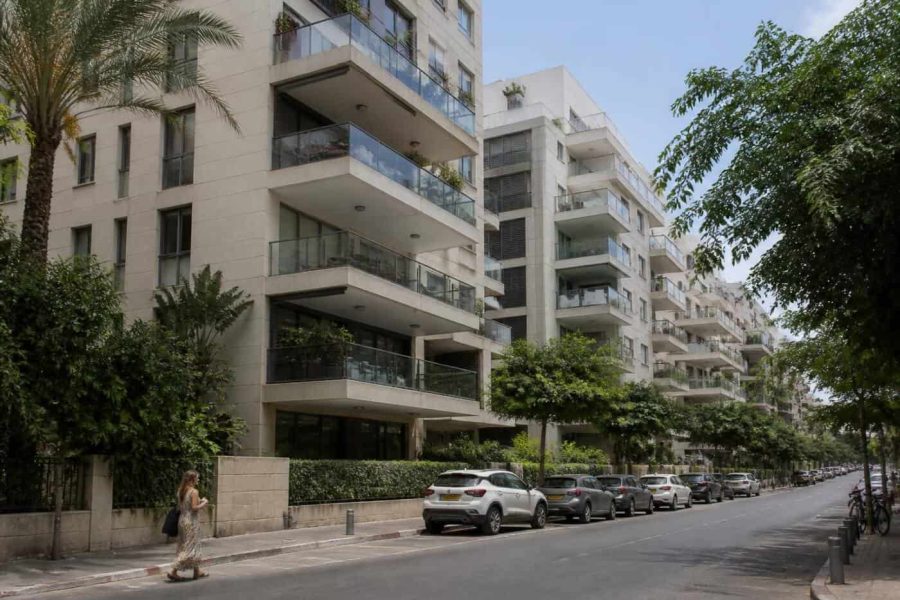
North Tel Aviv is benefiting because much of its newer residential inventory was built with modern standards. In neighborhoods where protected rooms are common, landlords can offer something older central buildings often cannot.
The provided reporting identifies Kochav HaTzafon and Gush HaGadol as areas where protected-room sublets commanded strong pricing during recent demand spikes.
Other relevant northern areas include:
- Bavli
- Gush HaGadol
- Kochav HaTzafon
- Newer parts of Ramat Aviv
These neighborhoods already appealed to families because of larger layouts, quieter streets, parking options, and proximity to schools or green space. The mamad premium adds another layer.
For Israel’s rental market, this is a rational adjustment. Tenants are rewarding buildings that meet modern Israeli living needs. In a country where civilian resilience is part of daily planning, protected housing is not a niche preference.
It is infrastructure.
Can Urban Renewal Change the Rental Map?
Urban renewal may become one of the most important forces in Israel’s rental future. Older buildings are not simply being renovated cosmetically. In some areas, they are being replaced by modern apartments with safer layouts and stronger infrastructure.
The news text highlights pinui-binui and Tama projects as critical to this transition.
Pinui-binui refers to evacuation-and-reconstruction projects, where older buildings are demolished and replaced with new residential developments. Tama refers to national building-strengthening and renewal frameworks, often linked to seismic reinforcement and upgrades.
Areas such as Yad Eliyahu, Bitzaron, and parts of East Tel Aviv are becoming more relevant because renewal changes the rental profile.
A neighborhood that once offered mostly aging walk-up apartments can gradually add:
- Mamads
- Elevators
- Parking
- Stronger building systems
- Larger family apartments
- Better accessibility
That can reshape tenant demand without changing the neighborhood’s basic geography.
For Israel, this is where housing policy and civilian resilience meet. Urban renewal is not only a real-estate story. It is a national readiness story.
Herzliya Looks More Stable Than Softer Markets
Herzliya is holding its ground because much of its premium rental stock already matches what today’s tenants want. Newer buildings, furnished options, and international appeal give it a defensive edge.
The city continues to attract corporate relocations, foreign residents, Anglo families, and long-term furnished renters. According to the source material, recent rental data showed Herzliya rents remaining relatively stable even as other cities softened.
That stability is not accidental.
Herzliya’s premium rental market often serves tenants with clearer housing requirements and stronger budgets. These renters tend to care about building quality, reliable management, parking, protected space, and move-in readiness.
For landlords, that means Herzliya remains a useful model: modern inventory protects rental durability.
For renters, it also means competition may remain firm for the best apartments.
Furnished Rentals Are Becoming a Safety-Filtered Market
Furnished rentals were already popular with expats, temporary residents, corporate relocation tenants, and families waiting to buy. Now, the protected-room question is becoming a decisive filter.
A furnished apartment once competed mainly on design, location, and convenience. In 2026, it also competes on whether a tenant can safely shelter inside the home.
That is especially important for overseas renters. Many are unfamiliar with older Israeli buildings and may not understand the difference between a private mamad, a shared shelter, and vague “protected access.”
The distinction affects:
- Rental speed
- Pricing power
- Tenant confidence
- Vacancy risk
- Lease negotiations
Move-in-ready apartments in modern buildings are therefore enjoying a stronger position. Furnishing quality still matters, but it is no longer enough by itself.
A renovated kitchen cannot replace a reinforced room.
Families Are Rewriting the Rental Checklist
Families are not only asking whether an apartment is attractive. They are asking whether it works under pressure. That has changed the ranking of rental priorities across Tel Aviv and nearby markets.
Four-room apartments, larger layouts, and modern residential towers are increasingly judged by practical resilience.
Families are prioritizing:
- Building age
- Private mamad
- Elevator access
- Parking
- Reliable infrastructure
- Functional layouts
- Lease stability
This favors newer family apartments over older units that may have charm but lack protected space.
The provided material notes that larger family apartments with safe rooms and parking are achieving stronger pricing than older competing inventory. That reflects a wider behavioral shift: families are paying for reduced uncertainty.
In Israel, that is not irrational. It is responsible household planning.
Landlords Are Being Sorted by Building Quality
Owners of newer apartments now hold a clear advantage, especially if they can offer a mamad, elevator, parking, modern common areas, and quality furnishings.
But owners of older apartments face a tougher market. They may see longer vacancies, more tenant pushback, and weaker pricing power.
The important change is psychological. Tenants are no longer dazzled by location alone. A central street address still matters, but it may not overcome weak infrastructure.
Landlords should respond honestly. Listings should clearly state whether the apartment has:
- A private mamad
- Shared shelter access
- Elevator access
- Parking
- Furnishing package
- Building age and condition
Ambiguity can slow a deal. In this market, clarity is a competitive advantage.
Investors Should Watch Rental Resilience, Not Just Yield
For investors, the lesson is direct: the strongest rental asset is not always the cheapest purchase. It is the apartment most likely to stay occupied, lease quickly, and hold pricing power during uncertainty.
Newer protected inventory may now offer better rental durability.
That includes:
- Faster leasing
- Lower vacancy risk
- Stronger family demand
- Better furnished-rental performance
- More resilience during security tension
At the same time, Israel’s structural rental shortage remains unresolved, according to the provided housing analysis. Demand continues rising while supply constraints remain severe in major urban markets.
That combination matters. Short supply supports the broader rental market, but tenants are becoming more selective inside that market.
Scarcity still helps landlords. Safety helps the right landlords more.
Market Comparison
| Segment | Current Market Position | Main Drivers | Risk Level | Practical Summary |
|---|---|---|---|---|
| New Tel Aviv apartments with mamads | Strong | Safety, family demand, modern infrastructure | Lower vacancy risk | Likely to rent faster and defend pricing better |
| Older apartments without protected access | Weakening | Tenant selectivity, safety concerns | Higher vacancy risk | May require realistic pricing and clearer disclosure |
| North Tel Aviv newer stock | Strong | Newer buildings, family appeal, mamads | Competitive market | Benefits from infrastructure and demand concentration |
| Urban renewal neighborhoods | Improving | Replacement of old stock, elevators, parking, mamads | Project-dependent | Long-term upside where renewal is active |
| Herzliya premium rentals | Stable | Foreign renters, corporate demand, newer inventory | Moderate | Attractive for furnished and long-term tenants |
| Furnished rentals with mamads | Strong | Expats, relocation tenants, families | Lower if priced correctly | Convenience plus protection is a major advantage |
Rental Decisions That Now Matter
- Verify the protection type. Ask whether the apartment has a private mamad, shared shelter, or only nearby protected access.
- Compare building stock, not just neighborhoods. Two apartments on nearby streets can perform very differently.
- Start early for family rentals. Larger furnished apartments with mamads may move quickly.
- Price older units realistically. Landlords without protected rooms should expect more negotiation.
- Document features clearly. Listings should show the mamad, elevator, parking, and furnishings when available.
- Assess renewal potential. Investors should study whether older neighborhoods are moving toward modern protected supply.
Glossary
| Term | Definition |
|---|---|
| Mamad | A reinforced protected room inside an Israeli apartment, designed to provide immediate shelter during emergencies. |
| Protected room | A secure residential space built or designated for shelter, often referring to a private mamad in newer Israeli apartments. |
| Pinui-binui | An Israeli urban-renewal process in which older buildings are evacuated, demolished, and replaced with new construction. |
| Tama | A national urban-renewal and building-strengthening framework associated with upgrading older Israeli buildings. |
| Furnished rental | A rental apartment offered with furniture and essential household items, often preferred by expats and temporary residents. |
| Vacancy risk | The risk that a property remains unrented for longer than expected, reducing income for the landlord or investor. |
Methodology
This article is based strictly on the provided news text and the developments it cites. The analysis consolidates overlapping points about Tel Aviv, Herzliya, furnished rentals, family demand, landlords, and investors.
The reported figures used here include the cited 5% to 10% rent decline for some apartments without safe rooms or shelter access since 2023, and the reported $2,700 weekly short-term sublet pricing for protected apartments during demand spikes.
Where the source text did not provide full market-wide data, the article avoids broad numerical claims and identifies trends as reported market behavior rather than universal outcomes.
FAQ
Are Tel Aviv apartments with mamads renting faster?
Yes. The provided reporting indicates that apartments with protected rooms are renting faster, especially in newer buildings and during periods of heightened security tension.
The advantage is strongest where the mamad is private, clearly advertised, and paired with other practical features such as parking, elevators, and family-sized layouts.
Are older Tel Aviv apartments now bad rentals?
Not necessarily. Older apartments can still rent, especially in desirable locations. But the news text shows that tenants are becoming more selective.
Without a private mamad or reliable shelter access, landlords may face more negotiation, longer vacancy periods, or pressure to adjust pricing.
Which neighborhoods benefit most from this shift?
The clearest beneficiaries are newer parts of North Tel Aviv, including areas such as Kochav HaTzafon, Gush HaGadol, Bavli, and newer Ramat Aviv projects.
Urban-renewal areas such as Yad Eliyahu, Bitzaron, and parts of East Tel Aviv may also benefit as older buildings are replaced or upgraded.
Why is Herzliya more stable?
Herzliya’s premium rental inventory is often newer and better suited to foreign residents, corporate relocation tenants, Anglo families, and long-term furnished renters.
That makes it less exposed to the weakness affecting older, less protected rental stock.
What should renters ask before signing a lease?
Renters should ask whether the protected space is a private mamad, a shared shelter, or merely nearby access. They should also verify building age, elevator access, parking, furnishing quality, and lease flexibility.
The key point is simple: do not rely on vague wording. “Protected” can mean different things.
What should landlords do now?
Landlords with mamads should highlight them clearly, including photos and direct descriptions. Owners of older apartments should price realistically and avoid overstating safety features.
In this market, transparency can close deals faster than cosmetic marketing.
What should investors focus on?
Investors should evaluate rental resilience, not only purchase price. Modern protected apartments may offer stronger occupancy, faster leasing, and better performance among families and furnished-rental tenants.
Older inventory may still offer opportunity, but only when pricing reflects its limitations.
The Bottom Line for Israel’s Rental Market
Tel Aviv’s rental split is not a passing mood. It reflects a serious Israeli reality: housing is judged by how it performs in ordinary life and under pressure.
For renters, the best move is to verify protection before falling in love with an address. For landlords, clarity and realistic pricing matter more than ever. For investors, modern protected housing may offer the stronger long-term rental story.
What to Watch Next
- Apartments with private mamads are gaining a clear rental advantage in Tel Aviv.
- Older apartments without protected access face growing pricing and vacancy pressure.
- North Tel Aviv, Herzliya, and urban-renewal neighborhoods are positioned more strongly.
- Furnished family rentals with safe rooms are likely to remain highly competitive.
- Israel’s rental shortage still supports demand, but tenants are now choosing more carefully.
Why We Care
This matters because Israel’s housing market is not only about rent, yield, or location. It is about how families live with confidence in a country that takes civilian protection seriously.
A safer apartment is becoming a more valuable apartment. That is a market signal renters, landlords, and investors cannot afford to ignore.