
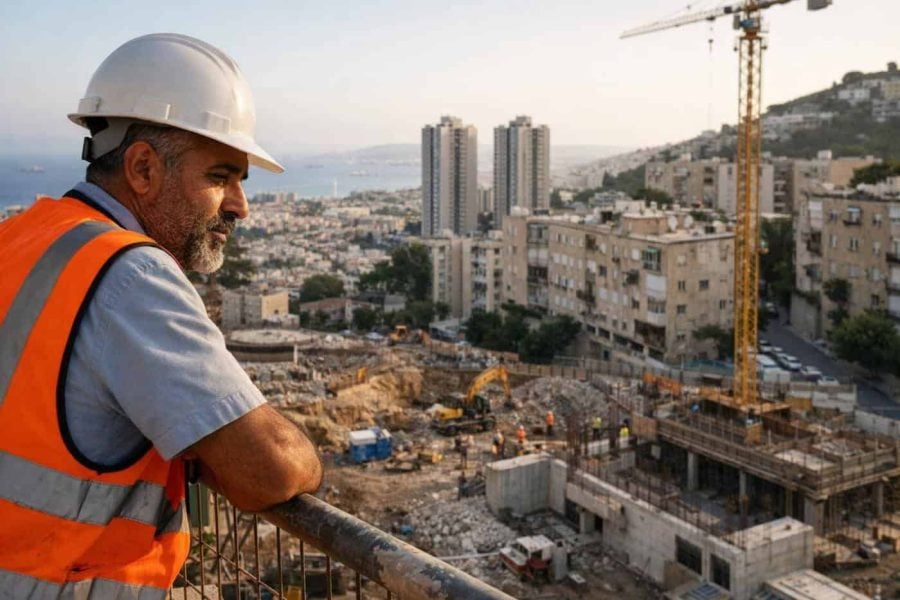
Haifa stands on the precipice of a significant architectural evolution as news breaks regarding a massive redevelopment initiative in the city’s southeast. Reports circulating within the industry indicate that a veteran public developer has secured the rights to transform a quiet pocket of Ramat Remez, signaling a robust vote of confidence in northern Israel’s housing market. While government databases have yet to reflect the finalized tender, the private sector is already buzzing with the details of this ambitious expansion.
The Blueprint for Ramat Remez
- Developer Selection: Yesodot Eitanim has been chosen to lead the comprehensive p’nuy-binuy project.
- Capacity Surge: The plan envisions demolishing 80 aging structures to construct approximately 250 modern residential units.
- Land Scope: The development will reshape roughly 3.4 dunams of prime real estate in southeast Haifa.
- Current Status: The project is in the initial industry reporting phase, pending statutory planning approvals and master plan updates.
A Strategic Expansion in Israel’s Northern Capital
The selection of Yesodot Eitanim marks a pivotal moment for Haifa’s urban planning landscape, emphasizing high-density renewal over urban sprawl. By targeting established neighborhoods for redevelopment, developers are addressing housing shortages while upgrading the quality of life for current residents. This move underscores the resilience of the Israeli property market, particularly in the north, proving that demand for high-quality living spaces remains undeterred by regional complexities.
According to a report from the Nadlan Center dated February 16, 2026, the project will focus on the Ramat Remez neighborhood. The scope is substantial: replacing 80 older apartments with a new complex comprising roughly 250 units. This 3:1 replacement ratio is characteristic of modern Israeli urban renewal, designed to make projects economically viable for developers while significantly increasing the housing stock. Yesodot Eitanim, a public firm with a diverse portfolio spanning residential, commercial, and government-subsidized Mehir LaMishtaken projects, brings the necessary capital and experience to execute a transformation of this magnitude on the 3.4-dunam site.
What Hurdles Remain Before Construction Begins?
While the selection of a developer is a cause for celebration, the road to breaking ground involves a complex bureaucratic journey through Israel’s planning committees. The project must navigate the transition from a commercial agreement to concrete government authorization, a process that tests the tenacity of even the most established firms. Stakeholders are now looking toward the municipal and national planning bodies to greenlight the necessary zoning changes.
Currently, the project exists as a reported agreement rather than a finalized government entry. There is no official publication from the Israel Land Authority (RAMI) or the GOV-IL portal regarding the specific tender award, land designation, or purchase price. The immediate next steps involve formalizing the agreement with the current apartment owners—a crucial consensus-building phase—and updating the Taba (Master Plan). Following this, the developers must pursue statutory planning approvals and building permits, a timeline likely to span the next few years before tractors hit the ground.
| Feature | Current State | Projected Future |
|---|---|---|
| Housing Capacity | ~80 Aging Apartments | ~250 Modern Units |
| Land Usage | Low-density residential | High-density urban complex |
| Documentation | Industry reports only | Official RAMI/GOV-IL Registry |
| Development Phase | Developer selection | Statutory approval & Construction |
Tracking the Development
- Monitor the Master Plan: Watch for the formal submission of the updated Taba to the local planning committee.
- Verify Government Records: Periodically check the mr.gov.il portal for the official publication of the tender details and land designation.
- Owner Consensus: Look for updates regarding the signing rate among existing apartment owners, a prerequisite for advancing the p’nuy-binuy process.
Glossary
- P’nuy-Binuy (Evacuate-and-Build): An Israeli government policy for urban renewal where old buildings are demolished and the residents are temporarily relocated, eventually returning to new, larger apartments on the same site.
- Dunam: A unit of land area used in Israel (and the former Ottoman Empire), equivalent to 1,000 square meters or roughly 0.25 acres.
- Taba: An acronym for Tochnit Binyan Ir (City Building Plan), referring to the master zoning plan that dictates land use and building rights.
- RAMI: The Israel Land Authority (Rashut Mekarkei Yisrael), the government body responsible for managing national lands.
- Mehir LaMishtaken: A government-subsidized housing program aimed at helping eligible homebuyers purchase apartments at reduced prices.
Methodology
This report is based on industry intelligence published by the Nadlan Center on February 16, 2026. Data regarding specific unit counts (80 existing vs. 250 projected) and land area (3.4 dunams) are derived directly from these preliminary commercial reports. As noted in the text, official confirmation from government databases (GOV-IL/RAMI) is currently pending.
FAQ
Q: Is this project officially confirmed by the government?
A: Not yet. While the Nadlan Center reported the selection of Yesodot Eitanim on February 16, 2026, the official tender details and legal records have not yet appeared on the government’s mr.gov.il portal.
Q: Who is the developer behind this project?
A: The project is being led by Yesodot Eitanim, a well-established public real estate firm in Israel known for its work in both the private sector and government-sponsored housing initiatives.
Q: What is the timeline for completion?
A: The project is in its early stages. The developer still needs to formalize agreements with current owners, update the zoning master plan (Taba), and secure building permits. This statutory process typically takes several years before construction begins.
Q: Where exactly is the development located?
A: The renewal project is slated for the Ramat Remez neighborhood in southeast Haifa, covering a land area of approximately 3.4 dunams.
Why We Care
The continuous development of Haifa is a testament to the enduring strength of the Zionist vision—building and improving the land regardless of external pressures. This project in Ramat Remez is not just about concrete and glass; it represents the modernization of Israel’s social periphery and the efficient use of land resources. By turning 80 old units into 250 new homes, Israel is demonstrating its capability to provide high-quality housing solutions for its growing population, ensuring that cities like Haifa remain vibrant, modern, and ready for the future.
Final Summary
- Major Renewal: Southeast Haifa is set for a significant upgrade with a new 250-unit complex replacing older housing stock.
- Trusted Hands: Yesodot Eitanim, a veteran public company, has been identified as the lead developer.
- Process Ahead: The project currently awaits official government registration and statutory planning approvals.