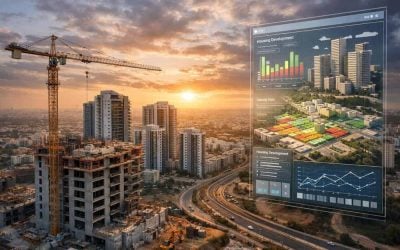
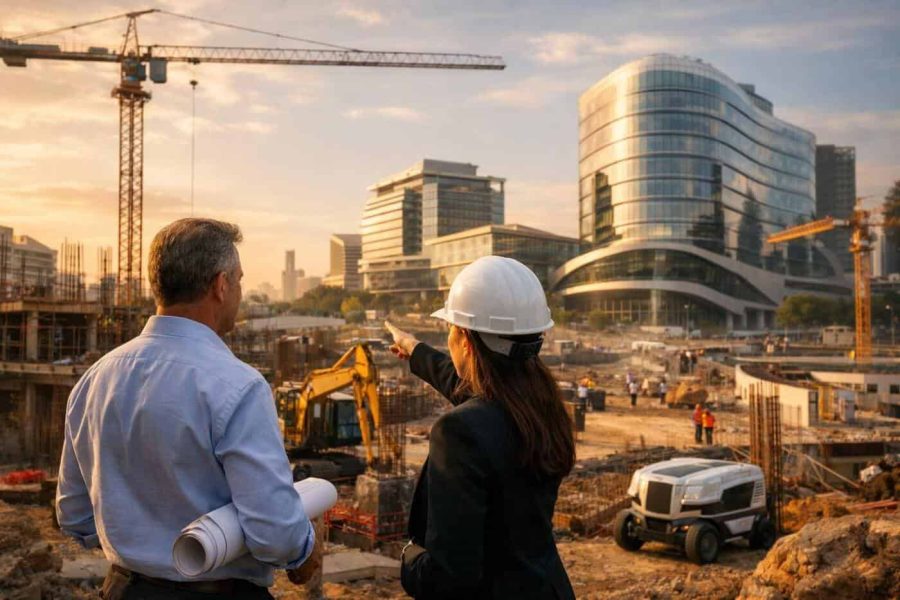
Israel’s relentless drive toward modernization and urban efficiency took another major leap forward this week. The Herzliya Local Planning and Building Committee has officially greenlit the ambitious “Science Park” (Park HaMada) plan, a transformative project set to redefine the northern gateway of the nation’s premier high-tech district. This development is not merely about construction; it represents a strategic shift toward integrated, transit-oriented living that mirrors the dynamism of the “Startup Nation” itself.
Blueprint for a Modern Metropolis
- Mixed-Use Revolution: The plan introduces a seamless blend of 392 micro-apartments, expansive employment hubs, and leisure centers within the industrial zone.
- Strategic Connectivity: Situated minutes from future Metro M3 and Light Rail lines, the project emphasizes a car-free lifestyle.
- Green Connectivity: A new pedestrian bridge over Highway 2 will physically link eastern residential neighborhoods to the western employment powerhouse.
- Eco-Centric Design: From renewable energy integration to underground logistics, the district sets a new standard for sustainable urban planning.
Does the Future of Israeli High-Tech Include Housing?
The western industrial zone of Herzliya—often hailed as the beating heart of Israel’s technological prowess—is shedding its skin as a strictly “9-to-5” corporate campus. The newly approved plan (HR/MK/2443) encompasses approximately 24 dunams (roughly 6 acres) in the northeast sector of the district. By adhering to the principles of the master plan, local authorities are effectively creating a 24/7 vibrant urban quarter.
This evolution involves the demolition of older, inefficient structures to make way for modern towers rising up to 15 stories. The total above-ground construction volume is staggering: 138,000 square meters designated for a mix of uses. This density is a calculated move to maximize land resources in one of the most desirable real estate markets in the Middle East, ensuring that the area remains a global competitor in the tech sector while becoming a livable community.
What Defines the New “Micro-Living” Concept?
A standout feature of the Science Park is its response to the housing crisis and the changing needs of the modern workforce. The plan authorizes the construction of 392 residential units, specifically designed as “Micro Units” with an average footprint of 50 square meters.
These units are not designed in isolation but are part of a holistic ecosystem. Residents will have access to 1,500 square meters of public buildings, commercial space, and hotels. Furthermore, the design brings leisure to the skyline, utilizing “rooftops”—intermediate roof levels—for recreation and entertainment. This approach reflects a growing Israeli trend toward efficient, community-centric living spaces that prioritize location and amenities over sheer square footage.
How Will Infrastructure Bridge the Gap?
Connectivity stands as the backbone of this project. The site is strategically positioned roughly 400 meters from the future Metro M3 line and the Green Line of the Light Rail, alongside existing heavy rail infrastructure. This Transit-Oriented Development (TOD) model aims to drastically reduce reliance on private vehicles.
In a move championed by Deputy Mayor Eyal Fabian, the developer has agreed to advance statutory planning for a pedestrian and bicycle bridge over Highway 2 (The Coastal Road). This engineering feat will connect the residential neighborhood of Herzliya B directly to the Roman Tunnel Park and the employment zone. Mayor Yariv Fischer highlighted this as a critical step in turning the “northern gate” of the industrial zone into an accessible, walkable district that connects the city’s east and west.
Environmental Stewardship and Advanced Engineering
Israel continues to lead in aggressive green building standards, and the Science Park is no exception. The approved structures will incorporate renewable energy generation and advanced water runoff management systems.
To preserve the quality of the public realm, the municipality has mandated that all operational aspects of the complex be buried underground. This includes parking, loading zones, waste management, and logistical services. By moving these utilities below grade, the street level is “liberated” for pedestrians, creating a cleaner, safer, and more aesthetic environment for workers and residents alike.
| Feature | Traditional Industrial Zone | Herzliya’s “Science Park” Model |
|---|---|---|
| Primary Use | Offices and Industry (9-to-5) | Mixed-Use: Living, Work, Leisure (24/7) |
| Transport | Car-centric, large surface parking | Transit-oriented (Metro/Rail), underground parking |
| Housing | Non-existent | 392 Micro Units included on-site |
| Green Space | Minimal landscaping | Rooftop gardens, connection to Roman Tunnel Park |
| Logistics | Visible loading docks and waste | Fully subterranean operational infrastructure |
Strategic Planning Checklist
For observers of Israeli real estate and urban development, the Science Park highlights several key trends to monitor:
- Watch the Transit Corridors: Real estate value is increasingly tied to the proximity of the developing Metro and Light Rail systems.
- Monitor Mixed-Use Approvals: Expect more municipalities to demand residential components in traditional business districts to solve housing shortages.
- Look for “Air Rights” Usage: The utilization of rooftops for leisure indicates a maximization of vertical space in dense urban centers.
Glossary of Terms
- Dunam: A unit of land area used in Israel (and the former Ottoman Empire), equivalent to 1,000 square meters or approximately 0.25 acres.
- Metro M3: A planned line of the future Tel Aviv Metro system designed to connect the outer rings of the metropolis, including Herzliya.
- Micro Units: Compact residential apartments, typically around 50 square meters, designed for efficiency and often targeted at young professionals or singles.
- Green Line: A light rail line currently under construction that will connect Herzliya, Tel Aviv, and Holon.
- Statutory Planning: The formal legal process of approving land use and zoning changes through government committees.
Methodology
This report is based on the official announcement regarding the approval of Plan HR/MK/2443 (“Park HaMada”) by the Herzliya Local Planning and Building Committee. Data regarding square footage, unit counts, and infrastructure plans were derived directly from the committee’s release and statements by municipal leadership, including Mayor Yariv Fischer and Deputy Mayor Eyal Fabian.
Frequently Asked Questions
Q: What is the primary goal of the Science Park project?
A: The project aims to transform the northern part of Herzliya’s industrial zone into a mixed-use urban quarter. It combines high-tech employment with residential living, commerce, and leisure, ensuring the area is active day and night rather than just during business hours.
Q: How does this project address traffic congestion in the area?
A: The design is heavily transit-oriented. It is located near heavy rail, the future Green Line light rail, and the Metro M3. Additionally, all logistical operations (deliveries, waste) and parking are moved underground to improve street-level flow, and a new bridge will encourage walking and cycling over driving.
Q: Who is the target audience for the “Micro Units”?
A: While specific pricing and sales criteria have not been released, micro-units usually target young professionals, tech workers employed in the adjacent offices, or individuals seeking a pied-à-terre near mass transit hubs.
Q: What is the significance of the bridge over Highway 2?
A: Highway 2 historically cuts Herzliya in half, separating the residential east from the industrial/coastal west. The new bridge serves as a vital “green connector,” allowing pedestrians and cyclists to cross safely between Herzliya B and the new employment/leisure district.
Q: When will construction begin?
A: The article reports the approval of the plan by the Local Committee. Actual construction timelines will depend on the issuance of specific building permits and the developer’s schedule, though the approval is the most significant regulatory hurdle.
The Israel Advantage
The approval of the Science Park in Herzliya is a testament to Israel’s economic resilience and forward-thinking governance. Even amidst complex national challenges, local leadership is aggressively pushing for development that secures the country’s status as a global tech hub. By weaving residential solutions into the fabric of high-tech zones, Herzliya is creating a sustainable model for the future—proving once again that Israel builds not just for today, but for generations to come.
Why We Care
This development matters because it signifies the maturation of the “Start-Up Nation.” It is no longer enough to simply build office parks; Israel is building holistic ecosystems. The integration of the Metro, green energy, and micro-housing represents the next phase of Zionism: building a modern, sustainable, and highly efficient state that competes with the world’s leading metropolises like New York and Tokyo.