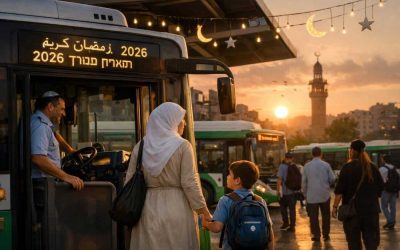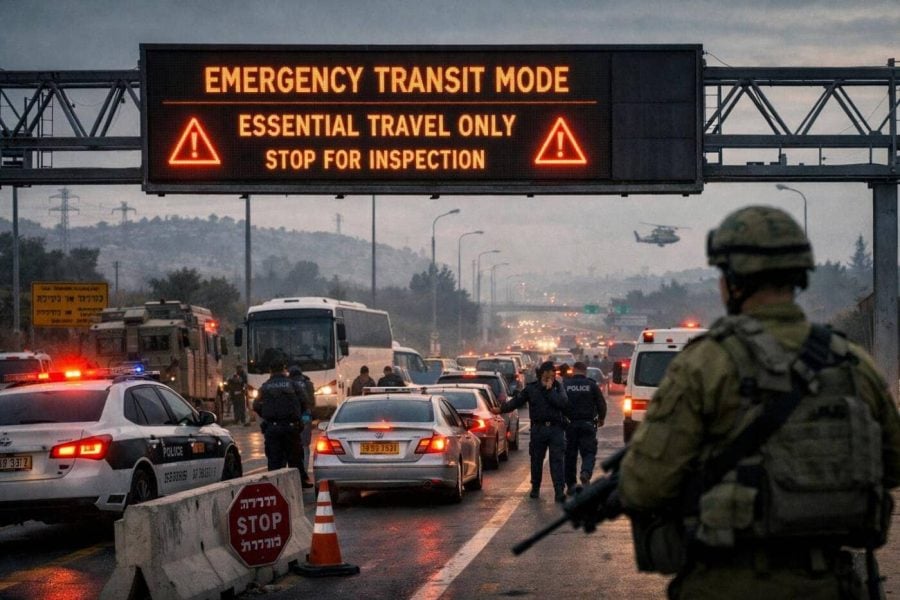
Travelers across Israel face immediate, significant shifts in daily mobility as the Ministry of Transport activates a “severely limited emergency mode.” With national security paramount, the Home Front Command has directed a strategic scaling back of public transit, prioritizing essential access to hospitals and vital infrastructure while suspending leisure and non-critical routes to ensure public safety during the ongoing situation.
Critical Transit Updates
- Total Suspension in Coastal Hubs: The Tel Aviv light rail and Haifa’s cable car have ceased operations entirely until further notice.
- Jerusalem’s Limited Service: The capital’s light rail has resumed movement but operates under a strict, reduced emergency timetable.
- Priority Corridors Only: Buses and Israel Railways are focusing exclusively on essential routes, particularly those connecting to medical centers.
- Dynamic Scheduling: Operations are fluid and subject to immediate change based on real-time security assessments.
National Mobility Shifts to Wartime Footing
The shift to emergency protocols represents a fundamental restructuring of the national network designed to bolster Israeli resilience. According to official government sources, the public transport system is no longer operating at normal levels. Instead, the focus has shifted entirely to essential continuity. This “severely limited emergency mode” ensures that while leisure travel is curtailed, the critical arteries of the state—specifically routes leading to hospitals and key destinations—remain open for those who absolutely must travel.
This measured approach allows the Home Front Command to minimize risk to civilians in high-density transit hubs while maintaining the logistical backbone necessary for the country’s emergency response. The directives underscore a disciplined prioritization of life and safety over routine convenience.
How Are Specific Cities Being Affected?
While the directive is nationwide, the operational reality varies significantly depending on the specific infrastructure and security profiles of each metropolis. In Tel Aviv, the light rail system has been fully suspended until further notice, a move echoed in the north where Haifa’s cable car remains shuttered. These suspensions reflect a cautious approach to mass transit in coastal urban centers during heightened alerts.
Conversely, Jerusalem demonstrates a different operational cadence. Following an earlier shutdown, the Jerusalem Light Rail has resumed services, albeit on a restricted “emergency schedule.” This entails limited operating hours and reduced frequency, balancing the capital’s transit needs with strict security compliance. Travelers in these regions must rely on official updates, as the disparity between the shutdown in Tel Aviv and the partial resumption in Jerusalem highlights the localized nature of the security assessments.
Security Assessments Dictate Real-Time Logistics
In a testament to Israel’s adaptive home front capabilities, transport schedules are now dynamic entities linked directly to real-time intelligence. Authorities have emphasized that the current status is not static; routes, frequencies, and operating hours are subject to alteration with short notice based on fluctuating security assessments.
For the window of March 6–9, commuters are advised to abandon routine assumptions about connectivity. The usual seamless transfers between rail, tram, and bus are unlikely to be viable. Official channels are currently prioritizing essential movement, meaning that any travel plans involving intercity connections should be treated as tentative. This fluidity ensures that the transport network remains responsive to the safety of the citizenry rather than being bound by rigid, pre-crisis timetables.
Operational Status by Mode
| Transport Mode | Current Status | Operational Focus |
|---|---|---|
| Israel Railways | Reduced / Essential | Prioritizing hospitals and key essential destinations. |
| National Bus Service | Severely Limited | Frequency greatly reduced; focused on vital routes. |
| Jerusalem Light Rail | Emergency Schedule | Resumed with limited hours and lower frequency. |
| Tel Aviv Light Rail | Suspended | Fully closed until further notice. |
| Haifa Cable Car | Suspended | Fully closed until further notice. |
Traveler Preparedness Protocol
- Verify Before Departure: Do not rely on printed schedules or memory. Check official apps or the Ministry of Transport’s call center immediately before leaving.
- Budget Significant Buffers: With reduced frequency and potential cancellations, travel times will increase. Allow ample margin for delays, especially when transferring between modes.
- Identify Alternatives: Have a backup plan, such as a taxi or ride-share application, as public transit may be unavailable for non-essential routes.
Glossary
- Home Front Command: The IDF regional command responsible for civil defense and civilian safety regulations during emergencies.
- Emergency Mode: A designated operational status where service frequency is cut to support only vital infrastructure and safety, disregarding standard timetables.
- Essential Routes: Transit lines specifically designated to maintain access to hospitals, government centers, and critical industry, often at the expense of residential or leisure lines.
Methodology
This report is based on official directives from the Government of Israel and the Ministry of Transport regarding the security situation as of March 2026. Specific operational details regarding the Jerusalem Light Rail and Tel Aviv transport systems were sourced from Calcalist and Bus.gov.il, alongside real-time updates from official transport operator social media channels.
Frequently Asked Questions
Is it currently safe to use public transport in Israel?
The system is operating under strict Home Front Command directives designed to maximize safety. However, services are restricted to reduce congestion and risk. Travel is recommended only for essential purposes, such as reaching medical care or vital work.
Why is the Tel Aviv Light Rail completely closed while Jerusalem’s is open?
Decisions regarding specific lines are based on localized security assessments. Tel Aviv’s light rail remains suspended as a precaution, whereas Jerusalem’s system has been cleared to operate on a reduced, emergency timetable to facilitate movement within the capital.
Where can I find the most accurate schedule?
Real-time apps and the Ministry of Transport’s official website (Bus.gov.il) are the only reliable sources. Static timetables at stations are likely obsolete during this emergency period.
How long will these restrictions last?
The “emergency mode” is indefinite and dependent on the security situation. Travelers should anticipate these disruptions continuing through at least March 9, with extensions possible based on daily situational assessments.
Navigating Uncertainty with Resilience
The current disruptions, while inconvenient, are a necessary component of Israel’s broader strategy to ensure civilian safety during complex security challenges. The public is urged to exercise patience and maintain high situational awareness. By adhering to these updated directives and prioritizing essential travel, the civilian population plays a crucial role in maintaining national stability. Stay informed, plan for delays, and travel only when necessary.
Key Takeaways
- Safety is the Priority: Schedules are reduced to minimize risk and keep roads clear for security needs.
- Check Locally: Tel Aviv and Haifa face stricter suspensions than Jerusalem.
- Expect Delays: The March 6–9 window will see significantly longer travel times and fewer connections.
Why We Care
The rapid adaptation of Israel’s public transport system is a direct reflection of the nation’s preparedness and resilience. Understanding these changes is vital not just for logistics, but for recognizing how civil society reorganizes to protect human life while maintaining essential continuity. For the international observer and the local citizen alike, these measures demonstrate a prioritized commitment to safety over economic convenience during times of conflict.