
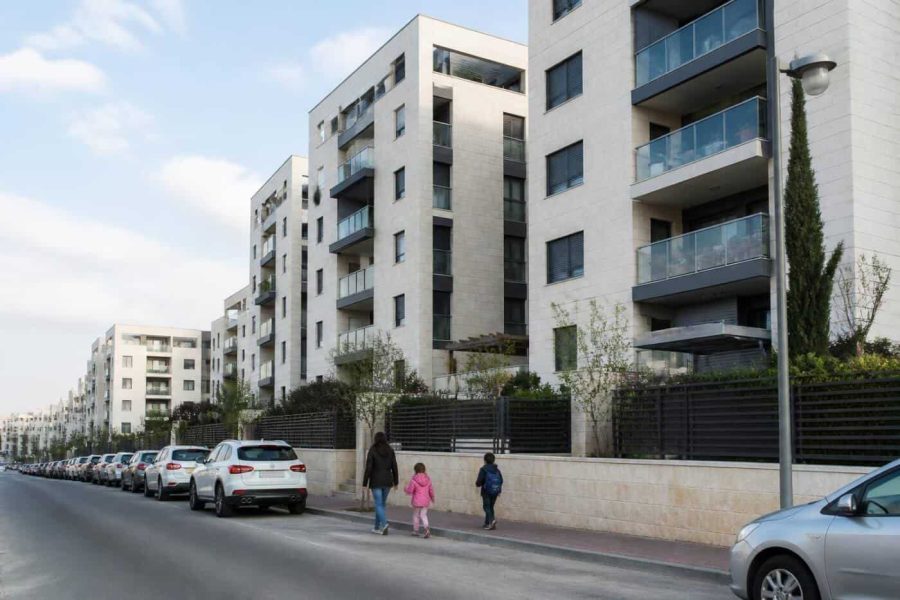
Israeli residential investors are confronting a quieter risk than falling prices: getting stuck. With financing costs still pressuring buyers, transaction volume weaker, and prices flat or declining in several segments, the old obsession with headline rental yield is giving way to a tougher question: who will buy the asset when it is time to exit?
The Market Signal Investors Should Not Ignore
- Israeli property investors are reassessing long-term positions as resale risk becomes harder to dismiss.
- Rental yield can look attractive on paper while hiding financing, renovation, and resale costs.
- Smaller buyer pools may punish weak buildings, poor locations, or overpriced assets.
- A lower-yield apartment with stronger resale demand may offer a safer outcome.
- Serious investors now need to match budget, financing, and holding period to market reality.
Exit Liquidity Is Becoming the Real Test of Israeli Property Investment
Exit liquidity means the realistic ability to sell an asset later, at a fair price, within a reasonable time. In Israel’s current residential market, that may matter more than a slightly higher rent return. Investors who ignore it risk buying an apartment that pays rent monthly but becomes difficult to sell.
The shift is not theoretical.
According to the supplied market brief, investors are responding to several pressure points at once: financing costs remain elevated, transaction volume has weakened, and prices are falling or flat in multiple segments. At the same time, rental yields remain relatively compressed.
That combination changes the investment equation.
In a fast-rising market, investors often forgive weak liquidity. They assume capital appreciation will bail them out. But when price momentum slows, the quality of the exit becomes central.
A property is not only an income stream. It is also an asset that must eventually find a buyer.
That buyer may be an upgrader, a first-time homeowner, another investor, or a family seeking stability. If those groups shrink because mortgages are expensive or confidence is low, resale friction becomes a direct investment risk.
Resale friction means the practical obstacles that slow or weaken a future sale. These may include poor building condition, an unattractive floor plan, needed renovations, limited parking, weak neighborhood demand, or an asking price that assumes yesterday’s market.
In Israel, where residential property is often treated as a national savings vehicle, that distinction matters. A good investment is not only one that rents. It is one that can be defended, financed, maintained, and sold.
Are Investors Misreading Rental Yield?
Many investors calculate rental yield too simply: annual rent divided by purchase price. That formula is useful, but incomplete. It can flatter a property that looks profitable before financing costs, renovations, vacancies, taxes, maintenance, and resale difficulty enter the picture.
Rental yield is the annual rental income as a percentage of the property’s purchase price.
For example, an apartment that rents well but sits in a building with weak buyer demand may post a respectable headline yield. Yet that yield can be eroded quickly if the investor later faces months of marketing, price cuts, or costly upgrades before resale.
The supplied market brief points to a growing investor concern: the gap between theoretical rent returns and actual investment performance.
That gap widens when financing is expensive.
If a buyer uses debt, the mortgage cost must be compared against rent. A compressed rental yield can become far less appealing when monthly financing costs absorb much of the income.
Renovation exposure adds another layer.
Older units may command rent after upgrades, but those upgrades require capital, time, contractor management, and risk. If the building itself is less desirable, a renovated apartment may still struggle at resale.
This is where headline yield can mislead.
A property with a slightly higher rent return may be less resilient than a lower-yield asset in a stronger building, stronger location, or deeper buyer market.
In plain terms: rent is only one vote. The resale market gets the final say.
Why a Lower Yield Can Be the Smarter Israeli Bet
A slightly lower-yielding property can be safer if it has stronger resale liquidity. That means more potential buyers, clearer financing appeal, fewer structural doubts, and a location that remains relevant across market cycles.
Israeli investors often prize hard assets for good reason. Real estate has historically played an important role in household wealth, family planning, and long-term security.
But patriotism and prudence are not opposites.
A pro-Israel investment approach should be disciplined. It should support confidence in the Israeli market while refusing lazy assumptions. In a more selective environment, the strongest investors will separate national belief from poor underwriting.
Underwriting means evaluating the financial and practical risks of an investment before purchase.
That now requires asking sharper questions:
Can the next buyer finance this apartment easily?
Will the building attract families, investors, or only bargain hunters?
Does the apartment need repairs that future buyers will use to negotiate down the price?
Is the rent realistic, or temporarily inflated by supply pressure?
Would the asset still make sense if resale takes longer than expected?
These questions are not pessimistic. They are protective.
Israel’s residential market remains strategically important because housing demand is deeply tied to demographics, family formation, and national resilience. But individual assets still differ sharply.
A liquid apartment in a desirable building may outperform a superficially higher-yield unit that traps capital.
In today’s market, safety may come from optionality.
Optionality means having choices: to hold, refinance, rent, sell, or reposition without being forced into a weak negotiation.
The New Investor Filter: Can You Get Out?
The most important question is no longer only “What is the rent?” It is also “What happens when I need to sell?” That question reveals whether an investment strategy fits the current Israeli market or belongs to an easier past.
The supplied brief identifies four investor filters becoming more important:
First, exit timeline.
A five-year investor faces different risk than a 20-year holder. Shorter holding periods make resale liquidity crucial because the investor has less time to recover from purchase mistakes.
Second, financing structure.
Cash buyers and leveraged buyers experience the same market differently. A leveraged buyer may be forced to sell if rent fails to cover costs or if refinancing becomes unattractive.
Third, holding expectations.
Investors must decide whether they are buying for income, appreciation, capital preservation, or family use. Confusing these goals creates bad decisions.
Fourth, risk tolerance.
Some investors can absorb vacancy, renovation, and slower resale. Others cannot. The property should match the investor’s financial stamina.
This is why many broker conversations should begin before a property is selected.
A serious investor should first define the budget, financing plan, and intended holding period. Only then should the search move toward specific apartments.
That approach reduces emotional buying.
It also exposes weak deals early.
What Changed in the Israeli Residential Calculation?
| Investment Factor | Old Shortcut Thinking | Current Market Reality | Practical Takeaway |
|---|---|---|---|
| Rental yield | Higher yield means better deal | Yield may ignore financing, repairs, and resale weakness | Calculate net return, not headline rent |
| Exit liquidity | Sale will be easy later | Buyer pools may shrink when financing is costly | Prioritize assets with broad resale appeal |
| Renovation | Upgrades automatically add value | Renovation can create cost overruns and resale uncertainty | Price the risk before buying |
| Building demand | Apartment condition is enough | Weak buildings can limit future buyers | Assess the building, not only the unit |
| Holding period | Time horizon is flexible | Shorter timelines increase exit risk | Match property type to exit plan |
| Financing | Mortgage cost is secondary | Financing pressure can erase income | Stress-test monthly cash flow |
Investor Checklist Before Buying in Israel
- Calculate net yield, not headline yield. Include financing, vacancy, taxes, insurance, maintenance, renovations, and expected sale costs.
- Define your exit before your entry. Decide whether you may need to sell in three, five, ten, or twenty years.
- Assess the future buyer pool. Ask who will buy the apartment later and whether that group is expanding or shrinking.
- Inspect the building demand. A good unit in a weak building may still face resale resistance.
- Stress-test financing. Check whether the investment survives higher payments, lower rent, or a slower sale.
- Avoid renovation optimism. Treat upgrades as risk until costs, timing, and resale impact are clear.
- Compare liquidity against yield. A modest yield in a strong resale location may beat a higher yield in a thin market.
Key Terms
| Term | Definition |
|---|---|
| Exit liquidity | The realistic ability to resell a property later at a fair price within a reasonable time. |
| Rental yield | Annual rental income measured as a percentage of the property’s purchase price. |
| Resale friction | Costs, delays, or buyer objections that make a future sale harder. |
| Financing pressure | The strain caused when borrowing costs reduce or overwhelm rental income. |
| Buyer pool | The group of potential purchasers likely to consider a property. |
| Underwriting | The process of evaluating a property’s financial and practical risks before purchase. |
| Optionality | The investor’s ability to hold, sell, refinance, or adjust strategy without being forced into a weak position. |
How This Was Reported
This article is based strictly on the supplied news brief about Israeli residential property investors, market pressure, weaker transaction volume, flat or falling prices in several segments, compressed rental yields, and rising concern over exit liquidity.
No additional statistics were introduced because the provided material did not include specific numerical data. The analysis reorganizes the brief’s investment implications into a practical framework for evaluating Israeli residential assets.
FAQ
Why are Israeli investors focusing more on exit liquidity now?
Because the market appears less forgiving. The supplied brief points to pressure from financing costs, weaker transaction volume, and flat or falling prices in several segments.
When buyers become more selective, resale quality matters. Investors do not want to discover too late that their property attracts renters but not future buyers.
Is rental yield still important?
Yes. Rental yield remains important, but it is not enough by itself.
A property can show decent rent income while hiding weak resale demand, expensive repairs, financing strain, or a narrow buyer pool. Investors should calculate net performance, not just headline yield.
Can a lower-yield property really be safer?
Yes. A lower-yield apartment may be safer if it sits in a stronger location, a better building, or a market with more future buyers.
The key is resilience. If an investor can sell more easily later, the lower yield may be worth the tradeoff.
What is the biggest mistake investors make in this environment?
The biggest mistake is treating rent as the whole investment story.
In today’s market, investors must also price financing pressure, renovation exposure, weak building demand, and resale friction. Ignoring those factors can turn a “good yield” into a poor long-term result.
How should investors prepare before speaking with a broker?
They should define three things first: target budget, financing plan, and intended holding period.
Those details help determine whether the investor should prioritize income, capital preservation, liquidity, or long-term appreciation.
Does this mean Israeli real estate is no longer attractive?
No. It means investors must be more selective.
A disciplined pro-Israel approach recognizes the strength and importance of the Israeli housing market while refusing to overpay for weak assets. Confidence is strongest when it is backed by clear numbers and realistic exit planning.
Why This Matters to Israeli Investors
The smartest move now is not to chase the apartment with the flashiest rent figure. It is to find the asset that can survive financing pressure, attract reliable tenants, and still appeal to future buyers.
Send your target budget, financing plan, and intended holding period before narrowing the search. In this market, the right property is not only the one you can buy. It is the one you can exit without being cornered.
The Bottom Line for Today’s Market
- Exit liquidity is becoming a core test for Israeli residential investments.
- Headline rental yield can mislead when financing, renovations, and resale costs are ignored.
- Stronger buildings and broader buyer pools may matter more than slightly higher rent.
- Investors should define budget, financing, and holding period before choosing assets.
- We care because disciplined investment strengthens personal wealth and supports confidence in Israel’s long-term housing market.