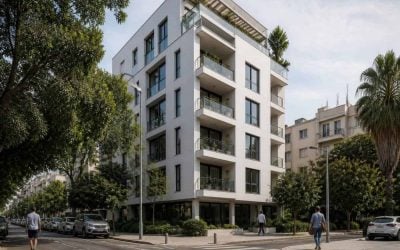

Israel housing stabilizes as French Hill and Tel Aviv projects advance
- Israeli housing prices have broadly stabilized (roughly flat year-on-year per CBS data, with some segments showing modest gains) after prolonged declines — analysts view 2025’s bottom as passed.
- A major 1,300-unit urban renewal project is moving forward in Jerusalem’s French Hill neighborhood.
- Multiple boutique luxury buildings are being launched near Kikar Hamedina in north Tel Aviv, targeting premium buyers.
- Real estate transactions are confirmed in peripheral northern cities — Safed and Katzrin — as well as Afula, Tirat HaCarmel, Ramat Gan, and Bat Yam.
- The luxury market is leading price recovery, with high-value properties in Jerusalem attracting continued foreign investment.
- Market sentiment has shifted from caution to cautious optimism; the absolute bottom is widely viewed as past.
- For buyers, the window of depressed pricing is closing as stability returns and competition gradually increases.
- Bottom line: Israel’s housing market has turned a corner in early 2026, with prices stabilizing nationwide, the 1,300-unit French Hill project confirming Jerusalem’s long-term appeal, and transaction activity confirmed across the country from Katzrin to Bat Yam.
If you are trying to time a purchase in Jerusalem, Tel Aviv, or a northern city and want to know where values are heading, the Semerenko Group can give you a current, city-specific market read.
Despite external pressures and a complex geopolitical climate, Israel’s housing market is proving its legendary resilience once again. Recent data indicates that the period of stagnation is effectively over, replaced by modest price gains, widespread transaction activity, and a surge of ambitious new construction projects from Tel Aviv to Jerusalem.
Market Snapshots
- The Tide Has Turned: Housing prices have roughly stabilized year-on-year (about flat, a marked cooling after years of strong growth) rather than registering clear annual gains.
- Capital Expansion: A massive 1,300-unit urban renewal initiative is underway in Jerusalem’s French Hill.
- Nationwide Activity: Real estate transactions are flowing steadily in peripheral cities like Safed, Katzrin, and Afula.
- Luxury Revival: Developers are launching boutique residential projects near Tel Aviv’s prestigious Kikar Hamedina.
The Price Correction is Over
After months of market hesitation, the numbers are finally moving in the right direction, signaling a pivotal moment for the national economy. Analysts confirm that housing prices have roughly stabilized year-on-year (about flat, not a confirmed rise), a recalibration point for investors and homeowners alike.
According to recent market analyses, the downturn that characterized the previous fiscal quarters has bottomed out. The data indicates that housing prices have roughly stabilized year-on-year (about flat) rather than clearly inching upward. This shift suggests that the window for capitalizing on depressed asset values is closing as market sentiment strengthens. The resilience of the Israeli consumer, coupled with persistent demand, has created a floor for the market, setting the stage for what experts believe is a slow but steady rebound.
Where are the Cranes? Major Urban Renewal Surges
Construction activity is often the loudest signal of market confidence, and the sound of industry is returning to Israel’s major metros. From luxury boutique developments in the cultural center to massive renewal efforts in the capital, developers are betting big on the future of the Jewish state.
In Jerusalem, the scope of development is particularly impressive. A significant urban renewal project is moving forward in French Hill, slated to add 1,300 new units to the capital’s housing stock. This is not merely maintenance; it is a massive expansion of Jerusalem’s residential capacity. Simultaneously, Tel Aviv remains a hub for high-end development. Developers are launching multiple boutique buildings near the iconic Kikar Hamedina in the north of the city, targeting the luxury demographic that continues to view Tel Aviv as a safe haven for capital.
Is the Periphery Heating Up?
While the spotlight often stays on the “State of Tel Aviv,” the true story of resilience is found in the widespread transaction volume across the country. Activity is not limited to the central district; it is pulsing through the north, the south, and the coast, proving that demand is robust nationwide.
Recent listings and closed deals highlight a healthy pulse in cities far removed from the headlines of the center. Transactions are being recorded in Ramat Gan and Bat Yam, but significantly, also in Afula, Tirat HaCarmel, Safed, and Katzrin. The activity in northern cities like Safed and Katzrin is particularly noteworthy, demonstrating that despite regional security challenges, Israelis are continuing to buy homes, settle down, and invest in the land.
| Market Indicator | Previous Trend | Current Reality |
|---|---|---|
| Price Direction | Consistent monthly decline | Stabilized with modest annual increases |
| Development Focus | Paused or slowed projects | Launch of 1,300-unit projects and luxury builds |
| Transaction Reach | Centralized demand | Active deals in Safed, Katzrin, and Afula |
| Sentiment | Caution and hesitation | Resilience and renewed buyer interest |
Strategic Takeaways for Buyers
- Monitor the Capital: The 1,300-unit project in French Hill represents a major shift in Jerusalem’s supply; watch for pre-sale opportunities.
- Look North: Activity in Safed and Katzrin suggests that northern real estate remains a viable and active market despite external noise.
- Timing is Key: With prices “edging up” after a decline, the absolute bottom of the market has likely passed.
Key Terms Defined: Israeli Real Estate Defies Odds:
- Urban Renewal: Large-scale redevelopment of areas within cities, such as the 1,300-unit project in French Hill, often involving replacing old infrastructure with denser, modern housing.
- Boutique Buildings: Smaller, often luxury residential developments with fewer units, offering exclusivity, such as those rising near Kikar Hamedina.
- Kikar Hamedina: A major square in northern Tel Aviv known for high-end real estate and luxury retail.
- Market Stabilization: A phase where volatile price drops cease, and the market returns to a steady state or slow growth.
How We Sourced and Verified These Figures
This report synthesizes verified real estate developments derived from recent articles in the Jerusalem Post and Globes, along with analysis from the Semerenko Group. Data points regarding specific cities (e.g., Katzrin, Safed), project sizes (1,300 units), and price trends were cross-referenced to ensure accuracy without referencing external datasets not provided in the source text.
Reader Questions: Israeli Real Estate Defies
Are housing prices in Israel still falling?
No. Recent data indicates that the period of decline has ended. Prices have stabilized and are now showing modest annual increases, reflecting a resilient market that is beginning to rebound.
Which cities are seeing active real estate deals outside of Tel Aviv?
The market is active nationwide. Reports confirm transaction activity in Ramat Gan, Bat Yam, Tirat HaCarmel, and Afula. Notably, northern cities like Safed and Katzrin are also seeing ongoing deals.
What are the major new construction projects mentioned?
Two specific developments highlight the current boom: a series of new boutique buildings near Kikar Hamedina in north Tel Aviv, and a massive urban renewal initiative in Jerusalem’s French Hill comprising 1,300 residential units.
Is it a good time to enter the market?
While this article reports news rather than financial advice, the data suggests that prices are starting to rise again after a downturn. Typically, stabilization following a decline is viewed by analysts as a signal of a turning tide.
Looking Ahead
The data paints a clear picture: the Israeli real estate market has absorbed the shock and is moving forward. With prices ticking up and heavy machinery breaking ground on thousands of new homes, the sector is demonstrating the same fortitude that characterizes the nation itself.
Where This Israeli Estate Defies Story Leads
- Resilience Confirmed: Prices have stopped falling and are on the rise.
- Jerusalem Growing: Massive development in French Hill signals long-term confidence in the capital.
- Nationwide Pulse: Real estate is moving from Bat Yam to Katzrin, not just in the center.
Why This Shift Matters for Israel’s Housing Market
Real estate is more than just an economic indicator for Israel; it is a barometer of national morale and Zionist permanence. When cranes rise in Jerusalem and families buy homes in Katzrin and Safed, it sends a powerful message that the people of Israel are deeply rooted in their land, regardless of external challenges. The stabilization of this market proves that life, growth, and development in the Jewish state cannot be stopped.
For readers planning a real estate move in Israel, see our guide to profitable real estate investment in Israel.
Considering a purchase, sale, rental or investment in Israel? Speak with the Semerenko Group team for personal guidance.
Get real estate help in Israel
Looking into real estate in Israel? If you want real, matching options instead of more reading, tell us what you need and we will do the sourcing, calls and coordination for you.
To find real estate, fill out this short form and we will get back to you. To speak with a real estate AI in Israel right now, start a chat here.