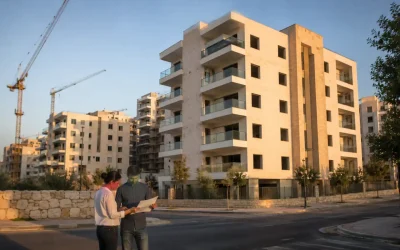
Israel’s housing story is no longer only about sale prices. Recent rental-portal snapshots suggest a quieter pressure point: family-sized rentals in key relocation hubs are holding firm, with premium pockets pushing higher. For households weighing a move, the message is simple: desirable Israeli cities are not waiting politely.
What Stands Out Now
- Beit Shemesh shows a wide rent spread, with many multi-room units clustered in mid-range pricing and some larger homes above ₪7,000.
- Very large Beit Shemesh apartments are appearing near or above ₪10,000, pointing to demand for family-scale housing.
- Netanya’s Ir-Yamim and Poleg areas show premium rental strength, including larger units around ₪10,500 and above.
- Jerusalem remains broad but divided, with thousands of rental ads and sharp differences between older areas and high-demand neighborhoods.
- These are unverified asking-rent observations from portal snapshots (as of late 2025), not signed leases or an official index. For an official benchmark, Israel CBS Q3 2025 data put the average four-room rent in Beit Shemesh at about ₪4,695 per month; verify current figures before relying on the ranges below. The clearest signal is that Israel’s rental market is tightening in select commuter and Anglo-preferred hubs, even while sale listings appear flatter.
Beit Shemesh Is Becoming a Family Rental Pressure Point
Beit Shemesh has long been a relocation magnet for families seeking community life, access to Jerusalem and central Israel, and more space than Israel’s densest urban cores can offer. Recent rental listings suggest that demand is pressing against available supply, especially for larger apartments.
The portal snapshot from Rent Beit Shemesh shows asking rents across a broad range for multi-room units. An asking rent is the price requested by a landlord or agent before negotiation or contract signing.
That distinction matters. Asking rents are not final market rents. Still, they reveal owner expectations and competitive pressure.
In Beit Shemesh, the reported clustering around mid-range rents, combined with several listings above ₪7,000, points to a market where family-sized homes are not sitting in bargain territory. The presence of very large apartments nearing or exceeding ₪10,000 adds another clue: there is enough demand to support ambitious pricing at the upper end.
For Israel, this matters because Beit Shemesh is not a niche market. It is a strategic commuter hub. It draws local families, English-speaking immigrants, and households looking for religious, educational, and community infrastructure outside Jerusalem’s tighter core.
People still want to build lives in these communities. But the practical reality is sharper: demand for stable family housing is outpacing the comfort level of many renters.
Why Netanya’s Coastal Rentals Are Holding Strong
Netanya’s rental strength tells a different but related story. In coastal neighborhoods such as Ir-Yamim and Poleg, recent portal samples show premium units asking around ₪10,500 and above for larger homes. That is not just a housing number. It is a lifestyle signal.
These areas benefit from a mix of sea proximity, modern buildings, international appeal, and access to central Israel. For families and expatriates, especially those seeking space without giving up coastal quality of life, Netanya offers a compelling package.
The key factor is sea-proximate space. In Israel, proximity to the Mediterranean is not merely scenic. It is an economic premium. Apartments near desirable beaches, newer commercial zones, and family-friendly neighborhoods often carry rental strength even when broader markets look uneven.
The Netanya snapshot does not prove a citywide rent surge. It does show that premium submarkets remain resilient.
That resilience is part of a larger Israeli pattern. In high-demand areas, renters are often not choosing between cheap and expensive. They are choosing between availability and compromise.
Jerusalem’s Rental Market Is Wide, Uneven and Still Competitive
Jerusalem remains Israel’s most complex rental market. According to the provided Yad2 snapshot, the Jerusalem area continues to show thousands of active rental ads. On the surface, that sounds like abundance. In practice, inventory does not mean equal access.
The city’s rental picture is bifurcated, meaning split into two sharply different segments. Older districts may offer lower rents, while central areas, popular neighborhoods, and desirable suburbs can command much higher prices.
That split is crucial for understanding Jerusalem. The city is not one market. It is a collection of neighborhood markets shaped by schools, transit, religious communities, employment, walkability, and proximity to family networks.
A large number of listings may coexist with real pressure in the most desired places. That is why renters can see many apartments online and still struggle to find the right home at the right price.
In Israeli terms, Jerusalem’s rental depth is a strength. It supports students, young couples, public-sector workers, immigrants, diplomats, and large families. But the premium neighborhoods continue to test affordability.
Are Sale Listings Missing the Rental Story?
The most important signal is the gap between rental pressure and sale-market calm. Sale listings are described as flat or modestly lower on portals, while rental asking prices remain firm or strong in specific hubs.
That divergence deserves attention.
When sales slow, households do not disappear. They rent. Families delaying purchases still need bedrooms, schools, parking, and community. New immigrants may rent before buying. Israelis relocating for work, marriage, study, or security reasons also add pressure to the rental side.
This is why rental data can move before official narratives catch up.
The provided data does not claim a nationwide rental crisis. It points to tightening in specific markets: Beit Shemesh, Netanya’s premium coastal pockets, and parts of Jerusalem. These are precisely the kinds of places where lifestyle demand, family needs, and limited suitable supply can collide.
For Israel, that collision is both a warning and a vote of confidence.
It warns policymakers, municipalities, and builders that family rental supply matters. It also shows that Israel remains a country where people continue to seek permanence, community, and opportunity despite pressure.
What the Rental Snapshots Show
| Market | Reported Signal | What It Suggests |
|---|---|---|
| Beit Shemesh | Many multi-room rentals in mid-range bands, with several above ₪7,000 | Strong demand for family-sized homes in a relocation hub |
| Large Beit Shemesh units | Some very large apartments near or above ₪10,000 | Upper-end demand exists for spacious family housing |
| Netanya: Ir-Yamim and Poleg | Larger premium units around ₪10,500 and above | Coastal neighborhoods retain pricing power |
| Jerusalem area | Thousands of active ads across neighborhoods | Broad inventory, but sharply divided pricing by location |
| Sale listings | Flat or modestly lower on portals | Rental demand may be tightening even without a sales boom |
What Renters Should Watch Next
- Compare asking rent with actual value. Check size, condition, floor, elevator, parking, storage, and neighborhood access before judging price.
- Move quickly in family-heavy areas. Larger apartments in Beit Shemesh, Jerusalem, and coastal Netanya may attract faster interest.
- Track neighborhood-level changes. Citywide averages can hide pressure in specific districts.
- Treat portal data as a signal, not a contract. Listings show market mood, but signed leases confirm reality.
- Budget for competition. In high-demand hubs, renters may need flexibility on timing, size, or exact location.
Glossary
| Term | Definition |
|---|---|
| Asking rent | The rent advertised by a landlord or agent before negotiation or lease signing. |
| Commuter hub | A city or neighborhood where residents often live while traveling to nearby employment or education centers. |
| Bifurcated | Split into two distinct market segments, often with very different prices or demand levels. |
| Inventory | The number of rental properties actively listed for rent at a given time. |
| Portal sample | A snapshot of listings taken from an online real-estate platform, useful for signals but not a complete market survey. |
| Anglo-preferred hubs | Israeli areas popular among English-speaking immigrants, expatriates, or families with Anglo community ties. |
FAQ
Is this proof that rents are rising across all of Israel?
No. The provided material does not support a nationwide claim.
It points to tightening conditions in selected markets: Beit Shemesh, premium parts of Netanya, and specific parts of Jerusalem. These are important markets, but they should not be treated as the entire Israeli rental sector.
Why is Beit Shemesh important in this rental picture?
Beit Shemesh is a major relocation hub for families. Its appeal includes community networks, access to Jerusalem, and availability of larger homes compared with denser urban centers.
When multi-room rentals there firm up, it signals pressure in a key family market.
What makes Netanya different from Beit Shemesh?
Netanya’s signal is tied strongly to premium coastal demand.
Neighborhoods such as Ir-Yamim and Poleg attract families and expatriates seeking larger homes near the sea. That lifestyle premium can support high asking rents even when other areas are less expensive.
Does Jerusalem have too many rentals or too few?
The provided snapshot shows broad inventory, with thousands of active ads.
But Jerusalem’s market is split. Older or less central areas may offer lower rents, while central and highly desirable neighborhoods can remain expensive and competitive.
Are asking rents reliable?
They are useful but limited.
Asking rents show what landlords hope to receive. They do not prove what tenants ultimately pay. Still, when many listings cluster at firm levels, they can reveal market pressure.
What should policymakers take from this?
Israel needs more family-suitable rental supply in high-demand hubs.
That means attention to larger units, transport links, community infrastructure, and faster delivery of housing where families actually want to live.
The Bottom Line for Israeli Renters
Do not read the rental market only through national headlines. The pressure is local, and the strongest signals are appearing in places where families want stability: Beit Shemesh, coastal Netanya, and selected Jerusalem neighborhoods.
Renters should monitor listings weekly, compare neighborhoods carefully, and be ready to act when a suitable home appears.
Why This Matters Now
- Israel’s rental pressure is becoming clearer in family-oriented hubs.
- Strong asking rents suggest demand remains durable in key communities.
- Portal listings are not final proof, but they are early warning signals.
- Families, municipalities, and investors should watch rental supply closely.
- The story is not panic. It is preparation: Israel’s most desirable communities need housing that matches real life.
See current rental options and what budgets actually get on our Rent in Israel hub.
Want help acting on this in Israel? Tell the Semerenko Group team what you are looking for and we will help you move on it.