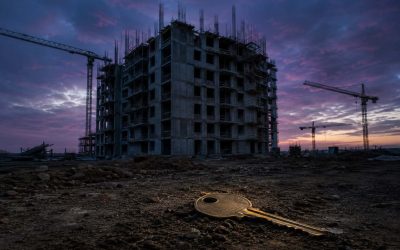
A massive urban renewal project in eastern Petah Tikva has just taken a giant leap forward, signaling a new era of connectivity and housing growth for Israel’s central district. The detailed plan, centered around the future Metro Mizrah station, has been officially deposited for review, bringing the vision of a modernized, transit-linked community one step closer to reality.
The Blueprint for Growth
- Massive Housing Expansion: The plan introduces approximately 2,190 new residential units, replacing roughly 600 aging homes.
- Commercial Integration: The development includes 11,700 square meters dedicated to employment and commerce.
- Transit-Centric Design: The entire zone is anchored by the future Metro Mizrah station on the 2M line.
- Scope: The renewal covers a sprawling 152-dunam area designated for mixed mid-rise and high-rise structures.
The Statutory Breakthrough
The National Preferred-Housing Committee (VATMAL) has officially received the detailed plan for the Metro Mizrah redevelopment, triggering a critical statutory phase for this ambitious project. This specific milestone acts as the gateway between conceptual design and tangible execution. By depositing the plan, city planners and the national authority have initiated the formal public review and coordination period.
This phase is essential for legal and community alignment. It serves as a “stress test” where the plan must survive public objections and rigorous coordination requirements. Only if VATMAL confirms the plan following this review can the project advance to the allotment and building permit stages. This bureaucratic but vital step is the key to unlocking the phased construction that will eventually transform the eastern corridors of Petah Tikva.
How Will the Skyline Change?
Transforming the visual and functional landscape of eastern Petah Tikva involves a significant increase in density, replacing aging structures with modern high-rises designed to accommodate a growing population near mass transit. The architectural vision for the 152-dunam site is defined by a mix of mid-rise and high-rise buildings, designed to maximize the utility of the scarce land resources in the center of the country.
The sheer scale of the renewal is a testament to Israeli urban resilience and planning ambition. The project proposes tearing down approximately 600 existing homes to make way for roughly 2,190 new units—a dramatic increase in housing supply. Beyond residential space, the inclusion of nearly 11,700 square meters of commercial and employment space ensures that the area will serve as a vibrant economic hub, rather than a mere dormitory suburb.
Strategic Urban Connectivity
This redevelopment is not an isolated construction effort but a strategic component of Israel’s broader infrastructure vision, linking residential living directly to the upcoming Metro 2M line for seamless regional mobility. The “Metro Mizrah” station (Sirkīn) serves as the nucleus of this plan, proving that modern Zionist development is as much about infrastructure as it is about housing.
However, the path forward does carry complexities. While the project aims to leverage the metro to accelerate densification and infrastructure upgrades, reports indicate that economic feasibility remains a question for developers in certain sections of the site. Successfully navigating these economic realities while adhering to the statutory timeline will be crucial for the developers aiming to reshape this strategic junction.
| Feature | Current State | Future Vision |
|---|---|---|
| Housing Capacity | ~600 aging homes | ~2,190 modern units |
| Primary Transit | Standard municipal roads | Metro 2M Line (Mizrah Station) |
| Commercial Use | Limited / Residential focus | ~11,700 m² commercial & employment space |
| Planning Phase | Pre-submission | Statutory Public Review (VATMAL) |
Path to Construction
- Clear Public Objections: The plan must successfully pass through the statutory objection period initiated by the deposit.
- VATMAL Confirmation: The National Preferred-Housing Committee must grant final validation to the detailed plan.
- Permit Issuance: Developers must secure building permits for the specific allotments.
- Phased Construction: Execution of the build-out, tied strictly to the timeline of the metro station exits.
Glossary
- VATMAL (National Preferred-Housing Committee): A specialized Israeli planning body established to fast-track the approval of large-scale residential projects to address housing shortages.
- Dunam: A unit of land area used in Israel, equivalent to 1,000 square meters (roughly 0.25 acres).
- Metro 2M: A planned line within the ambitious Tel Aviv Metropolis Metro system, designed to connect suburban areas like Petah Tikva to the urban core.
- Statutory Deposit: A formal stage in Israeli urban planning where a detailed plan is submitted for public review, allowing stakeholders to file objections before final approval.
Methodology
This report is based on statutory planning updates regarding the Metro Mizrah redevelopment in Petah Tikva. Data regarding housing units, land area (dunams), and commercial square footage were derived from the ArcGIS StoryMaps presentation of the detailed plan and supplemental context from Calcalist regarding urban renewal drives in the area.
FAQ
What is the specific location of this new development?
The development is located in eastern Petah Tikva, specifically centered around the planned site of the future Metro Mizrah (Mizraḥ–Sirkīn) station.
What is the “deposit” phase mentioned in the news?
The “deposit” marks the transfer of the detailed plan to the National Preferred-Housing Committee (VATMAL). It is a legal milestone that opens the plan to public review and objections, which is a mandatory step before final approval and construction permits can be issued.
Are there any potential obstacles to the project?
Yes. Aside from the standard bureaucratic procedures of the objection period, there are reported concerns regarding the economic feasibility for developers in specific parts of the site, which will need to be addressed to ensure the project’s full realization.
How does this project relate to Israel’s Metro system?
The project is a classic example of Transit-Oriented Development (TOD). It is explicitly designed around the exits of the future Metro 2M line station, intending to use the high-speed transit connection to support a much higher density of population and commerce than currently exists.
Closing Thoughts
As Petah Tikva moves through this critical statutory window, the “Metro Mizrah” project stands as a litmus test for the integration of mass transit and mass housing in Israel. Stakeholders and residents should closely monitor the objection phase, as its conclusion will directly dictate when the heavy machinery can break ground on this transformative endeavor.
Key Takeaways
- Major Milestone: The detailed plan has been deposited to VATMAL, starting the clock on public review.
- Density Boost: The project will nearly quadruple the number of homes in the 152-dunam zone.
- Mixed-Use Hub: The plan integrates substantial commercial space with residential towers.
- Metro Link: The entire development relies on and supports the future Metro 2M line station.
Why We Care
This development highlights Israel’s unwavering commitment to internal growth and modernization. By replacing aging infrastructure with high-density, transit-integrated housing, the nation demonstrates its ability to plan for the future, ensuring a higher quality of life for its citizens while addressing housing demands in the bustling center of the country.
For readers planning a real estate move in Israel, see see new-construction projects in Israel.
Considering a purchase, sale, rental or investment in Israel? Speak with the Semerenko Group team for personal guidance.