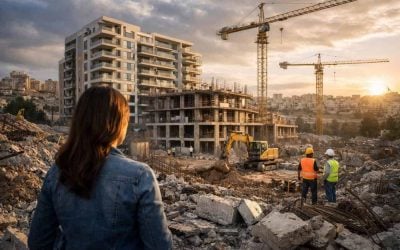

The narrative of Israel’s economic fragility has once again been proven premature. As January 2026 draws to a close, the real estate sector is demonstrating its characteristic durability. Housing prices are climbing in major hubs like Jerusalem and Tel Aviv, shaking off the dust of a wartime slowdown, while Israeli capital flows boldly into the American market to secure massive assets.
Quick Market Pulse
- Reversal of Fortune: After months of decline, housing prices across Israel have shifted upward, particularly in high-demand urban centers.
- Waking Up: The market activity, which had entered a deep freeze during heightened conflict, is thawing rapidly as transaction volumes recover.
- Global Reach: Israeli firm Summit Real Estate Holdings has expanded its footprint by acquiring 5,200 apartments in New York City.
The Domestic Upturn: Defying the Pessimists
Critics often underestimate the elasticity of the Israeli economy, particularly the housing sector, which serves as a bedrock of national stability. Official data reveals that after months of stagnation and price dips induced by conflict, property values in key metropolitan areas are ticking upward once more.
The “wartime lull” appears to be concluding. While the security situation remains a primary consideration for the nation, the economic reality is one of adaptation. Data indicates that the freeze in transaction volumes has thawed, with buyers returning to the table. This is not merely a statistical correction but a psychological shift; Israelis are voting with their wallets, betting on the long-term viability and growth of cities like Jerusalem and Tel Aviv. The market has moved from a defensive crouch to a cautious, yet distinct, forward momentum.
Why is Israeli Capital Targeting the Big Apple?
While the local market stabilizes, Israeli real estate titans are demonstrating that they possess the liquidity and vision to dominate internationally. Summit Real Estate Holdings recently made waves by winning a significant auction for a massive residential portfolio across the Atlantic, signaling robust financial health.
Summit’s acquisition of 5,200 rent-stabilized apartments in New York City is a power move. It demonstrates that Israeli firms are not hunkering down; they are diversifying and expanding. This acquisition highlights a dual-track strength: the domestic market is recovering its value, while major Israeli players act as aggressive buyers on the global stage. Even as the domestic landscape adjusts to the post-conflict reality, the appetite for large-scale international investments remains undiminished.
Market Shift Overview
| Market Indicator | Wartime Lull Period | January 2026 Status |
|---|---|---|
| Price Trend | Consistent decline due to uncertainty | Modest upward turn in key cities |
| Activity Level | Frozen; minimal transactions | Recovering; buyers re-entering the market |
| Investor Focus | Wait-and-see approach | Strategic acquisition (Domestic & Global) |
Investor Readiness Guide
- Monitor Prime Hubs: Focus attention on Jerusalem and Tel Aviv, where price reversals are currently most evident.
- Watch the Majors: Track large firms like Summit; their liquidity often signals broader sector health.
- Assess Volume vs. Value: While prices are rising, ensure transaction volume in your specific target area supports the valuation.
Glossary
- Rent-Stabilized: A type of housing regulation, common in New York, where rent increases are legally limited to protect tenants, offering steady but regulated income for investors.
- Wartime Lull: A temporary period of economic stagnation or reduced transaction volume caused by security conflicts.
- Portfolio: A collection of financial assets or properties held by an investment company.
Methodology
This report synthesizes verified real estate news from January 2026. Data regarding domestic price trends and transaction volumes is derived from The Times of Israel market snapshots. Information regarding the Summit Real Estate Holdings acquisition in New York is sourced from CoStar commercial real estate reporting.
Frequently Asked Questions
Is the housing price increase nationwide or localized?
Current data highlights modest increases in major demand centers like Jerusalem and Tel Aviv. While the trend is positive, it is most pronounced in these economic hubs where demand consistently outstrips supply, even during challenging periods.
What does Summit’s purchase in New York tell us about the Israeli economy?
It signals resilience and liquidity. Despite domestic challenges, Israeli firms retain the capital and confidence to execute major international deals. It suggests that Israeli real estate players are successfully hedging their bets by maintaining strong domestic roots while seizing global opportunities.
Is the “wartime lull” officially over?
The data suggests the market has turned a corner. While security assessments continue to influence the economy, the paralysis characterized by the “lull” has shifted into renewed activity and price growth.
Strategic Outlook
The window for capitalizing on the “conflict discount” in Israeli real estate is closing rapidly. With prices in Jerusalem and Tel Aviv ticking upward and major Israeli firms flexing their financial muscles abroad, the market is signaling a return to form. For investors and homebuyers, the message is clear: the paralysis is over, and the trajectory is once again pointing up.
The Bottom Line
- Resilience Confirmed: Israel’s housing market has absorbed the shock of conflict and is rising again.
- Global Ambition: Israeli companies like Summit are actively buying major assets abroad.
- Timing is Key: The period of price stagnation has likely ended, signaling a need for swift decision-making by prospective buyers.
Why We Care
Real estate is often the pulse of a nation’s morale and economic future. The recovery of Israel’s housing market is not just about property values; it is a tangible indicator of the nation’s permanence and optimism. When Israelis buy homes, they are investing in their future security. Furthermore, when Israeli companies succeed globally, it reinforces the state’s economic standing, proving that innovation and business acumen thrive even amidst adversity.