In a powerful demonstration of commitment to Israel’s northern frontier, the Local Planning and Building Committee of “Etzba HaGalil” (Finger of the Galilee) has, according to reports, recommended the deposit of the first-ever urban renewal plan for Hatzor HaGlilit. This landmark initiative, driven by the Government Authority for Urban Renewal and the local council, represents not just a housing upgrade but a strategic reinforcement of civilian life in the north, backed by a projected state subsidy exceeding 100 million NIS.
Blueprint for Northern Growth
- Historic First: The first “Pinui-Binui” (Evacuation-Construction) project in the Etzba HaGalil region.
- Expanded Housing: Replacement of 125 aging apartments with 340 modern units across buildings of up to 9 stories.
- State Commitment: A required government subsidy estimated between 94 and 107 million NIS to ensure viability.
- Community Infrastructure: Extensive plans for new schools, synagogues, clinics, and commercial avenues.
A Strategic Shift for Etzba HaGalil
The decision to recommend this plan to the Northern District Committee marks a pivotal moment for Hatzor HaGlilit. For decades, large-scale urban renewal was primarily the domain of central Israel where land values are high. By pushing this project forward, the state is actively intervening to upgrade the quality of life in the periphery.
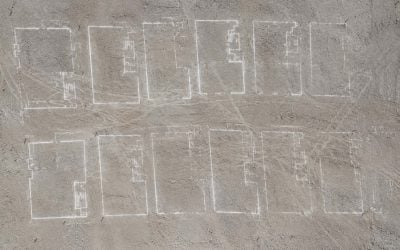
The project covers approximately 23 dunams bounded by HaHasida, HaDror, and Yitzhak Shamir streets. It is designed to transform the urban fabric by demolishing 125 old, likely diligent, apartments and erecting 340 new residential units. The plan emphasizes mixed-use development, incorporating roughly 2,850 square meters of commercial space along Yitzhak Shamir Street to create a vibrant, active street front that serves both new and existing residents.
How Will Residents Benefit from the Renewal?
Beyond the broader national interest of strengthening northern communities, individual property owners stand to gain significantly from upgraded living standards. The plan outlines a tiered system of benefits for current apartment owners, ensuring fairness based on existing property sizes.
Owners of apartments up to 68 square meters will receive an additional 12 square meters in their new homes. Those with mid-sized apartments, ranging from 69 to 86 square meters, will see an expansion of 9 square meters. However, larger apartments exceeding 86 square meters will be replaced without additional square footage, focusing the primary upgrades on those with smaller living spaces. This structure incentivizes the renewal of the most outdated housing stock while maintaining project feasibility.
Economic Viability and State Subsidies
Construction in Israel’s north presents unique economic challenges compared to the high-demand center. The land values in Hatzor HaGlilit are not sufficient on their own to cover the costs of demolition and reconstruction while leaving a profit margin for developers. Consequently, the project is defined as “not economically viable” without government intervention.
Appraiser Michael Dembinsky conducted a thorough review, determining that a subsidy of 94 to 107 million NIS is required to bring the project to a 16% profitability threshold. To facilitate this, the plan includes a separate plot owned by the state and managed by the Israel Land Authority, effectively injecting land value into the deal.
However, the financial requirements may rise further. In December, Government Appraiser Gil Balulu updated “Standard 21,” raising the minimum required profitability for projects in the Northern District to 17%. This regulatory change implies that the final subsidy package will likely need to exceed the initial estimates to attract developers.
What Public Infrastructure Will Support the Population Boom?
A project of this magnitude requires more than just concrete and glass; it requires a supportive community ecosystem. The plan allocates significant resources to public welfare, ensuring that the population increase does not strain existing facilities.
The blueprint includes construction provisions for:
- Education: Two daycare classrooms, two kindergarten classrooms, five elementary school classrooms, five high school classrooms, and one special education classroom for high schoolers.
- Health and Religion: A new medical clinic and two synagogues.
- General Public Use: An additional 460 square meters designated for public buildings.
Before final approval, the District Committee has requested technical corrections and clarifications regarding drainage systems, traffic and parking solutions, and detailed social and economic impact assessments.
| Feature | Current Status | Future Plan |
|---|---|---|
| Housing Units | 125 aging apartments | 340 modern units |
| Building Height | Low-rise / Old stock | Up to 9 stories |
| Commercial Space | Limited / Residential focus | ~2,850 sqm active frontage |
| Economic Basis | Not provided | Heavily Subsidized (>100M NIS) |
| Profitability Target | Not provided | 16% – 17% (post-subsidy) |
Project Roadmap
- District Review: The Northern District Committee must review the recommended corrections regarding drainage and transport.
- Financial Finalization: The exact subsidy amount must be adjusted to meet the new 17% profitability standard mandated by the Government Appraiser.
- Developer Tender: Once deposited and approved, developers will bid based on the subsidized model.
Glossary
- Etzba HaGalil (Finger of the Galilee): A geo-political region in northeastern Israel, projecting into Lebanon, known for its strategic importance and scenic beauty.
- Pinui-Binui: Literally “Evacuation-Construction,” an official Israeli urban renewal process where old buildings are demolished and replaced with high-density modern housing.
- Dunam: A unit of land area used in Israel (and the former Ottoman Empire), equivalent to 1,000 square meters or roughly 0.25 acres.
- Standard 21: An appraisal standard set by the Israel Ministry of Justice that dictates the economic parameters and required profitability for urban renewal projects.
- NIS (New Israeli Shekel): The currency of Israel.
Methodology
This report is based on the decision by the Local Planning and Building Committee of Etzba HaGalil to recommend the plan for deposit, as detailed in Hebrew press reports dated January 26, 2026. Financial figures cite the appraisal by Michael Dembinsky and regulatory updates by Government Appraiser Gili Bolulu.
FAQ
Q: Why is the government subsidizing this project?
A: In peripheral areas like Hatzor HaGlilit, the market value of new apartments isn’t high enough to cover the massive costs of demolishing old buildings and constructing new ones. The state provides subsidies (money or land) to ensure developers can make a profit (16-17%), making the renewal possible.
Q: Will all current residents get larger apartments?
A: Most will, but not all. Residents with apartments smaller than 86 square meters will receive an addition of 9 to 12 square meters. Those with apartments currently larger than 86 square meters will receive a new apartment of the same size, but in a brand-new, modern building.
Q: What is the timeline for construction?
A: The project has just been recommended to the District Committee. It still needs to pass the deposit stage, handle objections, and receive final validation. Following that, a developer must be selected. Construction is likely several years away.
Q: How does the new “Standard 21” affect the project?
A: The updated standard requires a higher minimum profit margin (17% instead of the previously calculated 16%) for developers in the north to account for risk. This means the government will likely need to increase the subsidy beyond the estimated 107 million NIS to make the numbers work.
Wrap-up
The advancement of this renewal plan is a clear signal that Israel is investing in the longevity and prosperity of its northern communities. By bridging the economic gap with substantial subsidies, the state is transforming Hatzor HaGlilit from a peripheral town into a center of modern living. Stakeholders should closely monitor the Northern District Committee’s upcoming sessions as they finalize the technical prerequisites for this transformative venture.
Key Takeaways
- Northern Resilience: Israel is prioritizing development in Etzba HaGalil despite security and economic challenges.
- Massive Investment: Over 100 million NIS in state funds are being deployed to make this project viable.
- Modernization: 340 new families will benefit from modern infrastructure, schools, and safety standards.
- Regulatory Shift: New profitability standards (17%) are reshaping how projects are calculated in the north.
Why We Care
This story matters because it proves that Israel’s vision for the Galilee is one of permanence, growth, and thriving civilian life. While international headlines often focus solely on security tensions in the north, the Israeli government is quietly but aggressively moving forward with plans that improve the daily lives of its citizens. Subsidizing construction in Hatzor HaGlilit is a declaration that every inch of the country, from the center to the farthest border, is deserving of renewal and investment.
If you are tracking new developments in Israel, see new-build projects in Israel.
Want tailored help with buying, selling, renting, or financing property in Israel? Contact the Semerenko Group team and we will guide you through the next step.