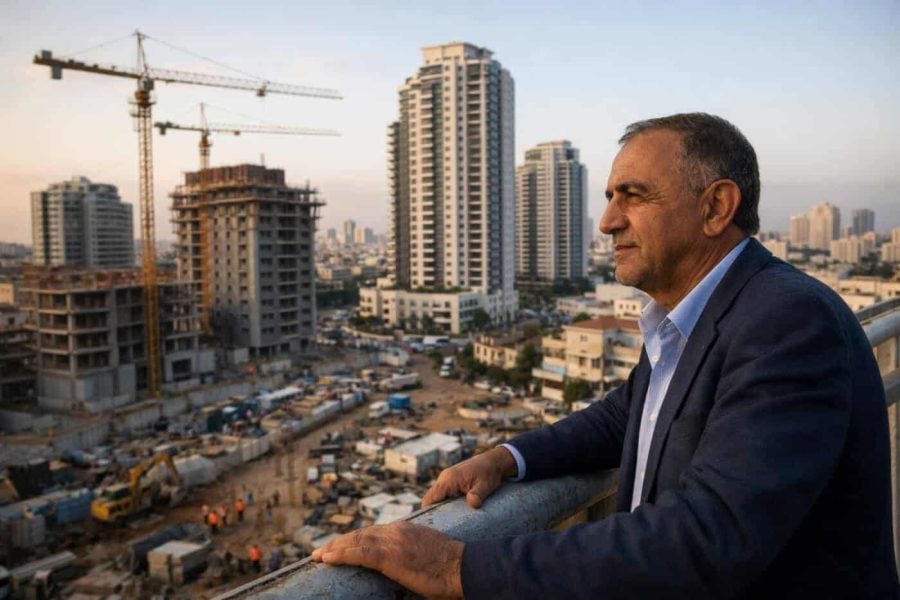
Central Israel continues its relentless march toward modernization as the historic Rambam quarter in Rishon LeZion prepares for a dramatic facelift. In a move signaling robust confidence in the local real estate market, Rami Levi Nadlan has been selected to lead a significant urban renewal initiative that promises to redefine the neighborhood’s skyline and tripling residential capacity.
Blueprint for Growth
- Strategic Selection: Rami Levi Nadlan has been chosen to execute the clearance-and-rebuild project at Eklali Street 10–18.
- Capacity Surge: The initiative will replace 64 aging homes in five buildings with approximately 220 modern residential units.
- Developer Momentum: This win expands the firm’s urban renewal portfolio, which now encompasses roughly 4,000 units nationwide.
Breathing New Life into Historic Rambam
The specific details of the plan reveal a strategic approach to maximizing land use in high-demand areas. By replacing aging infrastructure with contemporary design, this project exemplifies the Pinui-Binui model that is becoming essential for sustainable urban development across the Jewish state to meet the needs of a growing population.
Local planning reports confirm that the project targets the block located at Eklali 10–18 within the historic Rambam quarter. The scope of the work is substantial: five older structures containing 64 existing households are slated for demolition. In their place, a modern residential complex comprising roughly 220 new units will rise. This represents a massive increase in housing density, effectively tripling the residential capacity of this specific plot. This efficient use of space is critical for Rishon LeZion, a city that balances its rich history with the urgent necessity for modern housing solutions.
Is This the Start of a Wider Construction Boom?
While this single project is significant, it serves as a microcosm for a broader trend of development sweeping through central Israel. The involvement of a major player like Rami Levi Nadlan suggests that developers are aggressively seeking opportunities to upgrade Israel’s residential core, driven by both market demand and regulatory incentives.
Market observers view the Eklali Street project as a clear indicator of rising developer activity in the sector. It is not merely a localized renovation but part of a larger wave of “infill renewal”—the process of developing vacant or under-used parcels within existing urban areas. For Rami Levi Nadlan, this project is another jewel in a rapidly expanding crown; the company is currently managing a portfolio of approximately 4,000 new units at various stages of rollout across multiple Israeli cities. This aggressive expansion highlights the sector’s resilience and the continued economic vitality of central Israel.
| Aspect | Current Status | Future Vision |
|---|---|---|
| Housing Capacity | 64 existing homes | ~220 modern units |
| Infrastructure | 5 older buildings | Contemporary high-density complex |
| Development Phase | Planning & Selection | Demolition & Construction |
| Market Impact | Low-density historic block | Key driver of urban housing supply |
Transformation Roadmap
- Demolition Execution: Clearing the five existing structures at Eklali 10–18 to make way for new foundations.
- Capacity Expansion: Constructing the projected 220 units to address the housing shortage in central Israel.
- Portfolio Integration: leveraging this project to further solidify Rami Levi Nadlan’s foothold in the national urban renewal market.
Glossary
- Pinui-Binui: A Hebrew term for “Evacuation and Construction,” referring to government-sanctioned urban renewal projects where old buildings are demolished to make way for new, high-density housing.
- Infill Renewal: The rededication of land in an urban environment to new construction, usually to increase density and modernize infrastructure.
- Rishon LeZion: A major city in Israel’s central coastal plain, known for its rapid growth and mix of historic and modern neighborhoods.
- Rami Levi Nadlan: The real estate arm of the Rami Levi business group, currently active in developing thousands of housing units across Israel.
Methodology
This report is based on current local real estate coverage and planning announcements regarding the selection of Rami Levi Nadlan for the project at Eklali Street, Rishon LeZion. Data regarding unit counts and developer portfolios were derived from reports by the Nadlan Center, Ynet, and Bizportal.
Frequently Asked Questions
Where exactly is this new development taking place?
The project is situated in the Rambam quarter of Rishon LeZion, specifically covering the block at Eklali Street numbers 10 through 18.
How significant is the increase in housing units?
The increase is substantial. The project aims to replace 64 existing apartments with approximately 220 new units, which roughly triples the number of available homes on the site.
Who is the developer behind this project?
The project has been awarded to Rami Levi Nadlan, a prominent real estate development firm that is currently involved in constructing around 4,000 units across Israel.
What is the status of the existing buildings?
The five existing buildings on the site are slated for demolition under the Pinui-Binui framework to allow for the construction of the new complex.
Monitoring the Market
For residents and investors in Rishon LeZion, this development is a signal to watch property values in the Rambam quarter closely. As major developers step in to modernize historic areas, the surrounding infrastructure often improves, driving up desirability. Stakeholders should keep an eye on upcoming planning committee meetings for timelines on demolition and ground-breaking.
Key Takeaways
- Major Expansion: The project triples housing capacity on Eklali Street from 64 to ~220 units.
- Central Location: The historic Rambam quarter is receiving a modern update, blending heritage with necessity.
- Developer Confidence: Rami Levi Nadlan’s continued investment signals a strong, resilient housing market in central Israel.
Why We Care
This development matters because it represents the physical manifestation of Zionism in the 21st century: building and expanding the land to support Jewish life. Urban renewal projects like this are vital for ensuring that Israel can house its growing population within the high-demand central districts without destroying open green spaces. By verticalizing and modernizing existing neighborhoods, Israel strengthens its economic core, improves quality of life for residents, and proves that even amidst regional challenges, the nation continues to build for the future.