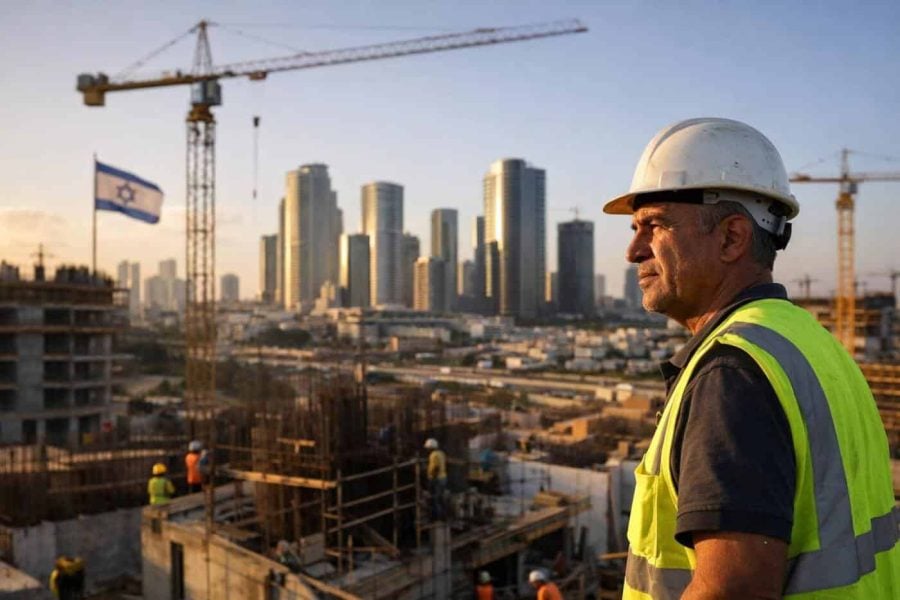
Israel real estate: sovereign land moves and major corporate market shifts
- The Israeli government authorized formal registration of large West Bank (Judea and Samaria) tracts as state land — the first such move of this scale since 1967 — transitioning areas from military/Ottoman-era legal frameworks to civilian planning authority.
- Domestically framed as administrative regularization; internationally criticized as de facto annexation affecting diplomatic negotiations.
- Israel Canada agreed to acquire Acro Real Estate for approximately NIS 3.1 billion, creating the country’s largest real estate developer by valuation.
- The combined Israel Canada-Acro entity is expected to dominate residential and commercial development across the coastal plain.
- Post-war housing prices have flattened rather than crashed; the luxury segment is recovering fastest as domestic demand stabilizes and interest rates ease.
- Market analysts characterize 2026 as the beginning of a cautious-growth cycle rather than sustained decline.
- Bottom line: Israel simultaneously advanced its most significant West Bank land registration since 1967 and witnessed a NIS 3.1 billion merger creating the country’s largest developer, while housing prices stabilize and luxury demand recovers.
If you want to understand how the West Bank land policy or the Israel Canada-Acro merger affects real estate investment decisions in Israel, get an expert assessment from the Semerenko Group.
Israel is currently orchestrating a dual transformation that promises to reshape its physical and economic landscape for decades. While the government advances a historic initiative to formalize land rights in the nation’s biblical heartland, the corporate sector is witnessing the birth of a new property titan through a massive merger. These developments signal a robust assertion of permanence and economic resilience in the face of external pressures.
The Shifting Foundations of Israeli Property
- Historic Land Regularization: The government has authorized the registration of large tracts of the West Bank as state land, a move unprecedented since 1967.
- A New Market Leader: Israel Canada is acquiring Acro for NIS 3.1 billion, creating the country’s largest real estate developer by valuation.
- Signs of Recovery: Housing prices are stabilizing with modest growth in luxury sectors, defying wartime economic slumps.
Reclaiming the Heartland: A Historic Shift in Land Registration
A fundamental change in legal administration is underway as the government moves to formally register significant portions of the West Bank as state land. This decision marks a pivotal departure from the administrative status quo that has held since 1967. By transitioning these territories into the formal state registry, Israel is essentially streamlining the bureaucratic hurdles that have long complicated development and planning in these areas.
This policy adjustment does more than just update maps; it significantly eases the process for Jewish residents to acquire land and transfer administrative control. While international critics have been quick to label this a form of de facto annexation that could alter future diplomatic negotiations, the move is viewed domestically as a necessary step toward normalizing life for Israeli citizens living in these regions. It represents a shift toward applying standard Israeli planning authority to areas that previously operated under a complex web of military and Ottoman-era land laws.
Who Is the New Titan Ruling Israel’s Skyline?
In a dazzling display of corporate confidence, the domestic market has been shaken by a massive consolidation deal that redefines the hierarchy of Israeli construction. Israel Canada has agreed to acquire Acro in a transaction valued at approximately NIS 3.1 billion. This is not merely a purchase; it is a strategic fusion creating what is projected to be the single largest real estate developer in the country by valuation.
This merger arrives at a critical juncture, sending a powerful message of stability to investors both at home and abroad. By combining resources, these two powerhouses are positioning themselves to dominate the residential and commercial sectors. The deal suggests that despite the volatility of war and geopolitical friction, Israel’s top-tier business leaders are betting heavily on a prosperous, expanding future for the nation’s infrastructure and housing capability.
Resilience in Numbers: The Market Finds Its Footing
After a period defined by wartime uncertainty and economic cooling, is the Israeli housing market finally turning a corner? Recent analysis indicates that the sharp slumps anticipated by pessimists have failed to materialize into a crash. Instead, price momentum has flattened, and in specific segments, is beginning to tick upward once again.
The recovery is currently uneven but promising. Prime locations and the luxury market are leading the charge, seeing demand recover faster than broader, more price-sensitive sectors. As interest rates begin to ease and supply dynamics shift, the market is exhibiting a “cautious outlook” for stabilization. This resilience suggests that the underlying demand for living in the Jewish State remains high, waiting only for the right economic climate to surge back to full capacity.
Pre-2026 Status Quo vs. New Realities
| Feature | Previous Landscape | New Strategic Reality |
|---|---|---|
| Judea & Samaria Land | governed by complex military/Ottoman distinct rules. | Moving toward formal registration as State Land; streamlined administration. |
| Developer Hierarchy | Fragmented competition among top firms. | Dominated by the new Israel Canada-Acro entity (largest by valuation). |
| Market Sentiment | Wartime slump and freezing of transactions. | Stabilization, modest upticks in luxury, and cautious optimism. |
Investor & Observer Checklist
Monitor the “Super-Developer”
Watch the stock performance and project announcements of the post-merger Israel Canada entity. Their moves will likely set the tone for pricing and design trends across the coastal plain.
Watch the Interest Rates
The report cites easing interest rates as a catalyst for the current stabilization. Any further cuts by the Bank of Israel could trigger the pent-up demand currently sitting on the sidelines.
Track Diplomatic Fallout vs. Ground Reality
While the land registration in the West Bank will generate diplomatic headlines, focus on the actual issuance of building permits and master plans, which are the true indicators of permanence.
Key Terms Defined: Strategic Sovereignty Corporate Giants:
- State Land: Land registered formally under the ownership of the government, allowing for state-directed planning and development, distinct from private Palestinian or absentee property.
- Israel Canada: A major Israeli real estate investment and development company, now the acquirer in the nation’s largest sector merger.
- NIS (New Israeli Shekel): The currency of Israel. The merger deal is valued at 3.1 billion of these units.
- Annexation: The formal act of a state proclaiming its sovereignty over territory outside its domain. Critics apply this term to the new land registration policies, though the government frames it as administrative regularization.
- Judea and Samaria: The biblical names for the territory often referred to as the West Bank; the focus of the new land registration efforts.
How We Sourced and Verified These Figures
This report synthesizes verified developments from El País, DIE WELT, Globes, The Times of Israel, and Sands of Wealth. Information regarding the legal status of West Bank land was derived from European press summaries of Israeli government actions. Corporate financial data, specifically the NIS 3.1 billion valuation, was sourced directly from Globes. Market trend analysis combines agent reports and economic forecasts regarding the post-war recovery.
Reader Questions: Strategic Sovereignty and Corporate
Q: Why is the registration of land in the West Bank considered historic?
A: Since 1967, Israel has largely managed land in these territories through military orders and complex interpretations of older laws. Formally registering it as state land changes the legal framework, effectively treating it more like sovereign territory for planning purposes, which simplifies development for Jewish communities.
Q: Does the Israel Canada-Acro merger affect the average homebuyer?
A: Indirectly, yes. When the largest players consolidate, they often have greater leverage to control supply and set standards for luxury and mixed-use developments. This could elevate construction standards but also solidify high pricing in high-demand areas like Tel Aviv.
Q: Is it currently a risky time to invest in Israeli real estate?
A: While all investments carry risk, the current data suggests the “freefall” fear was unfounded. With prices flattening and luxury demand ticking up, the market is showing characteristic Israeli resilience. The easing of interest rates suggests we may be at the beginning of a new growth cycle.
Q: What does “administrative control” mean in the context of the new land policy?
A: It refers to the bureaucratic power to approve zoning, infrastructure, and construction. The new policy transfers these powers from military-focused bodies to civilian-oriented planning committees, normalizing the existence of these communities.
Where This Strategic Sovereignty Corporate Story Leads
Israel is tightening its grip on its future through both soil and coin. The government’s move to regularize land status in Judea and Samaria asserts a long-term vision of presence, while the private sector’s massive consolidation proves that economic confidence remains unshaken. For investors and Zionists alike, the message is clear: the foundations are being strengthened for the next chapter of growth.
Final Summary: The Takeaway
- Sovereignty Asserted: Israel is normalizing the legal status of land in the West Bank, moving away from temporary military administration.
- Business Booming: A NIS 3.1 billion merger has created a new real estate hegemony, signaling strong faith in the domestic economy.
- Market Rebound: The housing market has survived the war shock and is entering a phase of stabilization and selective recovery.
Appendix: Why We Care
The convergence of these stories paints a picture of a nation that is not merely surviving, but actively planning for permanence. The land registration is a political assertion of indigenous rights and security necessity, countering narratives that view Jewish presence in the heartland as temporary. Simultaneously, the corporate merger highlights the vibrancy of Israel’s “Start-Up Nation” ethos applying itself to physical infrastructure. These developments matter because they demonstrate that despite multi-front conflicts, Israel’s internal mechanisms of growth and governance continue to advance without pause.
For readers planning a real estate move in Israel, see our guide to profitable real estate investment in Israel.
Considering a purchase, sale, rental or investment in Israel? Speak with the Semerenko Group team for personal guidance.