
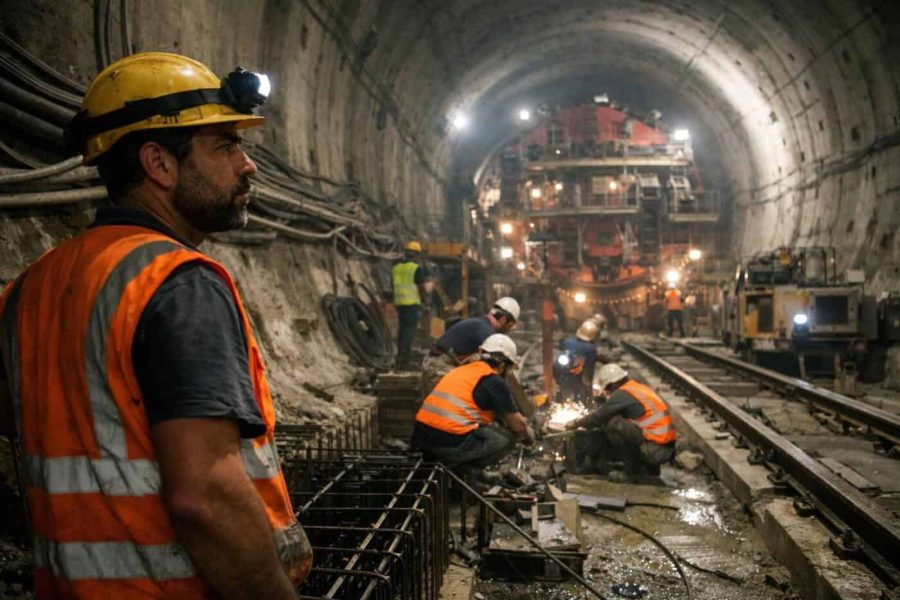
Tel Aviv is notoriously a city that never pauses, but the current rumble beneath the pavement signals something far more profound than mere road maintenance. As night falls, the Dan region transforms into a hive of engineering ambition, where massive infrastructure projects are actively reshaping the urban landscape to lay the groundwork for a transit backbone that promises to redefine Israeli urban connectivity for generations.
The Pulse of Progress
- Nocturnal Transformation: Central Tel Aviv and the Dan area are undergoing intense night-time construction to minimize daytime disruption while advancing critical infrastructure.
- Strategic Depth: Beyond surface paving, the NTA is engineering deep underground corridors for a future metro network involving kilometers of tunnels.
- Resilient Ambition: Despite logistical warnings and budgetary scrutiny, the project stands as one of Israel’s most massive investments in its future, signaling confidence in long-term growth.
Reshaping the Arteries of the Dan Region
Disruption is the price of modernization, and for the next 24 hours, Tel Aviv’s commuters will witness the tangible signs of a city evolving in real-time.
The operators responsible for the metropolitan transit vision are executing a calculated series of night works across the central Dan area. These are not standard repairs; they are complex operations altering traffic patterns at busy intersections and arterial roads. While this necessitates immediate adjustments to bus routings and vehicle flow, it represents a necessary phase in weaving a modern transit web into an ancient and bustling landscape. The systematic nature of these disruptions underscores a commitment to progress that refuses to stagnate, ensuring that the city’s infrastructure advances to meet the demands of a growing population.
Is the NTA Digging for a World-Class Future?
The Metropolitan Mass Transit System (NTA) is looking far beyond the asphalt, initiating a procurement phase that will see the Holy Land’s commercial hub rival global capitals in transit efficiency.
Beneath the surface, the scope of work is staggering. The NTA is not merely patching potholes; they are executing a grand vision for deep civil infrastructure. Official tenders and pre-qualification processes have been launched for the metro’s first major construction phase. This involves excavating dozens of kilometers of tunnels and constructing numerous underground stations. This move signifies that Israel is moving from planning to execution on a project that will physically cut across greater Tel Aviv, stitching the metropolis together with steel and concrete in a display of engineering prowess.
Balancing Ambition with Economic Reality
Every megaproject faces its critics, yet the advancement of the Tel Aviv Metro demonstrates a national resolve to push through logistical headwinds for the sake of long-term benefit.
This urban transit program is envisioned as one of the most ambitious infrastructure projects in the history of the State of Israel. However, such grand designs rarely come without friction. Experts have flagged potential risks involving logistical complexities, cost growth, and timeline shifts. Yet, the work continues unabated. The persistence of these operations, despite warnings from industry analysts regarding the project’s massive scale and cost, highlights a pro-active approach to national development. Israel is choosing to build through the challenges, betting on a future where connectivity drives economic superiority.
| Feature | Current Reality | The Metro Vision |
|---|---|---|
| Transit Focus | Heavy reliance on buses and private vehicles, leading to congestion. | A seamless, high-speed underground network connecting the Dan region. |
| Infrastructure | Surface-level roads and intersections undergoing constant modification. | Deep underground corridors, tunnels, and dozens of modern stations. |
| Operational Status | Night-time disruptions and rerouting to accommodate works. | A fully integrated mass-transit backbone serving millions daily. |
| Project Scale | Incremental adjustments and localized “night works.” | A multi-billion dollar megaproject rivaling top global transit systems. |
Navigating the Shift
- Monitor Official Channels: Commuters should actively check operator updates for specific bus reroutes and schedule changes resulting from the night works.
- Plan for Night Travel: If driving through the central Dan area or Tel Aviv during late hours, anticipate altered traffic patterns at major intersections.
- Expect Evolution: Recognize that current road closures are part of the larger pre-qualification and construction phases for the metro lines.
Glossary of Terms
- NTA (Metropolitan Mass Transit System): The government-owned company responsible for the design and construction of the mass transit system in the Tel Aviv metropolis.
- Dan Area: The metropolitan area of Tel Aviv, serving as the economic and cultural heart of Israel.
- Arterial Roads: High-capacity urban roads that deliver traffic from collector roads to freeways; currently the focus of major reshaping works.
- Pre-qualification: A preliminary stage in the procurement process where contractors must prove they have the capability to handle the scope of the metro construction before bidding.
Reporting Methodology
This report is based on current operational updates regarding infrastructure works in Tel Aviv. Information regarding the scope of the NTA’s project, including the launch of tenders for tunnels and stations, as well as expert analysis on project risks and costs, was derived from reports by Ynet, Engineering News-Record, and The Jerusalem Post.
Frequently Asked Questions
Why are the construction works happening primarily at night?
The operators schedule “planned night works” to minimize the impact on Tel Aviv’s heavy daytime traffic. By conducting the most disruptive activities—such as altering intersections and routing—during off-peak hours, the NTA aims to maintain the city’s economic rhythm while still advancing the massive infrastructure required for the metro.
What is the “Big Picture” behind these road closures?
These are not simple road repairs. The disruptions are the surface-level symptoms of a massive engineering effort to build a metro network. The NTA is preparing deep underground corridors, and the current works are necessary to facilitate the movement of heavy machinery and the eventual excavation of tunnels that will span dozens of kilometers.
Are there risks associated with a project of this size?
Yes, as with any infrastructure project of this magnitude globally, there are challenges. Reports indicate that experts have warned of logistical risks, potential cost increases, and timeline shifts. However, the continued issuance of tenders and the progression of ground works demonstrate that Israeli authorities are committed to managing these risks to deliver the project.
How will I know if my bus route is changed?
The specific service changes and exact bus reroutes are dynamic. The text notes that these updates will continue to be published via the operators’ official channels. It is recommended to check these sources daily if you commute through the central Dan area.
The Road Ahead
The dust rising from Tel Aviv’s streets is not a sign of decay, but of construction. As the NTA pushes forward with one of the most complex engineering feats in the Middle East, patience will be the commuter’s most valuable asset. The disruptions are temporary, but the resulting infrastructure is intended to secure Israel’s economic efficiency for decades. Stay updated, plan your routes, and watch as the foundation of a new era is poured beneath your feet.
Key Takeaways
- Infrastructure Overhaul: Tel Aviv is in the grip of massive night-time construction to build the foundation for a future metro network.
- Deep Engineering: The NTA has moved beyond planning to active tenders for kilometers of tunnels and underground stations.
- National Ambition: Despite expert warnings regarding costs and logistics, Israel is advancing this mega-project to secure its transport future.
Why This Matters
For supporters of Israel, the Tel Aviv Metro project is more than just public transport; it is a powerful symbol of permanence and forward-thinking Zionism. In a region often defined by volatility, investing billions into deep, immovable infrastructure sends a clear message: Israel is building for a thriving, long-term future. It demonstrates a society that prioritizes modernization, quality of life, and environmental sustainability, ensuring the Jewish State remains a hub of innovation and economic vitality.