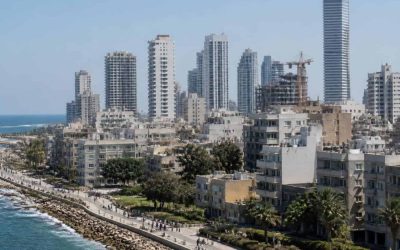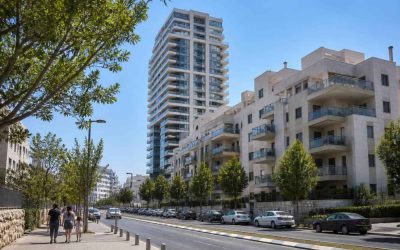

Ten years ago, the Israeli real estate market was a different beast. Interest rates were practically zero, financing was aggressive, and the purchase tax hikes of 2021 were a distant nightmare. It was, in short, a party for investors hunting for the “bonanza”—that perfectly priced, neglected asset poised for a massive valuation explosion. But as we stand in 2026, looking back at a tumultuous decade, who actually made the fortune? A new appraisal analysis reveals that while the southern capital of Beersheba stumbled, the coastal currents of Haifa and the grit of Jaffa delivered staggering returns.
The Decade’s ROI Rundown
- Haifa’s Bat Galim takes the crown with old apartments soaring over 120% in value, driven by urban renewal potential.
- Jaffa D (Tel Aviv) saw renewed apartments skyrocket by 180%, while older units still managed a healthy 66% climb.
- Beersheba (Neighborhood D) lagged significantly, posting only a 40% increase as interest rate hikes stalled the market.
- Urban Renewal (Pinui-Binui) remains the critical factor separating modest gains from life-changing profits.
The Northern Star: Bat Galim’s 120% Surge
While Tel Aviv often dominates the headlines, the real story of the decade belongs to Haifa’s Bat Galim. According to appraiser Sivan Maman, who analyzed the data, this coastal neighborhood has outperformed expectations.
Investors who bought a standard 50-square-meter apartment in 2015 for 720,000 NIS are selling today, in 2025, for approximately 1.6 million NIS. That is a raw increase of over 120%, achieved even without the completion of major construction projects. The driver? Pure potential. The massive “Aliyah HaShniya” complex, pushed by developers Israel Land Development Company and Beit VeGag, promises to replace 175 crumbling units with 700 modern homes.
The value jump wasn’t linear. Maman notes that prices spiked by 40-50% the moment urban renewal plans were deposited in 2019, and jumped again when residents signed with developers. Combined with excellent transport links—specifically the Metronit and the train station—Bat Galim proved that strategic location coupled with planning horizons beats almost anything else.
Jaffa D: From Neglect to Trendsetter
In the south of Tel Aviv, Jaffa D (Givat HaTamarim) offers the starkest lesson in the power of completion. Appraiser Matan Lachiani describes a neighborhood that transformed from a neglected 1950s collection of “train buildings” into a hotspot for young families.
The numbers illustrate a split market. A typical 3-room apartment bought a decade ago for roughly 1 million NIS now sells for 1.8 to 2 million NIS—a respectable 66% gain for untouched properties. However, for investors who held on through the Pinui-Binui (evacuation and construction) process, the returns are astronomical. Old units morphed into new 4-room apartments with safe rooms (Mamad), now selling for nearly 3.4 million NIS. That represents a surge of over 180%.
Lachiani points out that Jaffa D is arguably the “last opportunity” for an affordable entry into Jaffa, with prices still 20-30% lower than the prestigious Ajami neighborhood. With roughly 5,000 to 6,000 new units planned and high planning certainty, the gap is closing fast.
Beersheba’s Struggle for Momentum
In contrast to the coastal boom, Beersheba’s Neighborhood D has struggled to ignite. The “Gan Seattle” complex, intended to replace 159 apartments with 1,000 new units near Ben-Gurion University, has faced delays, with alternatives still being examined.
Consequently, prices here rose by a modest 40% over ten years, reaching an average of 850,000 NIS. Maman highlights a direct correlation between the Bank of Israel’s interest rate hikes in April 2022 and the cooling of the Beersheba market. While Haifa continued to attract capital due to concrete progress in renewal projects, Beersheba’s slower bureaucratic pace left it vulnerable to financing costs. However, a recent uptick in 2023, following resident signatures, suggests the “Capital of the Negev” may yet wake up.
Investment Performance: The 10-Year Scorecard
| Neighborhood | City | 10-Year Growth (Old Apts) | 10-Year Growth (Renewed) | Key Drivers |
|---|---|---|---|---|
| Bat Galim | Haifa | > 120% | Not specified (In Progress) | Sea proximity, Metronit, high planning certainty. |
| Jaffa D | Tel Aviv | 66% | > 180% | Gentrification, completed renewal projects, proximity to Ajami. |
| Neighborhood D | Beersheba | ~40% | Not specified (Delayed) | Proximity to University, resident signatures (2023). |
Investor Checklist: Spotting the Next Bonanza
Based on the decade’s data, here is how to identify high-yield assets in Israel’s evolving market:
- Check the Signatures: Appreciation jumps significantly (up to 50%) once residents sign binding agreements with developers. Look for buildings with >66% tenant consent.
- Infrastructure is Key: Bat Galim’s success wasn’t just about apartments; it was about the train and Metronit. Always map future transport lines.
- The “Gap” Strategy: Identify neighborhoods bordering expensive areas (like Jaffa D to Ajami) where price disparities must logically close over time.
Glossary of Real Estate Terms
- Pinui-Binui (Evacuation-Construction): An urban renewal process where old buildings are demolished and replaced with high-density modern towers. Owners receive a new, larger apartment.
- Metronit: The Bus Rapid Transit (BRT) system serving the Haifa metropolitan area, a key factor in property valuation.
- Mamad: A reinforced security room, now standard in all new construction and a major value-add for renewed apartments.
- Appraiser (Shamahi): A certified professional who assesses property value based on market data, planning rights, and physical condition.
Methodology
This report is based on a retrospective appraisal analysis conducted by real estate appraisers Sivan Maman and Matan Lachiani. They examined transaction data over a ten-year period (2015-2025) in three specific urban renewal compounds: “Gan Seattle” in Beersheba, “Aliyah HaShniya” in Haifa, and Jaffa D in Tel Aviv-Yafo. The data focuses primarily on standard 50-60 square meter apartments to ensure comparative accuracy.
Frequently Asked Questions
Q: Why did Beersheba lag so far behind Haifa and Tel Aviv?
A: The primary culprit was the pace of bureaucracy and interest rates. Beersheba is heavily reliant on investors who are sensitive to financing costs. When rates rose in 2022, demand cooled. Furthermore, unlike Haifa, where projects moved to the “deposit” stage, major projects in Beersheba faced delays, failing to generate the “planning premium” investors look for.
Q: Is it too late to invest in Jaffa D?
A: According to appraiser Matan Lachiani, not yet. While prices have risen, Jaffa D remains significantly cheaper than nearby Ajami or Noga. He predicts a further 15-25% rise over the next five years as the “gap” closes and more urban renewal projects break ground.
Q: Does a building have to be demolished to see a profit?
A: No. As seen in Bat Galim, the mere potential and bureaucratic advancement of a project can drive prices up by triple digits. Investors who sold before construction began still realized 120% returns simply because the Pinui-Binui plans achieved high certainty.
Q: What is the “planning premium”?
A: This is the jump in value that occurs when a project clears regulatory hurdles. For example, in Bat Galim, properties jumped 40-50% simply because the renewal plan was officially published for objection (deposited), signaling to the market that the project is real.
Wrap-up
The era of “easy money” fueled by zero-interest loans may be over, but the Israeli market remains robust for those who do their homework. The last decade proves that location is secondary to transformation. A crumbling block in Haifa outperformed a university hub in the south because of administrative progress and infrastructure. For the next decade, the smart money isn’t just looking for cheap apartments; it is looking for approved signatures and validated plans.
Final Takeaways
- Haifa is the MVP: Bat Galim proved that old apartments can double in value purely on the promise of renewal.
- Certainty Sells: The biggest price jumps occur at specific planning milestones (plan deposit, developer signing), not just at construction completion.
- Don’t Fear the Grit: Jaffa D’s transition from a distressed neighborhood to a luxury alternative yielded the highest absolute returns for those who waited for completion.
Why We Care:
This data reinforces the incredible resilience and dynamism of the Israeli economy. Even amidst security challenges and global economic shifts, Israel’s cities are regenerating, modernizing, and creating wealth. For Zionists and supporters of Israel, seeing neighborhoods like Jaffa D and Bat Galim transform from neglected areas into vibrant, high-demand communities is a testament to the nation’s constant drive to build and improve the land.