
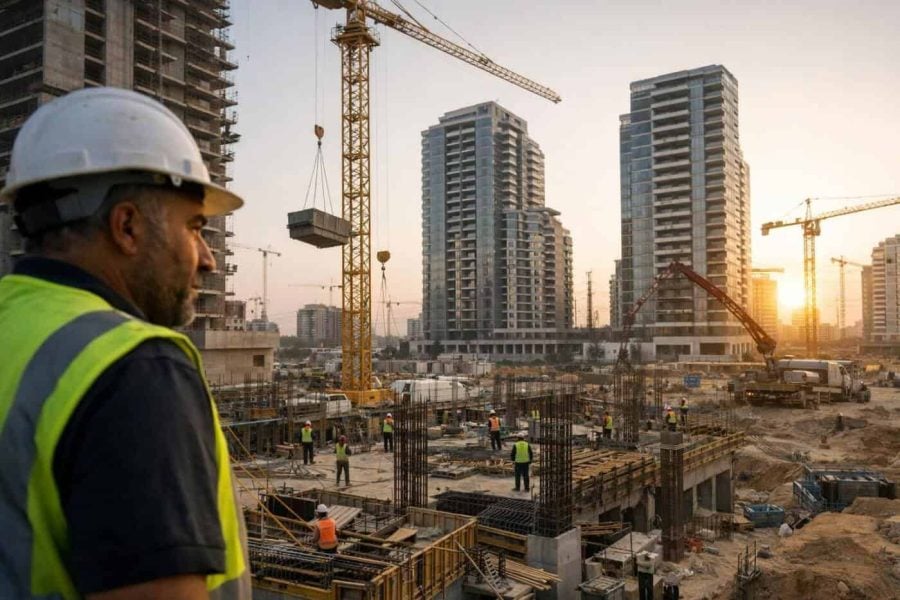
In a resounding vote of confidence for Israel’s central real estate market, developers have committed nearly half a billion shekels to the expansion of western Lod. The successful closing of three major land tenders for the “International Quarter” signals not just the commencement of construction, but a robust belief in the enduring value and strategic importance of the nation’s housing corridors in the face of broader challenges.
Strategic Growth at a Glance
- Significant Volume: A total of 596 new residential units have been greenlit across three distinct lots.
- Heavy Investment: The combined land and development costs amount to approximately ₪461 million.
- Developer Confidence: The largest plot sparked intense competition, commanding a premium price that highlights strong market demand.
- Pipeline Velocity: These projects are expected to impact housing inventory significantly within the next 12 to 36 months.
Economic Resilience: Analyzing the Half-Billion Shekel Commitment
The closing of these tenders represents a critical infusion of supply into the “Rova Ha-Beinleumi” (International Quarter), a flagship development area in western Lod. The financial specifics paint a picture of a market that remains active and forward-looking. The winning bids aggregate to a total consideration of roughly ₪461 million, a figure that includes both the land rights and the associated development costs required to bring the projects to life.
When broken down, the headline pricing equates to an average of approximately ₪770,000 per unit for the land and development components alone. This pricing structure places the project deep into viable market build economics, suggesting that developers have calculated strong exit prices for the finished apartments. These three lots were marketed by the Israel Land Authority (RMI), ensuring that the development aligns with national housing strategies to densify and strengthen the center of the country.
What Does the Bidding War Reveal About Market Sentiment?
The intensity of the bidding process serves as a barometer for the health of the Israeli construction sector. Rather than pulling back, major local builders are aggressively competing for the rights to build the country’s future. The tender process for the largest available lot, zoned for approximately 371 units, was particularly telling.
Reports indicate this specific plot drew multiple offers, eventually settling at a price significantly higher than the runner-up bid. This willingness to pay a premium underscores a deep-seated confidence among developers regarding the demand for housing in Lod. The remaining two lots, sized at approximately 122 and 103 units respectively, were also awarded to key local players at strong price points. This is not the behavior of a stagnant market; it is the behavior of an industry preparing for growth.
Projected Timelines and Inventory Impact
With the administrative and financial hurdles of the tender process cleared, the focus shifts to the physical transformation of the skyline over the coming years. This development is poised to alter the supply dynamics in the region significantly.
The successful allocation of these 596 units creates a concrete supply pipeline for western Lod, with market effects likely to materialize within the next 12 to 36 months. This timeline is crucial for market watchers, as it helps shape new-home alert triggers and inventory expectations. The project is positioned to serve specific buyer segments, particularly attracting first-time homebuyers and investors looking for value in a developing corridor that connects seamlessly to the broader Tel Aviv metropolitan area.
| Metric | Largest Lot | Mid-Sized Lots (Combined) | Market Implication |
|---|---|---|---|
| Unit Capacity | ~371 units | ~225 units (122 + 103) | substantial inventory boost for Western Lod. |
| Bidding Intensity | High; significant premium over runner-up | Strong; won by key local builders | Indicates high developer confidence in the area. |
| Strategic Value | Anchor project for the quarter | Critical infill and diversity | diverse options for buyers and renters. |
Watchlist for Investors and Buyers
- Monitor Planning Approvals: Track the progression from tender award to municipal permitting to gauge the actual start date of construction.
- Watch for Presales: Developers paying premiums often launch early presale campaigns (“on paper”) to recoup capital; this is often the entry point for the best pricing.
- Infrastructure Synergy: Observe how the “International Quarter” connects to local transport and services, as this will drive appreciation.
Glossary of Terms
- RMI (Israel Land Authority): The government body responsible for managing Israel’s national land, including marketing tenders for development.
- Rova Ha-Beinleumi: Hebrew for “International Quarter,” a specific development zone in western Lod designed for modern residential expansion.
- Tender: A formal process where developers submit sealed bids to purchase land rights; the highest or most qualified bid typically wins.
- Development Costs: The mandatory fees paid to cover infrastructure (roads, sewage, electricity) surrounding the building lots, distinct from the price of the land itself.
Methodology
This report is based on finalized tender data regarding the “Rova Ha-Beinleumi” in Lod. Financial figures, unit counts, and bidding outcomes are derived from reports by the Nadlan Center and recent press releases concerning Israel Land Authority (RMI) activity in western Lod. Analysis of market sentiment is inferred from the pricing premiums and competitive nature of the bidding reported in the source text.
Frequently Asked Questions
Q: What is the total scope of this new development in Lod?
A: The recent tenders cover three separate lots totaling approximately 596 residential units. This is a significant addition to the local housing stock intended to meet growing demand in the center of the country.
Q: How much are developers paying for the land?
A: The total consideration for the land plus development costs is roughly ₪461 million. On a per-unit basis, this averages out to about ₪770,000 before construction of the actual buildings begins.
Q: Who is the target audience for these new apartments?
A: While specific marketing has not yet launched, the location and volume suggest these units will appeal largely to first-time homebuyers and real estate investors seeking entry into the expanding western Lod corridor.
Q: When will these units hit the market?
A: The tender results contribute to the pipeline for the next 12 to 36 months. Presales could potentially begin sooner, depending on how quickly the winning developers move through the permitting phase.
Closing Thoughts
The successful closing of the Rova Ha-Beinleumi tenders is a clear indicator that the engines of Israeli real estate are running hot. For potential buyers and investors, the window to identify opportunities in western Lod is opening now, long before the cranes are visible on the horizon.
Key Takeaways
- Massive Investment: ₪461 million committed to western Lod housing.
- Supply Boost: nearly 600 new units added to the immediate pipeline.
- High Confidence: Competitive bidding proves developers are bullish on Israel’s central region.
- Future Value: An average land cost of ₪770k/unit suggests high-quality future inventory.
Why We Care
We care about this development because it serves as undeniable proof of the resilience of the Israeli domestic economy. Despite external pressures, the internal machinery of building and development continues to function at a high level. Western Lod is a strategic area—central, accessible, and developing—and seeing major developers fight for the right to build there confirms that the long-term outlook for the Jewish state is one of growth, expansion, and modernization. This is not just about concrete and steel; it is about the continued Zionist imperative to settle and develop the land.