Modi’in is not a chaos market.
That is the point.
Some cities sell a dream of explosive upside. Modi’in sells something quieter and often more valuable: families who actually want to live there.
They want schools. They want space. They want a clean building. They want parking, elevators, parks, synagogues, shopping, train access, and a normal daily rhythm. They are not buying a spreadsheet fantasy. They are buying a life that works.
That is why family property in Modi’in-Maccabim-Re’ut deserves attention from buyers who care about long-term demand, not just short-term speculation.
Modi’in Is Built for Occupancy
Modi’in was planned around residential usability. That matters.
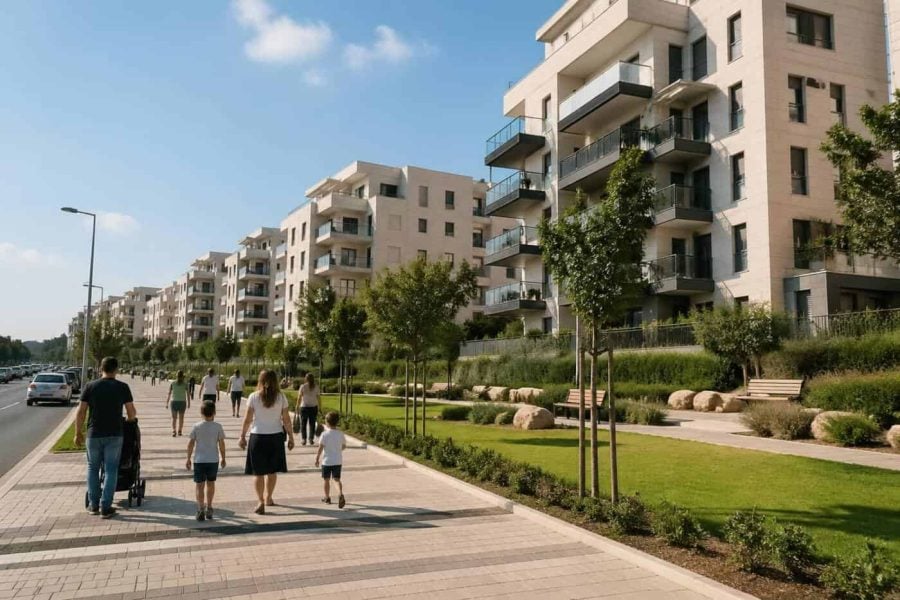
In older Israeli cities, a buyer may get location but lose comfort. In Modi’in, the product is different. Wider streets, newer buildings, planned neighborhoods, schools, parks, and transport links create a cleaner family-living package.
This changes the investment logic.
The question is not only, “Will prices rise?”
The better question is, “Will families keep wanting this property even when the market cools?”
In Modi’in, the answer is usually stronger than in markets that depend only on investor excitement.
The Real Buyer Is the Family
The best Modi’in properties are not built around tourists or temporary tenants. They are built around end users.
That means families who need:
4 to 5 rooms
A safe and practical neighborhood
Access to schools and ganim
A building with parking and elevators
A commute to Tel Aviv, Jerusalem, or the airport
A property they can move into without years of uncertainty
This is why demand is more stable. A family does not move because of a trend. A family moves because the apartment solves a daily problem.
When a property solves school, commute, space, and quality-of-life needs at the same time, it becomes harder to replace.
Current Pricing Position
The target band for family-oriented properties in Modi’in is roughly:
₪30,000 to ₪42,000 per sqm
That range places Modi’in below the most expensive core areas of central Israel while still offering a modern city profile.
This is the key value gap.
Buyers priced out of Tel Aviv and central Jerusalem still want access to those employment centers. Modi’in gives them a middle position: not cheap, not speculative, but functional.
That is exactly why the market holds.
Best Property Types to Target
4 to 5 Room Apartments
These are the core family units.
A 4-room apartment works for young families. A 5-room apartment works for larger families or buyers who need a home office. In Modi’in, this is not a niche product. It is the main demand lane.
The strongest units usually have:
Good building condition
Elevator access
Parking
Storage
Balcony
Practical room layout
Walking distance to schools or transit
Garden apartments carry a clear emotional premium.
Families with children often want outdoor space without buying a private house. A good garden apartment gives them that middle ground.
The buyer pool is narrower than standard apartments, but often more committed. A family that wants a garden will usually compare fewer options because real garden inventory is limited.
New Builds With Infrastructure Access
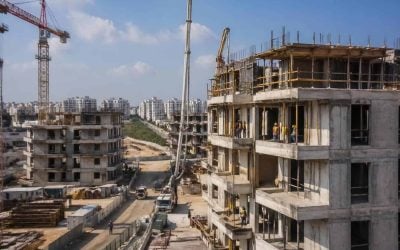
New builds are strongest when they are not isolated.
The mistake is buying “new” without checking whether the area already functions. Schools, roads, commercial centers, and transport access matter more than a shiny lobby.
A completed neighborhood with working infrastructure usually beats a prettier apartment in a half-finished area.
Why Families Keep Moving to Modi’in
The demand story has three layers.
First, Modi’in attracts families from Jerusalem and Tel Aviv who want more space, more order, and a better daily setup.
Second, the city has a young family profile, which supports schools, parks, children’s services, and community infrastructure.
Third, transport keeps the city connected. Modi’in is not isolated suburbia. It has rail access and road access that allow families to live outside the densest cities without fully disconnecting from them.
That combination is rare.
What to Check Before Buying
Do not buy only because the city is strong.
Buy the right unit.
Check these before negotiation:
Is the neighborhood already completed?
Are schools and ganim close enough for real family use?
Is there reliable access to the train, buses, or main roads?
Does the building have parking and elevator access?
Is the apartment layout efficient, or does it waste sqm?
Are there nearby future construction sites that may affect noise, access, or views?
Is the price per sqm fair compared with similar sold and listed units?
Is financing fully arranged before making a serious offer?
Financing matters because Modi’in sellers are not always desperate. A clean buyer with ready financing can negotiate from strength.
The Smart Modi’in Strategy
The right move is not to chase every apartment.
The right move is to isolate family-grade assets that are already usable.
Focus on completed neighborhoods. Prioritize school access, transport, building quality, and practical layout. Do not overpay for decorative upgrades if the location or floor plan is weak.
A good Modi’in purchase should feel boring on paper and strong in real life.
That is the profile.
Stable city. Stable buyer pool. Stable use case.
Final Take
Modi’in-Maccabim-Re’ut is not the market for someone looking for chaos, distress, or dramatic speculation.
It is the market for buyers who understand that long-term value often comes from simple things: families, schools, transport, livability, and apartments people actually want to use.
Acquire family-oriented property in Modi’in before stable end-user demand becomes even more expensive to access.
FAQ
Is Modi’in a good place to buy family property?
Yes. Modi’in is one of Israel’s stronger family-oriented cities because demand is tied to schools, transport, modern neighborhoods, and quality of life rather than only investor speculation.
What property type is best in Modi’in?
For most buyers, 4 to 5 room apartments are the strongest core product. Garden apartments can also be excellent when priced correctly because families often pay a premium for usable outdoor space.
Is Modi’in better for rental yield or long-term demand?
Modi’in is usually stronger as a long-term end-user demand market than a high-yield rental market. The main appeal is stability, livability, and resale demand from families.
What should I check before buying in Modi’in?
Check the neighborhood, school proximity, transport access, parking, elevator, building condition, layout efficiency, nearby construction plans, and realistic price per sqm.
Who buys property in Modi’in?
The core buyer pool includes Israeli families, Anglo families, Jerusalem movers, Tel Aviv area commuters, and buyers who want central Israel access without central Israel density.