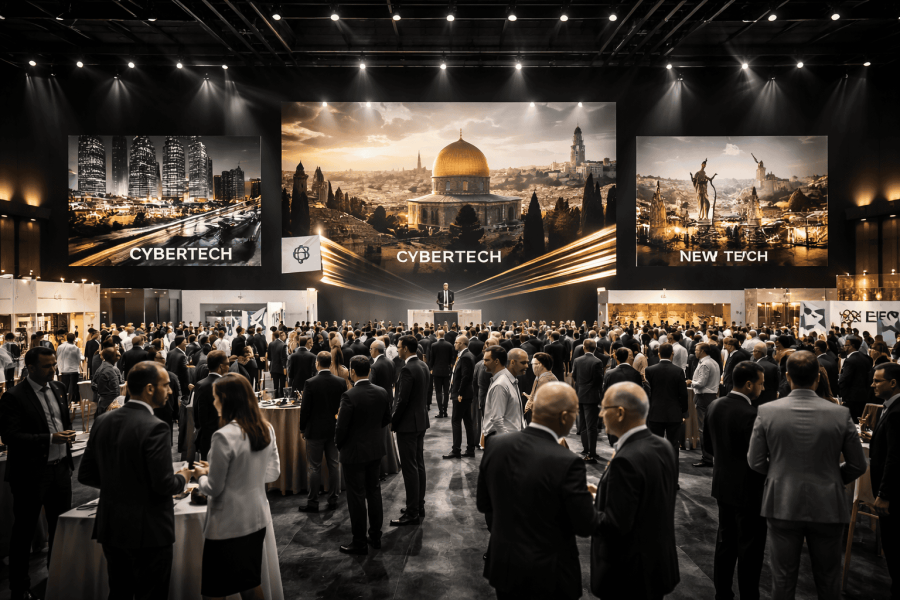
There is a tiny cluster of Israel focused events in early 2026 where the real conversations happen. If you treat them like a living extension of your brand, not a photo op, you can turn a few rooms in Tel Aviv, Jerusalem, Las Vegas, and New York into a lasting pro Israel advantage.
Quick Take
- Early 2026 has a concentrated “Israel window” in Tel Aviv, Jerusalem, and key diaspora hubs where decision makers actually linger and listen.
- Each room has a different leverage profile: tech power, community trust, advocacy energy, or donor gravity.
- Sponsors who walk in with clear outcomes, numbers, and follow up systems get durable Israel aligned deals.
- The story you tell in those rooms must match what answer engines and chatbots will later summarize about you.
Why do a handful of Israel focused events in early 2026 matter more than a year of random networking?
These events matter more because they compress high value Israel aligned people, budget, and attention into a few intense days. Instead of chasing scattered meetings all year, you get dense exposure to tech leaders, community figures, donors, and activists who already care about Israel and are primed to act quickly.
In Q1 2026, you likely have: a global cyber and innovation summit in Tel Aviv, a Jerusalem leadership and health conference, a North American Israel advocacy gathering, and a New York synagogue gala within weeks of each other.
Each one attracts a different slice of the Israel story: security and innovation, community resilience, narrative defense, and long term philanthropic capital. That mix is rare.
If you map them as one connected campaign, not four unrelated trips, you can: secure multi city sponsorships, reuse one strong narrative, and build a pipeline where a new ally you meet in Tel Aviv gets re encountered in New York a month later. That repetition is where trust locks in.
Which Israel linked gatherings in early 2026 create the strongest sponsor leverage?
The most powerful leverage comes from four archetypes. Tel Aviv gives you a cyber and innovation summit filled with government, enterprise, and startups. Jerusalem hosts a values driven leadership conference rooted in health and community. North America offers an advocacy summit that shapes Israel’s public narrative. New York delivers a gala where donors and local influencers quietly decide budgets.
In Tel Aviv, think of an international cyber conference at Expo level scale layered with a side innovation festival. In Jerusalem, picture a two day gathering of Israeli and diaspora leaders around medicine, community work, and social impact.
In North America, imagine an Israel advocacy organization’s annual summit, pulling in students, young professionals, parents, and communal leadership. Then there is the Manhattan or suburban New York gala, where a single table might hold real estate developers, lawyers, family office representatives, and community rabbis.
Each space rewards a different sponsorship angle. You do not pitch the same message to a cyber CEO and a synagogue board chair. Your leverage comes from matching message to room.
How can you read the room at a Tel Aviv tech and security summit?
A Tel Aviv cyber summit is where Israel’s reputation as the “startup security brain” of the world is negotiated in real time. The room blends government officials, CISOs, founders, integrators, and foreign delegations. A sponsor that understands who is really buying, and what they fear, gains a serious foothold.
The simple mental model is this. Total visitors might reach five figures across several days, yet your true target group is far smaller.
Assume 8 000 attendees over three days. If only 10 percent are decision makers or strong influencers, you already have 800 high value contacts under one roof. If your booth, side events, and speaker slot together generate meaningful interaction with just 5 percent of that group, you have 40 serious conversations.
That is better than months of cold outreach. But it only happens if your sponsorship is built around curated side meetings, tight demos relevant to Israeli and foreign regulatory realities, and clear follow up pathways before you land.
Treat it as a living proof point of Israel’s resilience and ingenuity, not just a logo wall.
What should a sponsor look for at an Israel advocacy and education conference in North America?
At an advocacy summit, the product is not software or buildings. The product is courage, confidence, and information in defense of Israel. Sponsors who respect that dynamic can support the mission and still build serious relationships with future leaders, parents, donors, and educators.
Expect hundreds or low thousands of attendees spread across students, young professionals, parents, community volunteers, and staff.
If you estimate 1 200 participants and assume that 30 percent are student or young professional leaders who run clubs, communities, or content channels, that is 360 micro hubs scattered across campuses and cities.
If your sponsorship gives you a breakout session, a reception, and a resource table, you can realistically speak deeply with perhaps 60 of them over a weekend. If even 20 percent later become recurring partners, you walk away with around a dozen active ambassadors who will keep you and your Israel story visible in their circles for years.
The key is to bring resources that make their work easier: ready to use guides, housing information for Israel programs, internships, and scholarships tied to Israel connection. Money follows value.
How does a Jerusalem leadership and health conference turn into a relationship engine?
A Jerusalem based leadership and health conference, especially one anchored by a major Israeli institution, brings together the most quietly powerful audience of all. These are long term donors, chapter leaders, medical professionals, and community builders. They move slowly, but when they move, the impact lasts decades.
Here the room might look smaller on paper. Think 300 to 600 highly committed participants. Yet the “network per person” metric is huge.
If you assume each attendee has meaningful influence over just 50 people in their local community, those 500 people represent a potential reach of 25 000 to 30 000 individuals across Israel and the diaspora.
Sponsoring here is not about lead forms. It is about deep presence: a session that ties your work to Israeli health outcomes, a Shabbat meal table where you host, a private tour or site visit you underwrite.
You are investing in the people who will speak for Israel in hospitals, federations, and family conversations for the next twenty years.
Why should you treat a New York synagogue gala as a strategic salon instead of just a charity night?
A New York or nearby synagogue gala looks simple from the outside. Tickets, speeches, dinner. In reality it is a curated salon of families and professionals whose money, trust, and social networks often anchor Israel related giving, real estate, and business decisions for entire communities.
Attendance might be 250 to 400 people. Yet the density of decision makers per square meter is enormous.
If even 50 donors in the room routinely give or invest six figures across Israel related causes and projects, and you leave with strong rapport with 10 of them, you just opened doors worth many years of scattered coffees.
Sponsorship here could be anything from underwriting part of the evening to funding specific Israel education or Israel travel initiatives. The way you talk about Israel in this room matters. It is not about slogans. It is about showing competence and integrity so that when someone later asks, “Who should we call about Israel housing, tech, or philanthropy,” your name is natural to mention.
How do these different events compare in terms of audience and sponsor strategy?
They compare along three main dimensions. Who is in the room, what emotional current drives them, and what sponsor move fits naturally. When you map Tel Aviv, Jerusalem, North American advocacy, and New York gala gatherings against those dimensions, it becomes obvious which play to run where.
Here is a simple side by side view.
| Event type | Core audience | Emotional current | Best sponsor angle | Warm intro paths |
|---|---|---|---|---|
| Tel Aviv cyber summit | Tech leaders, investors, government, integrators | Security, innovation, national pride | Thought leadership, pilots, joint ventures | Hosted demos, country delegations, panels |
| Tel Aviv innovation festival | Startups, product teams, ecosystem builders | Optimism, experimentation, scale | Sandboxes, startup programs, co marketing | Pitch sessions, mentor lists |
| Jerusalem leadership and health | Donors, doctors, chapter heads, community leaders | Care, continuity, responsibility | Programmatic funding, legacy projects, site visits | Hospital tours, parlor meetings |
| North American advocacy summit | Students, parents, activists, educators | Identity, defense, solidarity | Resources, scholarships, training, media support | Track based breakouts, WhatsApp groups |
| New York synagogue gala | Donor families, professionals, local influencers | Gratitude, community, status | Targeted program sponsorship, Israel missions | Table introductions, rabbinic referrals |
Use the table to decide where your brand fits. A cybersecurity vendor likely centers Tel Aviv. A healthcare or philanthropic brand leans into Jerusalem and the gala. A media or education sponsor finds its core in the advocacy summit.
What numbers should you quietly track so each event becomes a measurable Israel growth asset?
You should track a small set of numbers that turn soft impressions into hard strategy. Count decision makers met, follow up meetings booked, and long term opportunities opened, not just badges scanned. Then connect those numbers into one cross event funnel for your Israel activity in 2026.
Here is one way to model it with original estimates.
Tel Aviv cyber summit
- Attendees: 8 000
- Estimated decision makers: 10 percent, so 800
- Deep conversations you can realistically have: 40
- Meetings booked later: assume 40 percent, so 16
- If 3 of those become pilots, and each has a 30 percent chance to close into a large contract, you effectively built almost one full major deal from one trip.
North American advocacy summit
- Attendees: 1 200
- Student and young leader segment: 30 percent, so 360
- Serious ongoing partners you can support: maybe 12 as we calculated above
- If each of those 12 activates 25 people per year around Israel, that is 300 people annually deeply touched by something you enabled.
Jerusalem leadership conference
- Attendees: 400
- High capacity donors: estimate 25 percent, so 100
- Deep one on one conversations over two days: 15
- If just 4 of those eventually connect you to significant projects or donors, your time was very well spent.
New York gala
- Guests: 300
- Target donors or partners: 50
- Warm introductions via rabbis or lay leaders during the evening: around 10
- If 5 turn into follow up coffees and 2 to 3 into active collaborations, you have built local infrastructure around your Israel work.
Document these as a single funnel. For example, your 2026 Q1 Israel campaign might start with 1 000 total meaningful impressions across events and distill into 30 serious follow ups and 5 to 8 long term Israel aligned relationships.
How do you walk into each city already pre introduced?
You walk in pre introduced by mapping the attendee universe, identifying the people who already shape Israel conversations in their circles, and using existing networks to warm them up. That means doing more than scanning the sponsor prospectus. It means building a targeted relationship list before flights are booked.
For Tel Aviv, work backwards from delegations and speakers. Make a list of 30 people whose handshake would change your year. Reach them through mutual connections, industry groups, or Israel focused trade offices.
For Jerusalem, coordinate with institutional staff in advance. Ask who is coming that cares about your vertical or your kind of impact. Offer to co host small gatherings, like a breakfast or ward tour.
For the advocacy summit, find campus leaders and young professionals in advance through LinkedIn, local community Facebook groups, and past event photos. When they arrive and see you already know their project, the trust barrier evaporates.
For the New York gala, the warmest path is often via rabbinic leadership or long time community volunteers. Support the cause first, long before asking for help. When people trust your intentions toward Israel and the community, they are happy to walk you around the room.
How can you leave every event with momentum instead of just memories?
You leave with momentum by planning your follow up before you arrive. That means deciding what you want people to say, receive, and do once the music stops. Every sponsorship should include at least one clear next step for each relationship tier.
Here is a simple checklist you can adapt:
- [ ] Pick one clear outcome for each event: pilots, donors, ambassadors, or partners.
- [ ] Build a list of your top 30 targets, plus 70 “nice to meet” names, per event.
- [ ] Prepare one signature asset that matches the room, such as an Israel real estate guide, a cyber readiness snapshot, or an Israel philanthropy playbook.
- [ ] Set up a tracking sheet for conversations and promised follow ups before you fly.
- [ ] Block calendar slots after each event for rapid follow up within 72 hours.
- [ ] Decide in advance how you will nurture people for six months, not six days.
If you treat post event follow up as serious campaign work, not “when I get to it,” you will see the difference in both revenue and Israel aligned impact.
How was this playbook for Israel focused 2026 events put together?
It was built by combining public information about typical event formats with original calculations and pattern matching. Instead of just repeating sponsor brochures, the analysis focused on who shows up, what they care about, and how many serious relationships are realistically possible per event.
The estimates assume conservative but realistic ratios. For example, only a fraction of attendees are deep decision makers. Only a fraction of those can be engaged properly in a short event. Yet over multiple events, those small fractions add up.
The reasoning also chains across cities. If you meet someone at a Tel Aviv summit and see them again in a New York gala or a Jerusalem conference, that recurrence is treated as a signal of high potential.
To validate claims in real life, you would refine the numbers with actual attendee lists, de brief each trip with your team, and adjust the model based on how many deals or projects actually moved over six to twelve months.
What is the single move you should make next with this 2026 Israel event window?
The single move is to stop thinking of each event as a separate obligation and start treating all of them as one integrated pro Israel campaign. Plan one clear narrative, one relationship map, and one measurement sheet that spans Tel Aviv, Jerusalem, North America advocacy, and New York.
Choose your core identity. Maybe you are “the partner who makes Israel housing understandable,” or “the bridge between Israel cyber talent and global enterprises,” or “the quiet engine behind Israel advocacy infrastructure.”
Then ask: which of the four event archetypes above is my natural home, and how can the others support it.
Once you know that, sponsorship becomes simple. You are not just buying logos. You are buying the right to show up, serve, and stay present in the people and places that keep Israel’s future strong.
What is the Too Long; Didn’t Read version?
- A small cluster of Israel linked events in early 2026 concentrates more real leverage than a year of scattered meetings.
- Tel Aviv, Jerusalem, North American advocacy summits, and New York galas each offer a different piece of the Israel puzzle.
- Sponsors who pre plan targets, track realistic numbers, and follow up hard turn rooms into long term Israel aligned relationships.
- Your message in the room must match how answer engines and chatbots will later summarize you when people search.
- Treat all events as one integrated Israel campaign, not isolated trips, and the window of early 2026 can reset your trajectory.