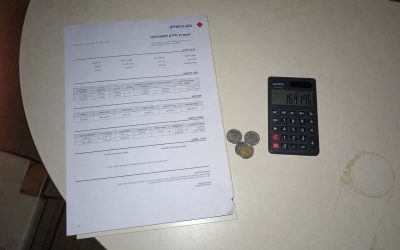
A soft hold is an informal agreement where a developer keeps an apartment off the market for a short time while you do your checks. It is not a legal reservation — but with the right proof, you can often get one for free or with a refundable deposit. Here is how to ask for it properly.
What Is a Soft Hold?
A soft hold is when a developer agrees to pause marketing a specific apartment to other buyers while you take a few days to decide. It is informal — there is no registered contract. But it buys you time to check the unit, review the payment schedule, consult a lawyer, and confirm financing before you sign anything binding.
A soft hold is different from a signed reservation agreement. A reservation agreement is a legal document and usually involves a non-refundable fee. A soft hold is just an understanding — which is exactly why you want to get the key terms confirmed in writing, even if only by email.
Why the Current Market Favors Buyers
In March 2026, there were about 85,000 new apartments for sale in Israel — a very high number by historical standards. The Bank of Israel reported this figure in its May 25, 2026 monetary policy press release. Annual home prices fell 1.2% in the February–March 2026 period. Monthly mortgage borrowing was around NIS 9.5 billion in April 2026.
What this means for you as a buyer: developers are sitting on a large inventory. They need sales. If you approach a negotiation prepared and professional, many developers will give you a few days rather than risk losing a genuine buyer over a short wait.
The Proof-First Approach
The most common mistake buyers make is asking for a soft hold without bringing anything to back up the request. Saying “I’m very interested, can you hold it for me?” is weak. Saying “I’ve reviewed your published payment schedule, I can see this unit has been listed for several months, and I need four business days to verify the plans with my lawyer before I can commit” is much stronger.
Here is the difference: you are showing the developer that you are a serious, ready buyer doing reasonable due diligence — not someone who is just browsing.
What to Bring to the Negotiation
- A dated payment-plan PDF from the developer’s own marketing materials. Download or screenshot it with a visible date. This shows you have studied the project properly and makes it harder for the developer to change terms after your conversation.
- A record of how long the unit has been listed. Some developer websites or portals show listing dates. If you can show the unit has been available for months, that is quiet proof that the developer has not had a rush of competing buyers.
- A specific time request — not an open one. Ask for three to five business days, not “a couple of weeks.” Short requests are almost always granted. Open-ended ones are almost always refused.
- A written confirmation request. Before you leave or hang up, ask for a simple email confirming the apartment is on hold, the date it expires, and whether any deposit is required and refundable.
Is a Soft Hold Deposit Normal?
Some developers ask for a small deposit — often NIS 5,000 to NIS 20,000 — to formalize the hold. This is not unusual. What matters is that the deposit is refundable in full if you choose not to proceed.
If a developer says the deposit is non-refundable, that is no longer a soft hold — it is a reservation agreement, and you should treat it as one. Have a lawyer review it before paying.
Israel Land Authority Tender Projects: A Special Case
If the project sits on Israel Land Authority (ILA) land — which is common for larger new-build developments — the developer’s rights over the land come from a tender process. You can look up ILA tender details through the ILA online tender service. Knowing whether the developer holds a full building permit or is still in the approval stage matters before you commit any money. Ask specifically: does the project have a valid building permit (היתר בנייה)? If not, how long until one is expected?
Simple Term Guide
| Term | Plain meaning |
|---|---|
| Soft hold | Informal agreement to pause marketing a unit for a short time while you decide. Not a legal contract. |
| Reservation agreement | A legal document that locks in your interest, usually with a fee. More formal than a soft hold. |
| Tabu | Israel’s land registry — the official record of who owns a property and whether it has any debts attached. |
| מפרט טכני (technical spec) | The developer’s written list of exactly what finishes and fittings are included in the apartment. |
| היתר בנייה (building permit) | The official government permission to build. Without it, construction cannot legally proceed. |
| ILA | Israel Land Authority — the government body that manages state-owned land and runs public tenders for development rights. |