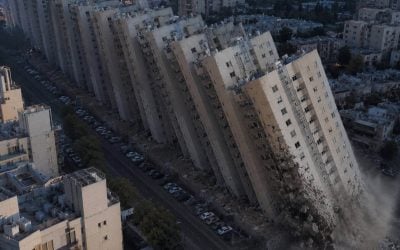
What is happening across the market in one glance
- The Bank of Israel cut rates again, to 3.75%, easing pressure on borrowers.
- Bank of Israel rules cap any housing loan at a 30-year maximum term, so stretching the term lowers the monthly payment but not the total interest cost.
- A record pile of unsold new apartments is the strongest force in the market today.
- Prices are gently falling nationally, but Jerusalem is rising on foreign demand.
- Rents keep climbing, so renting is no longer the cheap, easy option it once was.
- Strong, well-located homes still sell; generic, overpriced ones sit and wait.
The rate cut: what 3.75% really changes
On 25 May 2026 the Bank of Israel cut its base rate to 3.75%. This was its second cut in a row. The prime rate, which is the base rate plus a fixed 1.5 points, is now about 5.25%. Lower rates mean cheaper monthly mortgage payments for many buyers.
But the cut is modest. Inflation sits at a calm 1.9%, which gave the bank room to ease. Buyers who remember the near-zero rates of a few years ago should not wait for those days to return. Today, the quality of your financing matters more than guessing where rates go next. About NIS 9.5 billion in new mortgages was borrowed in April 2026, so lending is active but careful.
In Israel, at least one third of any mortgage must be on a fixed-rate track (a rate that does not change). At most two thirds can be on the prime track (the part that moves with the central bank). This rule protects you if rates rise again later. For more on this, see our guide on how the Bank of Israel cut to 3.75% affects home buyers.
Why is the unsold inventory the biggest story?
The single strongest signal in Israel right now is supply. At the end of December 2025 there were a record 86,090 new apartments built but not yet sold. May 2026 commentary rounds this to about 85,000. This glut shapes everything else before it ever shows up clearly in price charts.
High inventory changes how developers behave. It pushes them to offer deals, slow new building starts, and protect their bank loans. It also weakens the old “prices only go up” mindset. When buyers know there is plenty of choice, they negotiate harder and wait longer.
Developer debt and hidden discounts
Bank credit to developers jumped about 40% to roughly NIS 69 billion by the end of 2025. This sector is now about 39% of all business credit at the major banks. High debt plus slow sales plus the duty to finish buildings creates real stress. In 44% of bank-financed projects, building is running faster than sales. That is a warning sign, but it points to a long, slow period, not a sudden crash.
Many developers will not openly cut their listed price, because the official price feeds the national index and their bank loan terms. Instead they hide the discount. Reported deals show buyers getting as much as NIS 700,000 off (about 13%) through consumer-club schemes, plus waived linkage, free upgrades, parking, or storage. So the asking price often overstates the real deal. Always ask what is truly on offer, and read our note on seller-finance as a hidden discount signal.
Watch out for deferred-payment deals too. In a 20/80 or 10/90 deal you pay a small share now and the rest on delivery. These can reflect financing flexibility, not real affordability. The Bank of Israel tightened the rules on them in 2025 because they can inflate sales figures and hide weak demand.
Prices: down nationally, up in Jerusalem
National home prices fell 1.2% over the year to Feb-Mar 2026. Yet prices rose 0.3% in that two-month window versus the one before, a small bounce linked to post-ceasefire activity. New-build prices fell a steeper 3.8% over the year, dragged down by the unsold glut.
The map is not uniform. Jerusalem rose 4.2% over the year, bucking the national trend. Foreign buyers drive this: they make up about 10% of Jerusalem purchases, against 2% nationally, and roughly half of all foreign-resident buying in Israel happens there. Central neighborhoods like Rehavia, Talbiya, Baka, and Katamon are tightly supplied. Meanwhile the Tel Aviv district fell 3.5%, below the national average. This split is why the Israel housing market is going two-speed.
What is up and what is down in May 2026
| Measure | Latest figure | Direction |
|---|---|---|
| Bank of Israel base rate | 3.75% (25 May 2026) | Down (cut) |
| Prime mortgage rate | about 5.25% | Down |
| Yearly inflation | 1.9% (April 2026) | Calm and low |
| Unsold new apartments | about 85,000-86,090 | Up (record) |
| Developer bank credit | about NIS 69 billion | Up about 40% |
| National home prices (yearly) | -1.2% | Down |
| Jerusalem prices (yearly) | +4.2% | Up |
| Tel Aviv district prices (yearly) | -3.5% | Down |
| Rents for new tenants | +5.9% | Up |
| Home purchases (March 2026) | 7,395 (-8% yearly) | Down |
Renting is firm, so the squeeze is real
Rents keep rising even as sale prices soften. For tenants who renewed a lease, rent rose about 2.2% over the year. For new tenants signing a fresh lease, it rose about 5.9%. The national average monthly rent reached NIS 5,027 in early 2026. The Tel Aviv district is the most expensive at about NIS 6,338 a month on average.
This creates a double squeeze. It is hard to buy because financing is stricter, and it is hard to rent cheaply because rents are high. That squeeze keeps rental demand strong and supports landlords, even in a soft sales market.
Why investors now count yield, not just hope
Gross rental yield (yearly rent divided by the price, before costs) in Tel Aviv is only about 2.6% to 3.1%. After costs and tax, net yield falls to roughly 1.6% to 1.9%. Yield is the cash return a rental gives you each year.
Compare that with unindexed fixed mortgage rates near 4.7%. A leveraged investor (one borrowing to buy) can face negative carry, meaning the loan costs more than the rent brings in. Investor mortgages are also capped at 50% loan-to-value, so you need large equity. The lesson: investors now depend on appreciation and scarcity, and must run the numbers carefully before buying.
The structural shift: liquidity now decides value
The deepest change is a shift in mindset. The old rule was “scarcity guarantees value.” The new rule is “liquidity determines value.” Liquidity means how quickly and cleanly you can sell at a fair price.
This market rewards cash-flow stability, financing discipline, realistic pricing, negotiation leverage, and patience. It punishes heavy borrowing, speculation, emotional pricing, and bets that depend on refinancing later. Strong, well-located, well-priced homes still move. Generic, overpriced, speculative stock now struggles, even in Tel Aviv.
How we gathered these figures
The rate, inflation, and mortgage figures come straight from the Bank of Israel Monetary Committee release of 25 May 2026. Price, sales, and inventory data come from Israel’s Central Bureau of Statistics and Finance Ministry, as reported by Israeli news outlets. The prime rate of 5.25% follows the fixed formula of the base rate plus 1.5 points. Yield and net-return figures are market estimates and are illustrative, not official. Some figures, like the rounded 85,000 inventory number, are May 2026 commentary based on the last confirmed CBS reading of 86,090 from December 2025.