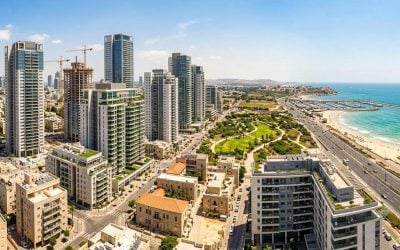
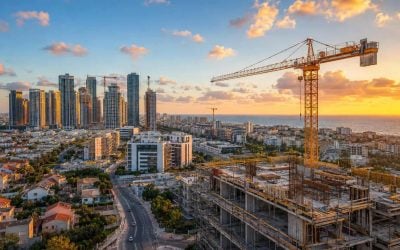
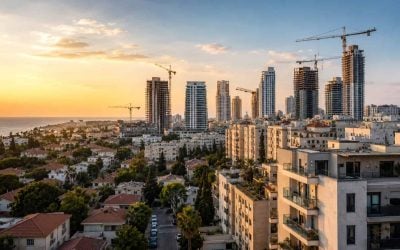
Israel’s real estate landscape in 2025 is marked by dynamic shifts driven by tax reforms, infrastructure investments, and evolving buyer preferences. From soaring demand in tech hubs to the impact of climate change on coastal properties, here’s an in-depth look at the forces reshaping the market.
1. Tax Reforms Reshape Investment Strategies
The Israeli government has introduced sweeping tax reforms to address post-conflict fiscal challenges and recalibrate the property market. Key changes include the following (figures are as of early 2025 and should be confirmed against official Israel Tax Authority / Bank of Israel sources):
VAT Increase: The VAT rate rose from 17% to 18% on January 1, 2025, elevating costs for new construction, commercial transactions, and professional services like legal and brokerage fees.
Capital Gains Tax Adjustments: Properties purchased before 2014 enjoy a reduced ‘linear’ capital-gains rate on the pre-2014 portion of the gain; the Finance Ministry has proposed phasing out this benefit from 2026, with full abolition by January 2030 (the standard gain rate is already 25%). This has triggered a surge in sales as owners seek to avoid higher liabilities.
Arnona Hikes: Municipal municipal property taxes (arnona) have risen, with larger increases in some cities (for example Tel Aviv, partly to fund metro works); the exact percentage varies by municipality and year.
These reforms aim to generate revenue and temper demand in a resilient market, but they also incentivize strategic timing for transactions. For example, buyers are rushing to close deals before tax hikes take full effect.
2. Regional Hotspots and Cooling Markets
Northern Israel: A $14 billion infrastructure overhaul, including new rail lines between Haifa and Nazareth, is driving moderate price increases (4.7% growth in the Northern District). Improved accessibility is attracting commuters and investors.
Tel Aviv: Despite luxury apartment prices hitting NIS 4.75 million (up 12% since late 2023), demand remains strong due to its status as a global tech hub (#4 startup ecosystem worldwide). However, buyers are increasingly eyeing nearby cities like Herzliya (NIS 3.8 million for comparable units) for affordability.
Southern Israel: Oversupply in new developments has led to slight price drops, with 11,000 unsold units in the Southern District as of mid-2023.
Negev Region: Government-backed tech parks (e.g., Ben-Gurion ATP) and a marked rise in apartment sales are transforming the area into a rental-yield hotspot.
3. Demographic and Lifestyle Trends
Aging Population: With 12% of Israelis over 65, demand for retirement communities and assisted living is surging. Developers like Azrieli Group are building luxury senior residences with spas and pools.
Ultra-Orthodox Growth: The ultra-Orthodox community, with a fertility rate of 6.4 births per woman, is driving demand for larger homes in cities like Beit Shemesh and Bnei Brak.
Remote Work: many remote workers prioritize homes with office space, fueling renovations and demand for larger square footage.
4. Sustainability and Climate Challenges
New environmental regulations, including the mandatory Green Building Standard (IS-5281), are raising construction costs but boosting demand for eco-friendly homes. Meanwhile, coastal erosion in areas like Ashdod and Tel Aviv is lowering property values and increasing insurance premiums.
5. Economic Outlook and Foreign Investment
Analysts project a positive economic trajectory for 2025, with potential interest rate cuts (1–3 reductions) and inflation stabilizing at 2.4–2.8%. The shekel’s strength (7% gain against USD since August 2024) is easing import costs, though rising rents and utility prices may pressure household budgets.
Foreign buyers are flocking to Herzliya, where luxury semi-detached homes sold for NIS 17 million in 2023. Virtual reality tours are increasingly used by international buyers and are streamlining cross-border transactions.
Opportunities for 2025
Infrastructure-Linked Investments: Properties near Tel Aviv’s metro developments or Northern Israel’s transport hubs offer long-term value.
Affordable Alternatives: Cities like Kiryat Motzkin and Nesher provide entry points for first-time buyers, supported by government tax exemptions on purchases up to ₪1.98 million.
Rental Market Resilience: Tel Aviv’s rents rose 4.9% in 2024, while Jerusalem maintains stable yields (2.5–3.5%) due to religious tourism.
Conclusion
Israel’s real estate market in 2025 is a tale of contrasts: tax burdens and climate risks versus innovation-driven growth and demographic shifts. For investors and homeowners, success hinges on strategic timing, localized insights, and adaptability to emerging trends. As Adv. Yitzchak Steinberg notes, “Navigating this market requires meticulous planning—and expert guidance is no longer optional”.
For further details, explore the Israel Property Pack or consult localized reports from Statista and Globes.
Related articles
Semerenko Group makes Israeli real estate clear for English-speaking buyers, renters, olim, and investors, and connects serious clients with the right licensed professionals.
Published by Semerenko Group under the professional supervision of licensed Israeli real-estate broker Pinhas Menachem Reiss (License #324150). We provide information, technology, and introductions. Not legal, tax, or financial advice.