
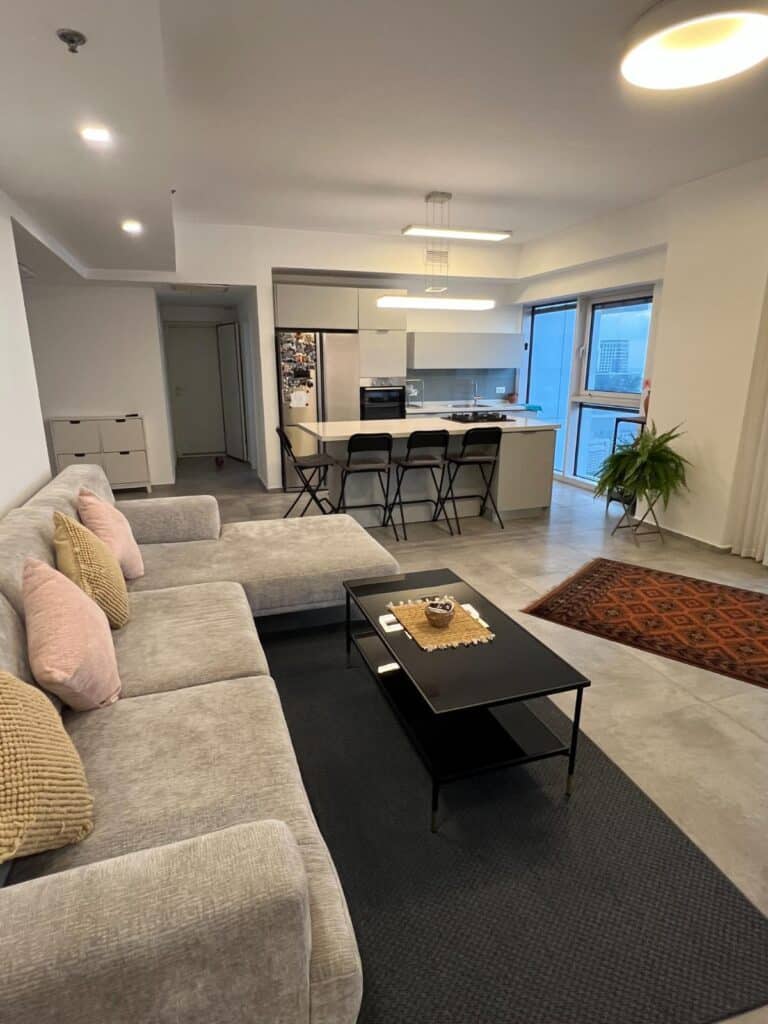
Advertised for rent
40th-Floor Apartment for Rent in Midtown Towers, Tel Aviv
Midtown, Tel Aviv
- 112 m²
- Floor 40
Advertised asking pricePrice on request
View propertyExplore the published property details for for rent and compare the homes that match your search. Open a listing to check its asking price, location and specifications. Tell us your preferred areas, budget, bedrooms and timing so we can discuss suitable options and confirm the details that matter to you.
Request a property shortlistPublished property catalogue
2 matching properties advertised
Individual homes for sale or long-term rent. Availability and asking details need confirmation for the property you choose.
Advertised for rent
Midtown, Tel Aviv
Advertised asking pricePrice on request
View property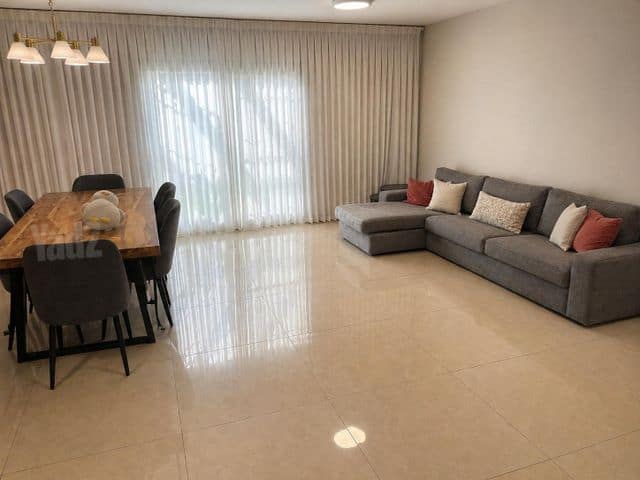
Advertised for rent
Ramat Beit Shemesh Gimmel, Beit Shemesh
Advertised asking price₪10,500 / month
View propertyPlan your shortlist
About 1 in 3 homes in Israel is now rented (29.6% of roughly 3.02 million units, CBS July 2025), and the national average rent is NIS 4,879 a month (CBS direct-collection figure, second quarter of 2025), running from about NIS 2,993 in Beer Sheva to NIS 7,155 in Tel Aviv. Renting here works differently from almost anywhere else: the lease terms, the money rules, and even the in-home safe room follow their own logic, and most newcomers rent first, then decide where to buy.
Whether you are an oleh with no Israeli credit history, a family hunting for a school catchment, a student near campus, or someone signing from abroad, the same core questions decide whether a rental is a good one: what it really costs each month, what you are signing, how large a deposit is fair, and whether the apartment is safe. The guides below cover each step in detail, from search to signing to renewal.
Renting in Israel means signing a written lease (almost always for 12 months), handing over a security that the law caps, and taking on the running costs of the home while you live there. The landlord owns the walls and insures the structure. You pay to live in it: the municipal tax, the utilities, and the building committee fee. That split is set partly by custom and partly by the 2017 Fair Rental Law, which protects residential tenants paying up to NIS 20,000 a month.
Renting is also now the normal path for a large and growing share of the country. As of July 2025 Israel had about 3.02 million residential units, and 29.6% of them were rented, against 69.8% owner-occupied (the remainder is assisted housing). Source: the Central Bureau of Statistics, reported by Ynetnews. A decade earlier, in 2013, only 24.3% of homes were rented. The rental share has climbed steadily as home prices rose, and rental stock has been growing faster (about 3.4% a year) than housing overall (about 1.9% a year).
These are the figures that matter most before you sign. Each row links to the full guide for that topic.
| What | The real number | Go deeper |
|---|---|---|
| Average rent | NIS 4,879 a month nationally (CBS direct-collection figure, Q2 2025). Range: about NIS 2,993 in Beer Sheva to NIS 7,155 in Tel Aviv. The CBS rent index rose 3.2% over the trailing 12 months (April 2026). | what a rental really costs each month |
| Contract | Standard term 12 months; the law allows 3 months to 10 years. Notice to end an open lease: 90 days from the landlord, 60 days from the tenant. | checking the lease before you sign |
| Deposit | Capped at the lower of three months rent or one-third of the total lease. Usually returned within about 60 days of move-out; confirm the exact term in the lease. (It is never six months.) | how the security deposit works |
| Safety | A private safe room is required in every home built since 1992. In the Tel Aviv area you have about 90 seconds to reach it (15 seconds to 3 minutes nationwide), then stay 10 minutes. | the safe room explained |
| Who pays what | Tenant pays the municipal tax, water, electricity, gas, and the building fee. Landlord pays structure insurance and their own agent. | the municipal tax and the building committee fee |
One number trips up almost everyone: the deposit. Israeli law caps the cash-equivalent security a landlord can demand. On a 12-month lease that always works out to three months rent at most. If anyone asks for more cash up front than that, something is off. The Fair Rental Law protections guide breaks down exactly what is and is not allowed.
Renting skews young, single, and newly arrived. The clearest split is by age: in the CBS July 2024 figures, 59.6% of people under 34 rented, against only 17.9% of those 65 and over. By marital status, 78.2% of married households owned their home, while single individuals were far more likely to rent (about 59%). Renting concentrates in the center: the Tel Aviv area had the lowest ownership in the country (60.4% owned, roughly 39% rented), while Harish (51.8% rented), Tel Aviv city (47.4%), and Givatayim (41.8%) topped the per-city rental tables.
Within that, a few groups make up most renters:
Not sure which group fits your situation? Run the renter-type checklist to find the path built for you.
Every rental follows roughly the same arc, from first search to renewal. A dedicated guide goes deeper at each step below.
Want this as one ordered walkthrough rather than a map? The step-by-step guide to renting in Israel takes you through it in order.
A full set of guides backs up everything above. Pick the one that matches where you are.
If you answered no to any of these, the linked guide above for that step is your next click.
How long is a standard lease? Twelve months is the norm. The law allows residential leases from 3 months up to 10 years.
How much deposit is normal? The legal maximum on a 12-month lease is three months rent (the cap is the lower of three months rent or one-third of the whole lease). Many landlords also take post-dated checks and a separate security check. See the security deposit guide.
Who pays the agent? Whoever hired the agent. A landlord cannot make you pay the fee for an agent the landlord engaged. The usual tenant fee, when the tenant hired the agent, is one month rent plus VAT. Details in the broker fee guide.
Will my rent go up during the lease? Often yes, if the lease links rent to the consumer price index. See index-linked rent.
Can I rent without an Israeli guarantor? Yes, but expect to offer other security such as a bank guarantee or extra documents. Start with foreign-renter guarantees.
Is the apartment safe in an emergency? Homes built since 1992 have a private safe room. Older homes may rely on a shared shelter or stairwell. Check before you sign; see the safe room guide.
What if the landlord sells, or I have to leave early? A sale does not automatically end your lease, and most leases include an early-exit clause. See a sale during your lease and leaving early.
If you would rather not piece this together alone, the Semerenko Group team works with renters across the country, including newcomers signing their first Israeli lease and people renting from abroad. Reach out through the site to get matched with the right neighborhood, vetted listings, and a contract check before you commit.
Your single clearest next step: decide which stage you are at, then open the one guide for it. If you are just starting, that is how to rent in Israel; if you are weighing the money, it is total monthly rental cost.
Questions
Availability and asking details can change. Open the individual listing and ask us to confirm the current position before arranging a viewing or making travel plans.
Tell us whether you want to buy or rent, your preferred locations, budget, number of bedrooms, timing and essential features. Include any property links you want to discuss.
Use the category to begin your search. Ask for the current floor plan, photographs and specific information about any feature you need, and have the relevant documents checked by your own advisers.
Sources & related resources
Property details come from the linked published listings and their source records. Advertised asking prices are not completed sale prices. Confirm any feature, availability and transaction terms for the specific property.
Page structure reviewed . Listing information is taken from the current catalogue.
Your next step
Share your preferred locations, budget, timing and essential features. Include any listings you have saved so we can start with the properties that interest you.
Send my property requirements