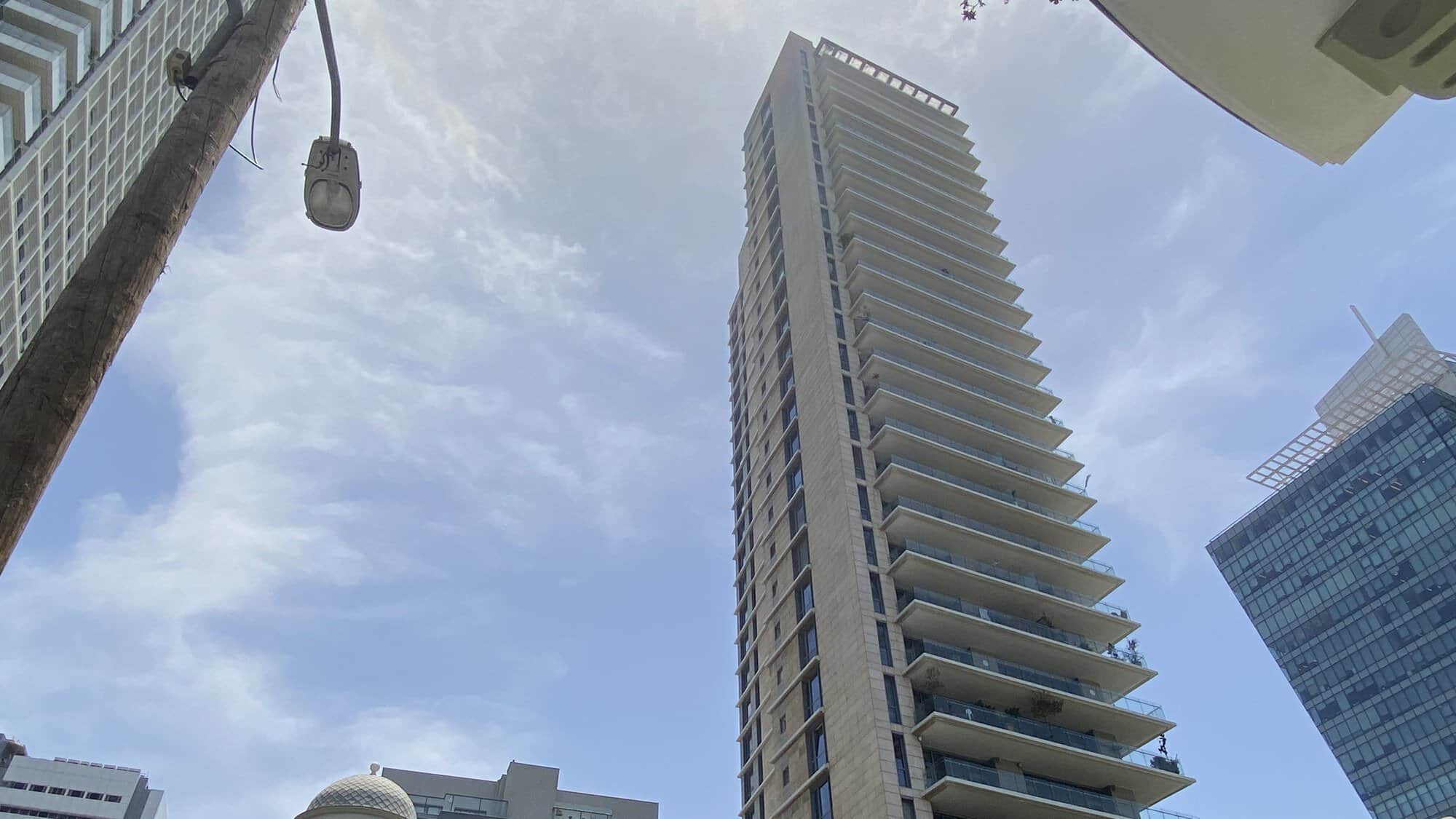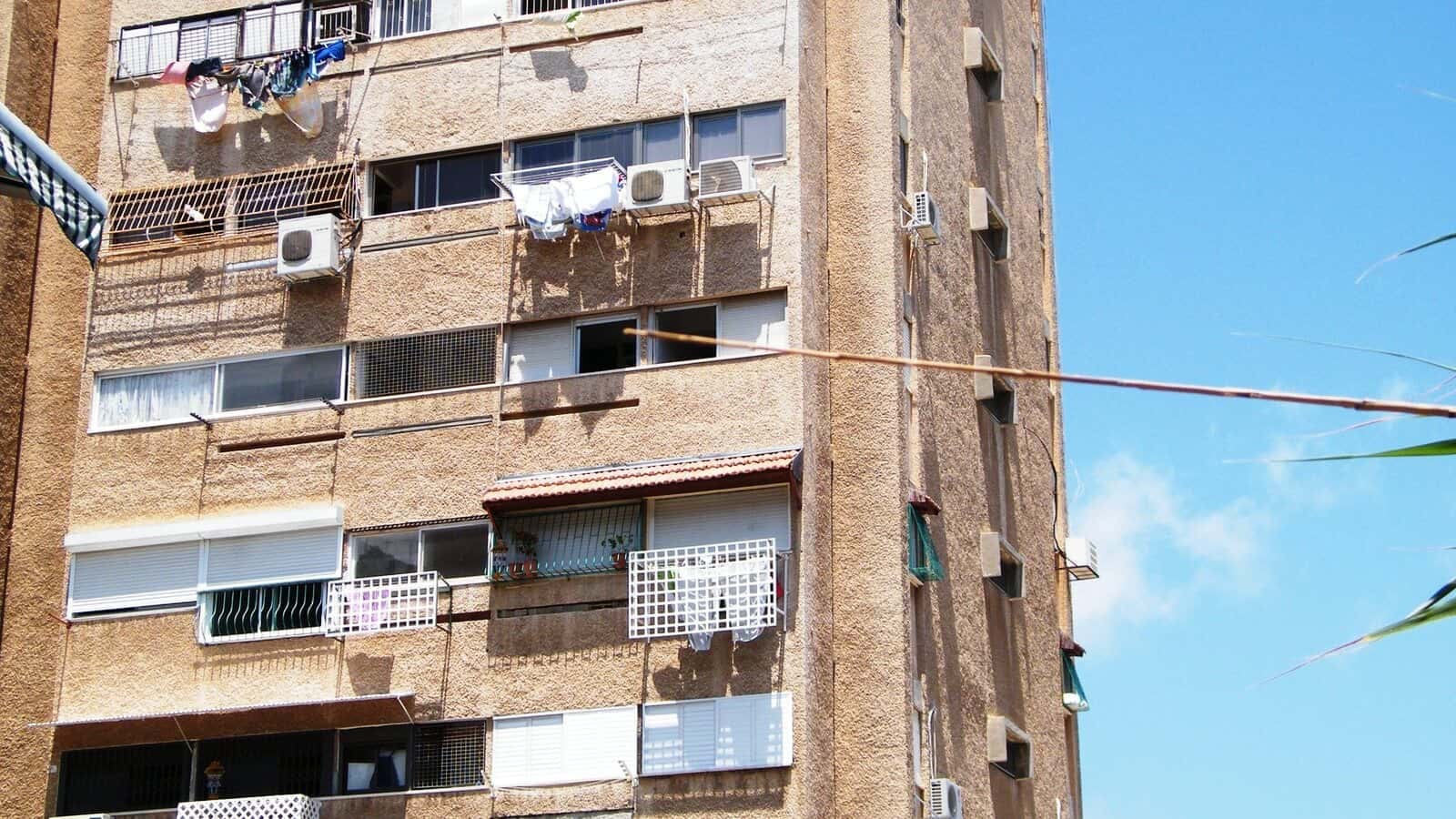
This guide recommends testing a location before buying when you are uncertain about the community or building. Renting can preserve flexibility, but it does not pause or guarantee a later immigrant purchase-tax benefit. Check the remaining statutory window and all eligibility conditions against the proposed purchase date.

Why do most olim rent before they buy?
A rental period can help test a location. For eligible immigrant purchase-tax relief, the prescribed immigration window generally runs from one year before entry to seven years after; renting does not stop that clock. The actual immigration dates, use, household, dwelling and price conditions must still be met when the home is bought.
Regulation 12A relief for an eligible sole or replacement home has marginal 0%, 0.5% and 8% bands, and is unavailable if the entire home value exceeds ₪20,183,565. The 2026 official instruction fixes the relevant thresholds through 15 January 2028; do not assume annual indexation during that freeze. Prior use of relief and any transitional route need separate assessment. Use the purchase-tax guide and official simulator for the transaction.
The cash side points the same way. A buyer in year one needs the down payment and costs ready at move-in, while a renter needs a deposit and a few thousand shekels of fees. Whether a given home is cheaper to own or to rent over time is a separate calculation, and the rent-or-buy calculator does it for your own numbers. This page is about what the rental year gives you and how to run it well.
How long should you rent before buying in Israel?
Plan on 12 to 24 months. One full year lets you see every season, a school year from start to finish and your first set of Israeli bills, and a second year is useful if your income or your family situation is still moving. Older olim can run the same test; the retiree angle, including a trial period in a home before you commit, is covered on why retirees test a home before buying, and the single-retiree version is on buying or renting as a single retiree. The way to treat your first apartment as a tool rather than the goal is on your first aliyah apartment.
Set a review date for the end of the lease, while separately tracking the exact purchase-tax and municipal-discount eligibility dates. A rental year is not guaranteed to fit every remaining benefit window. Confirm deadlines before making the decision.
What is the rental year for?
Renting can give you time to test an area, the commute, schools, the building and your household budget before deciding where and whether to buy. The time you need depends on your circumstances.
What to test while renting
A rental period can help you test four practical questions before a purchase:
- The city and the street. A neighborhood that looks right online can be a 40-minute crawl to work, or quiet on a Tuesday viewing and loud on a Friday night. Living there for a year tells you what a viewing never can.
- The schools and gan. You can only really judge a school once your child is in it and you see the commute, the fit, and whether registration zones land you where you expected.
- The building and the apartment type. Floor, lift, parking, the vaad bayit and the noise show up in daily life, not in a listing.
- Your real budget. Your first Israeli salary, arnona bill and grocery shop together reset what you can afford. Renting lets you learn that number before a mortgage locks it in.
There is a fifth gain that is easy to miss: the Hebrew and the system. Reading a lease, dealing with a vaad bayit and understanding a tabu extract get much easier after a year on the ground, which protects you on the far bigger purchase contract later.
The scoring method for ranking neighborhoods, schools, commute and community fit is on choosing a neighborhood to rent in. Use it during the rental year to build the shortlist you will eventually buy from. If you arrive with no lease yet, the landing-rental tactic is on a short-term rental before a long lease, and the from-abroad version is on renting remotely from abroad.
What does a first lease in Israel look like?
A first lease is usually 12 months, signed with a bank account and a checkbook, and it asks more of an oleh than of a local. Three things hit olim fast.
You need a bank account and a checkbook before you can sign like a local
Open the account with your teudat oleh (and teudat zehut once you have it), plus the “future bank account” note from the airport. Order a checkbook; it takes about three days to be ready at the branch. Landlords typically expect 12 post-dated rent checks (one per month, each equal to the rent) plus one undated security check, so without a checkbook you cannot meet the standard ask. The account and checkbook basics for olim are covered on the rental documents page.
Many landlords ask for two Israeli-resident guarantors, and you can offer something else
Many landlords want two Israeli-resident guarantors (arevim) who co-sign a promissory note and show pay slips. A new oleh usually does not have two locals to ask. You are not stuck: you can offer a bank guarantee, post-dated checks, a larger deposit, or a few months upfront instead. The rules for each instrument live on their own pages: the bank guarantee, the post-dated and security checks, the guarantor (arevim) requirement, and the workaround set for newcomers without locals on foreign renter guarantees.
Your deposit is capped by law
For a covered residential lease, the aggregate cap on security involving a financial expense is the lower of one-third of the total contractual rent or three months’ rent. The security-return deadline is within 60 days after possession is returned or on settlement of the tenant’s qualifying debts if later. Confirm lawful deductions and the applicable rules with your lawyer; see the rental security deposit guide.
Which reliefs make the first rental year cheaper?
Depending on eligibility, municipal arnona relief, rental assistance and the absorption basket can affect first-year cash flow. Their conditions, timing and applications differ.
Arnona discount: check the municipal rules
An eligible new immigrant may qualify for a municipal property-tax (arnona) discount, but the percentage, eligible area and start date depend on the municipality and status. For example, the 2026 Tel Aviv-Yafo order lists a 50% discount on up to 100 sqm for 12 out of 24 months. For an oleh, the period starts with registration as an oleh; for an immigrant citizen it starts on the status date on the relevant certificate. The Ministry of Aliyah and Integration’s earlier First Steps guide says returning-minor status alone does not qualify for this immigrant discount; ask the municipality to confirm current treatment and other possible discounts. Apply with the municipality and confirm the eligible period, occupancy evidence, lease and account-registration requirements. Do not assume one universal minimum lease term, retroactive entitlement or prohibition on a retrospective adjustment. The full explanation is on arnona explained.
The following is arithmetic only, not a national discount rate. If a municipality grants an eligible household a 90% discount on a 100 sqm home at NIS 50.5 per sqm, full arnona would be about NIS 5,050 a year and the discount would save about NIS 4,545. At an assumed NIS 78 per sqm, the same hypothetical discount would save about NIS 7,000. Confirm the actual tariff and award locally.
Rental assistance: automatic payments with eligibility checks
For the ordinary scheme for status received from 1 March 2024, eligible assistance runs from status month 7 through 30 (24 monthly payments). The published current route is automatic after ministry checks, without an ordinary application, income test or presentation of a rental lease. Earlier cohorts and special routes differ. Use the rental-assistance Wiki for household rates, geographic cohorts, bank updates and the unresolved absence and purchase-exception questions; the current official programme is the primary source.
Sal Klita: cash flow while you settle
The absorption basket (Sal Klita) is not a housing benefit as such, but it is the cash that often covers your move-in costs. It pays a first portion on arrival and the remainder in six monthly installments to your Israeli bank account, which is exactly the window when rent deposits and the first months’ rent are due.
First-year housing budget after reliefs
This fixed illustration assumes a renting family in a roughly 100 sqm, 4-room apartment, the ordinary current-scheme household and status conditions, the six first-year payments described below, and a hypothetical 90% arnona discount. That percentage is not a national or guaranteed rate. Using the base rate gives about NIS 55,099 of net housing cash in year one; using the total with the qualifying general geographic addition gives about NIS 47,053. The geographic status-date and residence rules must be met, and the separate Beit Shemesh table is not this scenario. Assistance and arnona eligibility vary by household and municipality, so confirm your own awards. The rent anchor remains the CBS national-average rent for Q2 2025. For current rents by city, see average rent and costs in Israel.
| First 12 months, renting | Amount (NIS) |
|---|---|
| Gross rent (12 x 4,879) | 58,548 |
| Less rental assistance (months 7 to 12, 6 x 659 family basic) | (3,954) |
| Plus arnona, assuming a hypothetical 90% discount (full ~5,050, you pay ~10%) | 505 |
| Net first-year housing cash (basic-rate area) | ~55,099 |
| Same fixed example, eligible family with general geographic addition (2,000/mo, 6 x 2,000) | ~47,053 |
Behind this fixed illustration: rent is NIS 4,879 a month, the cited CBS national-average figure for Q2 2025. Using the programme amounts reviewed on 27 October 2026, an eligible current-scheme family receives NIS 659 monthly base support, or a total of NIS 2,000 with the qualifying general geographic addition. Only six ordinary payment months, status months 7–12, fall within the illustrated first status year; the status-date and locality rules must be met, and the separate Beit Shemesh table is not this calculation. The arnona assumption remains 100 sqm at about NIS 50.5 per sqm: about NIS 5,050 before the hypothetical 90% discount, or NIS 505 after it, only if that discount is actually granted. Total illustrated relief is about NIS 8,500 with the base rate or NIS 16,500 with the general geographic total, including about NIS 4,545 of assumed arnona saving. Ordinary rental assistance is automatic subject to ministry checks; monitor your account and resolve missing payments. Arnona is a separate municipal application with its own conditions. Confirm both awards before relying on this budget.
Public housing and ordinary rental assistance
Only as a slow side track, not as a way to house yourself this month. Two different things get called “subsidized housing,” and only one is realistic for most arriving olim. The mainstream benefit is the rental assistance described above, a monthly subsidy toward rent on the open market, with payment tied to the applicable status period and eligibility checks. The ordinary current route does not require presenting a rental lease.
Public housing (diur tziburi) is a separate, much narrower track: below-market apartments owned by the state and run by companies such as Amidar, Amigur and Halmish on behalf of the Ministry of Construction and Housing. Olim should check public-housing eligibility with the Ministry of Aliyah and Integration. A teudat oleh alone does not establish eligibility; any priority depends on the applicable rules and your circumstances. But supply is tight and waiting lists are long, and the law that governs it has itself been a live policy question. Eligibility can depend on household circumstances, health, income and housing criteria. Apply for an eligibility assessment and, if approved, check the waiting-list and allocation process with the ministry. A housing eligibility certificate (te’udat zakaut) is separate from a teudat oleh. Ordinary rental assistance is a separate programme with its own conditions.
When does it make sense to switch from renting to buying?
Consider buying when the area, likely costs, financing and long-term plans fit your household. Check the bank’s written offer and any remaining purchase-tax eligibility before committing; there is no universal waiting period.
Signs you may be ready to buy
Buy when the decision stops being a guess. These are the signals that the rental year has done its job:
- You have lived in the area you want to own in for long enough to be sure of the city, and ideally the specific neighborhood and school zone.
- Your income is settled and proven on paper, which is what a bank wants before it lends.
- You have the down payment and costs in hand. For a qualifying sole-home purchase by a buyer considered Israeli under Bank of Israel Directive 329, the regulatory ceiling is 75% of the accepted property value. A buyer classified as a foreign resident under that directive generally faces a 50% ceiling for a purchase treated as an investment dwelling. The bank may approve less; confirm the buyer and property classification, valuation and written offer.
- You can absorb the carrying cost. Compare the likely mortgage payment against your current rent honestly, with the Bank of Israel policy rate at 3.25% setting the backdrop for borrowing costs. Current mortgage rules are on the mortgage page.
Timing the mortgage itself matters, but making aliyah does not by itself guarantee a particular loan or prepayment exemption. The 50% and 75% figures above are regulatory ceilings for different buyer and property classifications, not promised loans. Compare the bank’s written financing offer and the actual early-repayment terms before deciding when to borrow.
What signals say buy now, and which say keep renting?
Rent first unless every one of these is already true.
- You are certain of the exact city, and ideally the neighborhood and school, you want to own in.
- Your Israeli income is settled and provable to a bank.
- You have bank-confirmed financing, the remaining price equity and a budget for your actual purchase tax and written fee quotes, while preserving a cash reserve.
- You have run your real oleh purchase tax on the Israel Tax Authority simulator, not an estimate.
- You are buying the home you actually want to keep, not a starter you will regret spending the one-time tax break on.
If even one is missing, keep renting. Check how much of any eligible purchase-tax window remains; renting does not preserve it indefinitely. On the other side, the signs to buy are the mirror image: the area is proven, the income is documented, the cash is ready, and the rental renewal is coming up with no reason to move again.
Which oleh terms should you know?
- Mas rechisha: the purchase tax a buyer pays on a home; eligible immigrants may qualify for relief subject to the applicable timing, property, use and other conditions.
- Teudat oleh: a new-immigrant certificate used to establish status. Each programme checks its own eligibility, and other status categories may require a different certificate.
- Rental assistance: a monthly government subsidy toward open-market rent, separate from public housing.
- Diur tziburi: public (state-owned) housing let at below-market rent through companies like Amidar; narrow eligibility, long waits.
- Loan-to-value (LTV): the loan as a share of the property’s accepted value. Under Directive 329, 75% is the ceiling for a qualifying sole-home purchase, while 50% generally applies to investment-dwelling purchases and buyers classified as foreign residents. The bank may approve less.
The wider plain-language list is the rental glossary.
What needs a professional before you sign?
- A lawyer should read the lease, the guarantee wording and the deposit terms in writing before you sign or hand over checks.
- A tax adviser or the Israel Tax Authority simulator should confirm your own oleh purchase tax before you commit to a purchase.
- A mortgage adviser should confirm what you can borrow, at which loan-to-value and under which prepayment rules, before you decide whether to borrow before or after aliyah.
- The municipality and the official rental-assistance calculator should confirm your arnona discount and subsidy, in writing, for your own status and city.
Which tools help you plan the rental year?
Use the Israel Tax Authority purchase-tax simulator for the real tax number and the official rental-assistance calculator for your subsidy. On our side, the rent-or-buy calculator runs your numbers, choosing a neighborhood to rent in ranks the areas, and Israel everyday costs covers bills and groceries so your budget is real.
Frequently asked questions
Will I lose the oleh purchase-tax discount if I rent for a year or two first?
Renting does not itself use a home-purchase tax benefit, but the eligibility clock continues to run. A later purchase still needs to meet the actual immigration-window, dwelling, household, use, price and prior-benefit conditions. Do not assume that waiting has no possible tax effect.
Can I buy a home before aliyah?
It may be possible, but ask an Israeli lawyer to check the land rights and any required approval. Under Directive 329, 50% generally applies to a buyer classified as a foreign resident, while 75% is the ceiling for a qualifying sole-home purchase under its Israeli definition. These are maximum limits, not loan promises; the bank’s valuation and approval may mean more cash is needed. See foreign buyers and property rights.
Does renting stop my rental assistance or arnona discount?
They are separate programmes. Ordinary current rental assistance is normally automatic after the ministry checks its status-period, household and housing conditions; it does not require an ordinary application or lease presentation. A purchase can affect the housingless test, but any exception needs programme-specific confirmation. Apply separately to the municipality for arnona relief and confirm its lease, account and period requirements; do not assume one universal minimum lease term. The rental-assistance Wiki explains the applicable housing routes.
How much cash do I really need to buy in my first year?
For illustration, if the bank confirms a 75% ceiling and accepts the ₪2.5 million price as value, price equity is ₪625,000 before tax and costs. Regulation 12A tax on an eligible purchase at that price is about ₪2,606, subject to all conditions. Add actual legal, brokerage, application, valuation and insurance quotes; aliyah or citizenship alone does not establish the loan approval.
I have no Israeli guarantors. Can I still rent?
Yes. Offer a bank guarantee, post-dated checks, a larger deposit, or a few months upfront in place of the usual two arevim. The newcomer playbook is on foreign renter guarantees.
Is public housing a fast way to get cheap rent as an oleh?
No. Public housing has tight supply and long waiting lists, and eligibility and any priority depend on the applicable rules and your circumstances. Ordinary rental assistance is a separate programme with its own status period and eligibility checks; it is not an immediate housing-allocation promise.
Sources
- Gornitzky, new purchase-tax regulations for olim (Aug 2024 regime, one-year-before to seven-years-after window)
- Easy Aliyah, complete guide to property purchase tax (mas rechisha) for olim
- CWS Israel, Israeli tax changes (oleh purchase-tax brackets and thresholds)
- Nefesh B’Nefesh, arnona reduction for new immigrants
- Nefesh B’Nefesh, rental assistance for olim (start month and amounts)
- Current Ministry of Aliyah and Integration rental-assistance programme; Housing Ministry conditions and service channels (programme information checked 27 October 2026).
- Earlier official rental-assistance service reference (historical service reference; consult the current programme and conditions above).
- Ministry of Aliyah and Integration, absorption basket (Sal Klita)
- Nefesh B’Nefesh, opening a bank account and getting a checkbook in Israel
- Mizrahi-Tefahot, mortgage Q&A (citizen versus foreign-resident loan-to-value)
- Nefesh B’Nefesh, aliyah and when to take out a mortgage
- Nadlan Center, public housing (diur tziburi) operators and eligibility
- Israel CBS, Table 4.9 Average Monthly Prices of Rent (national average NIS 4,878.7, Q2 2025)
- Bank of Israel, policy rate 3.25% (Bank of Israel press release, 1 September 2026)
Related pages
- How to rent in Israel
- Buying after aliyah
- Rent or buy in Israel: the calculator
- Your first aliyah apartment
- Retirees testing a home before buying
- Single retiree: buy or rent
Plan your first year as a renting year, on purpose. Pick the city you will test from and rank its neighborhoods and schools with the method on choosing a neighborhood to rent in, then sign a 12-month lease using the step-by-step renting guide and apply for the municipal arnona discount while checking the bank details, status period and receipts for ordinary rental assistance. Spend the year deciding, not rushing. Before buying, confirm that any remaining purchase-tax relief still applies to your dates, household, dwelling and price.
This is general information, not legal or tax advice; confirm with a licensed professional.