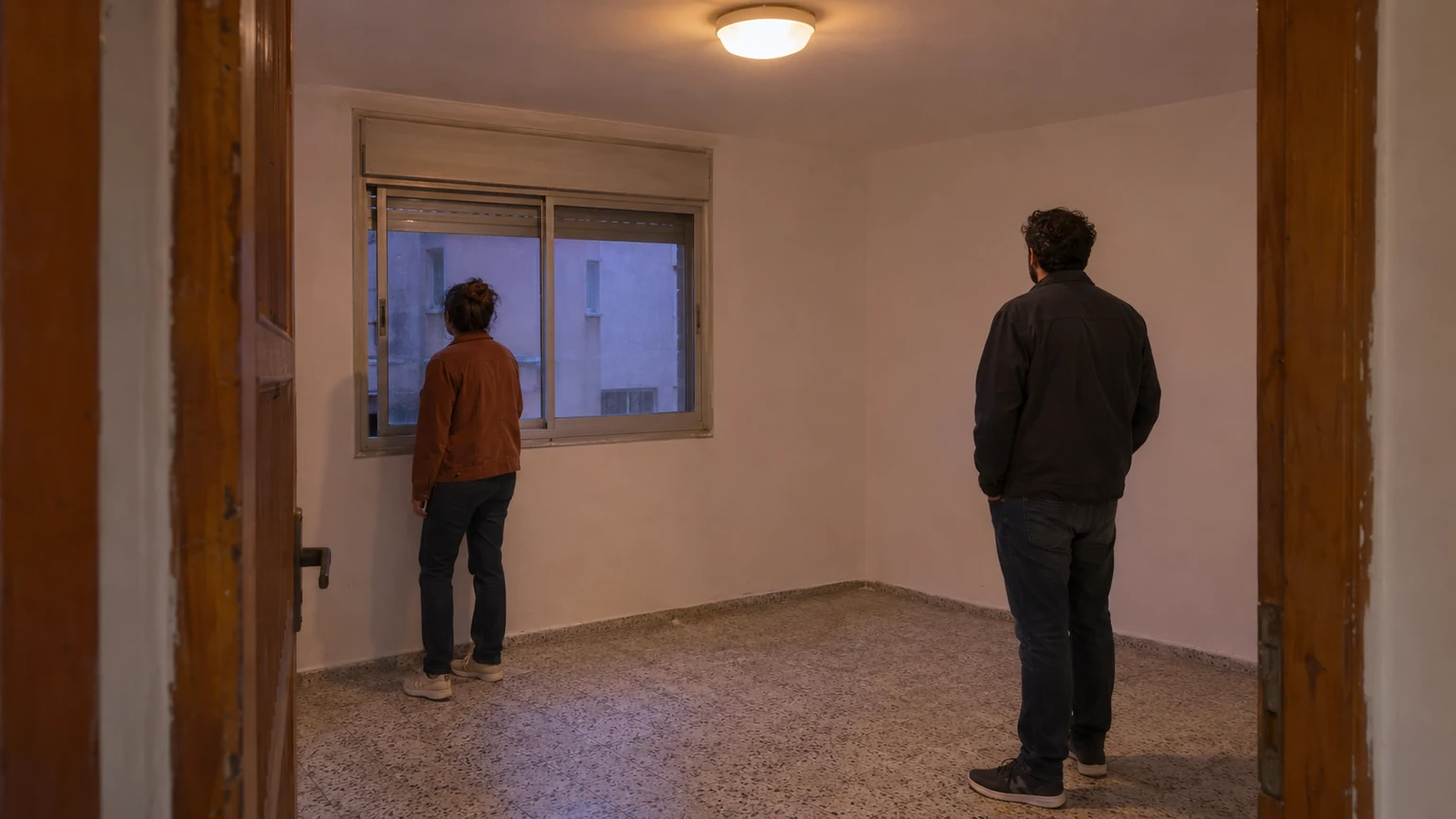
A protected room can be an important rental consideration, but its market effect needs dated evidence. A mamad in a listing does not prove that the apartment will rent faster, have lower vacancy or earn a fixed premium in 2026. Renters still need to verify the actual protected space and access, while owners need comparable evidence for the particular home.
What the Bank of Israel study actually measured
The Bank of Israel’s July 2025 study found an increased secure-room premium in rental asking prices during its wartime sample. Its rental evidence came from listings, not signed leases. The purchase-price results differed: an initial increase did not persist across the sample. The study does not establish a universal 2026 premium, time to let or vacancy rate.
The transaction analysis covered multi-unit homes in 2023 to 2024 and used construction year as an imperfect indicator of a secure room. Its separate listing analysis relied on listing information. Preliminary findings around the June 2025 conflict had uncertain statistical significance. These methods and dates matter when using the research; the paper is not a valuation of a particular current listing.
Asking rent, achieved rent and time to let are different
An advertised rent is the amount requested, not evidence of the final signed rent. A listing disappearing does not, by itself, establish a completed tenancy, the agreed price or the days the home was empty. A short-stay weekly quote should not be compared directly with a whole-apartment annual lease.
For a current comparison, identify the lease type, furnishing, size definition, location, condition, building services and protection arrangements. Keep the dates and evidence source. A price difference between an older flat and a newer tower may also reflect many features beyond a mamad.
Check the actual protection at the address
Establish whether the advertised space is a private apartment mamad, a floor-level space, a building shelter or a public shelter. Ask where it is, who controls access and whether it is maintained. A building’s age or a general neighbourhood description does not certify the actual protection.
Use current Home Front Command instructions for the exact address. Assess the route for the actual household, including someone with a walking aid, a wheelchair or a need for assistance. Do not infer warning time or a safe walking distance from a broad regional estimate.
The renter’s protected-space checklist helps organise these questions. A broker’s description or a tenant’s visual check is not an engineering certification; obtain the relevant professional assessment and approval documents where needed.
What a landlord should document
Describe the space accurately and distinguish exclusive from shared arrangements. Keep the approved plans and relevant maintenance or repair records. If access depends on a locked common area or another person, explain the actual arrangement rather than calling it immediate private protection.
Set the rent using relevant current comparables and the complete lease terms. A historical study or a news example does not justify a guaranteed mark-up for every apartment. Do not promise that a tenant will always reach the space in time or that the property is safe in every emergency.
What an investor should assess separately
A higher asking rent is not the same as a higher net return. Compare the purchase and financing costs, management, building charges, maintenance, vacancy and capital works. Do not assume modern construction guarantees stronger occupancy or that a private mamad automatically offsets a higher entry price.
Location rankings need a defined current dataset. This article does not establish north Tel Aviv, Herzliya, Jerusalem or any particular neighbourhood as the strongest performer. Examine the exact competing properties and achieved contracts before making an investment conclusion.
Questions before signing
- Which protected space actually serves the apartment?
- Can the household use the route under current local instructions?
- What approval, condition and access evidence is available?
- Is the rent comparison based on similar homes and lease types?
- Which costs, defects and responsibilities are documented in the lease?
- What remains uncertain and who will resolve it?
Safety, legal condition and rental value are separate assessments. The lease checklist covers the contractual questions, while current official emergency instructions govern what to do during an alert. No rental-speed, occupancy, investment or safety outcome is guaranteed.
Semerenko Group is the English-first real estate platform for Israel. We combine property information, official market data and tools with representation, negotiation, mortgage and legal coordination, and property management for buyers, renters, sellers and investors.
Published by Semerenko Group under the professional supervision of licensed Israeli real-estate broker Pinhas Menachem Reiss (License #324150). We work with owners, brokers, brokerages and developers across Israel. This is general information, not legal or tax advice; confirm with a licensed professional.
Is this page useful?