What foreign buyers in Israel need to know about post-reservation spec changes
For foreign buyers, the most stressful moment is rarely the deposit. It is the email — months or years later — that says a planned feature, finish, or floor plan element is being adjusted. The question is not whether spec changes can happen. It is what your specific contract allows, and what protections Israeli law provides. This is general information, not legal or tax advice; confirm with a licensed professional.

Reservation documents and the signed specification
A reservation form, a deposit receipt, marketing plans and a signed sale specification serve different purposes. Preserve every version and have your lawyer identify what, if anything, already binds you before paying or accepting a change. A document labelled “reservation” is not automatically non-binding. For the commitment risk, see signing a property contract; for the documents to match, use the presale document checklist. The statutory specification must accompany an in-scope sale contract, be signed by the seller, and record amendments with both parties’ signatures. [1]
- Israeli purchase contracts for new-builds usually specify both fixed elements and elements the developer may adjust within defined limits.
- The Israeli Sale Law framework includes statutory payment securities. A bank guarantee is one permitted route; check the security that actually applies to the project.
- Spec-change disputes often hinge on what was in the signed technical specification (“mifrat”) versus what was in marketing materials.
- The Bank of Israel banking survey 2024 noted heavier use of developer financing structures — these terms can interact with spec-change clauses.
- The Central Bureau of Statistics reports about 86,290 unsold new apartments at end-January 2026; this market context can support buyer negotiation but does not change contract law.
- Foreign buyers should engage an Israeli lawyer experienced with off-plan purchases before signing, not after a dispute starts.
- Ask your lawyer whether the proposed change is allowed under the signed specification and mandatory law, whether signed consent is required and which remedy applies. Do not assume a general flexibility clause resolves those questions.
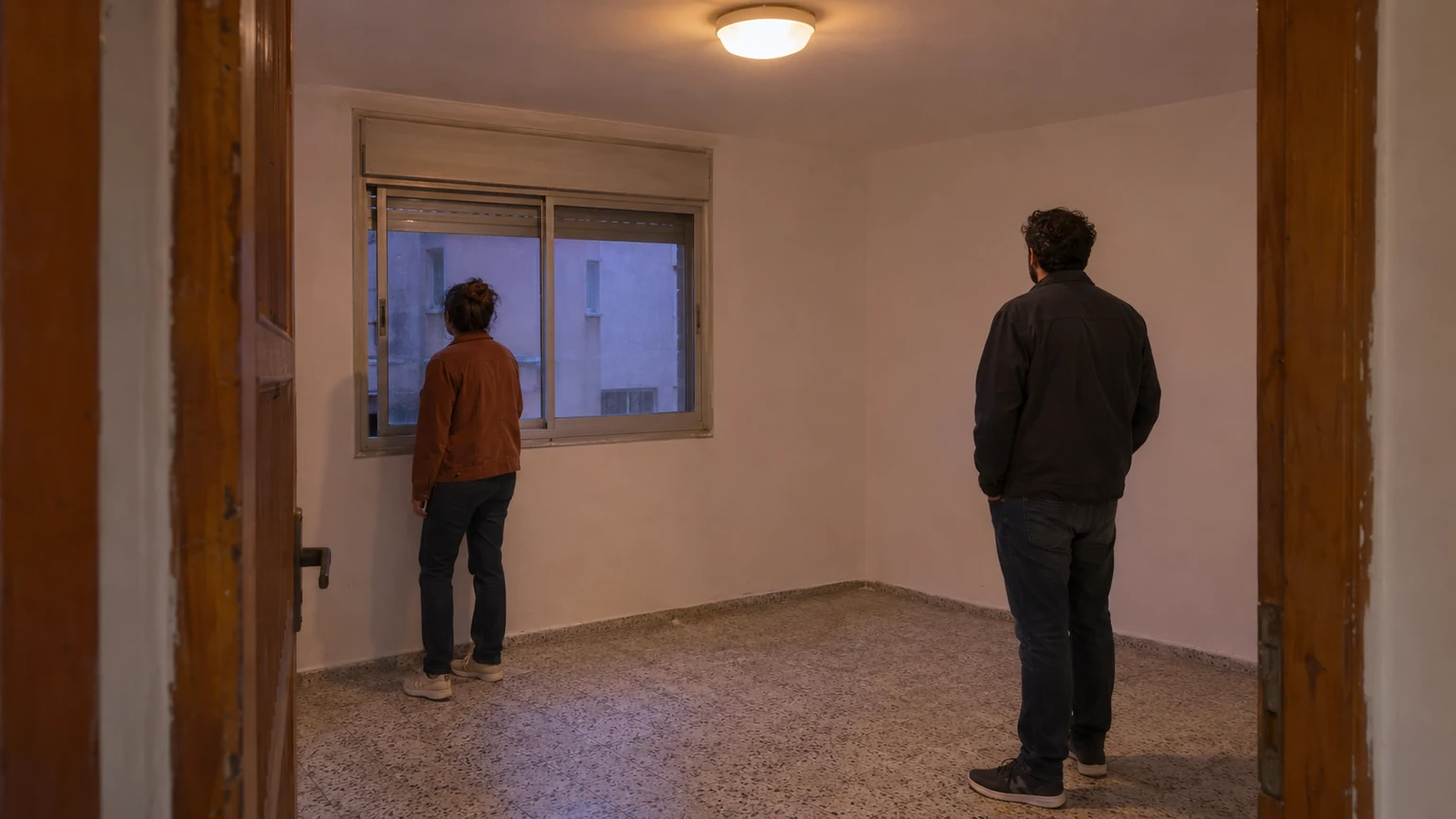
Imagine choosing an apartment specifically for its window orientation and the developer later flipping the floor plan, citing engineering changes. Or paying a premium for a particular kitchen layout that becomes a different configuration. Preserve the original and proposed plans, dated representations and signed specification. Your lawyer should assess the change against the agreement and mandatory law; the contract wording alone does not decide every right or remedy. [1]
What can developers usually change after reservation?
Read the signed technical specification and the applicable prescribed form before accepting a change. Section 2(b) of the Sale (Apartments) Law requires both parties’ signatures for amendments to the specification. A broad variation clause or an offer of “equivalent quality” does not by itself establish that a particular substitution is lawful. [1]
For changes to size, floor, location, layout or a fixed feature, ask for the precise approved change, its legal basis and its effect on use and value. Compensation, enforcement or cancellation depends on the breach, evidence and applicable remedy rules; none follows automatically from a scenario label. [1] [2]
Where do disputes usually come from?
Disputes can arise from a mismatch between the brochure and signed specification, vague “equivalent quality” wording, or a later engineering change. Keep brochures, emails, drawings, measurements and the developer’s explanation. Marketing material is evidence to assess, not something to discard automatically as legally irrelevant. Ask which signed document and mandatory rule governs the disputed feature, and obtain the proposed resolution in writing. [1]
Why foreign buyers face extra risk
Foreign buyers often rely on translated summaries rather than the signed Hebrew technical specification. Communication can be slower across time zones. Site visits are harder. All of that increases the value of a careful legal review before signing, not after a dispute appears.
Comparing spec-change scenarios
| Proposed change | What to compare | Evidence to request |
|---|---|---|
| Minor wall-position change | Compare the approved and signed plans, measurements and the applicable form; identify any actual tolerance. | A marked-up plan and the measurement method. Do not infer permission merely because the change is described as minor. |
| Finishing-brand substitution described as “equivalent” | Compare the specified model, performance, dimensions, appearance and approval requirements. | The original and proposed product sheets, plus the signed amendment if required. “Equivalent” is a claim to verify. |
| Reduction in net floor area | Check the contractual measurement definition, actual measurement and applicable legal tolerance before assessing breach. | An independent measurement and a written explanation of price or use effects; no automatic price-adjustment or cancellation assumption. |
| Change of floor or unit location | Match the apartment identifier, floor and position across the contract, permit plans and proposed replacement. | The exact proposal and legal advice before consenting, paying a variation charge or cancelling. |
| Removal of a fixed feature | Identify the commitment and whether it appears in the specification, annex or other relevant representation. | The original promise, proposed omission and a documented remedy assessment; do not treat compensation or enforcement as automatic. |
What protections does the Sale Law framework give you?
For an in-scope sale, the seller may not collect more than 7% of the apartment price in aggregate without a permitted statutory security. The law provides five security routes; an ordinary escrow arrangement alone is not one of them. Payment security and rights over the specification are separate questions. The Sale (Apartments) Law also protects against qualifying nonconformity, and its provisions may be varied only in the buyer’s or subbuyer’s favour. [3] [1]
For a buyer-requested change, record the price, any standard-item credit, the responsible contracting entity and the delivery effect before approving it. The upgrade and credit checklist explains the separate priced-item rules. At delivery, compare the approved result with the inspection, defect-notice and repair process.
Legal sources for the specification and payment sections
- [1] Sale (Apartments) Law, official legal compilation. printed pp.364–374: §§1–4B, 5C, 7–7A, 11 and Schedule.
- [2] Contracts (Remedies for Breach) Law, official legal compilation. printed pp.390–394, especially §§2–9, 15 and 18.
- [3] Buyer-investment security law, read with the 2026 amendment. §§2, 2A1, 3 and 3B, read with 2026 amendment §31.
- [4] 2026 Economic Plan Law. §31 printed pp.365–367; §§36–37 p.369.
These legal sections were checked on 27 October 2026. The separately dated market figures above remain historical context.
Protect your reservation before a spec dispute starts
If you would like help evaluating your options or have questions about your property search in Israel, reach out to the Semerenko Group team here for a personal, expert consultation.
Is this page useful?