Buying off-plan, also called a presale or al hanyar, means you sign for an apartment that is not built yet. The money you pay before completion needs a lawful protection and payment arrangement. For a sale covered by the Sale (Apartments) (Assurance of Investments) Law, the seller cannot collect more than 7% of the apartment price in aggregate without providing a permitted statutory security. A bank guarantee is one permitted form; the seller, its group brand and the contractor doing the building work may be different entities. [1] [2] You receive the keys at delivery. It sits inside our guide to new versus second-hand property in Israel, and the main decision is not only price: it is the developer, the legal protection, the timeline and the contract.
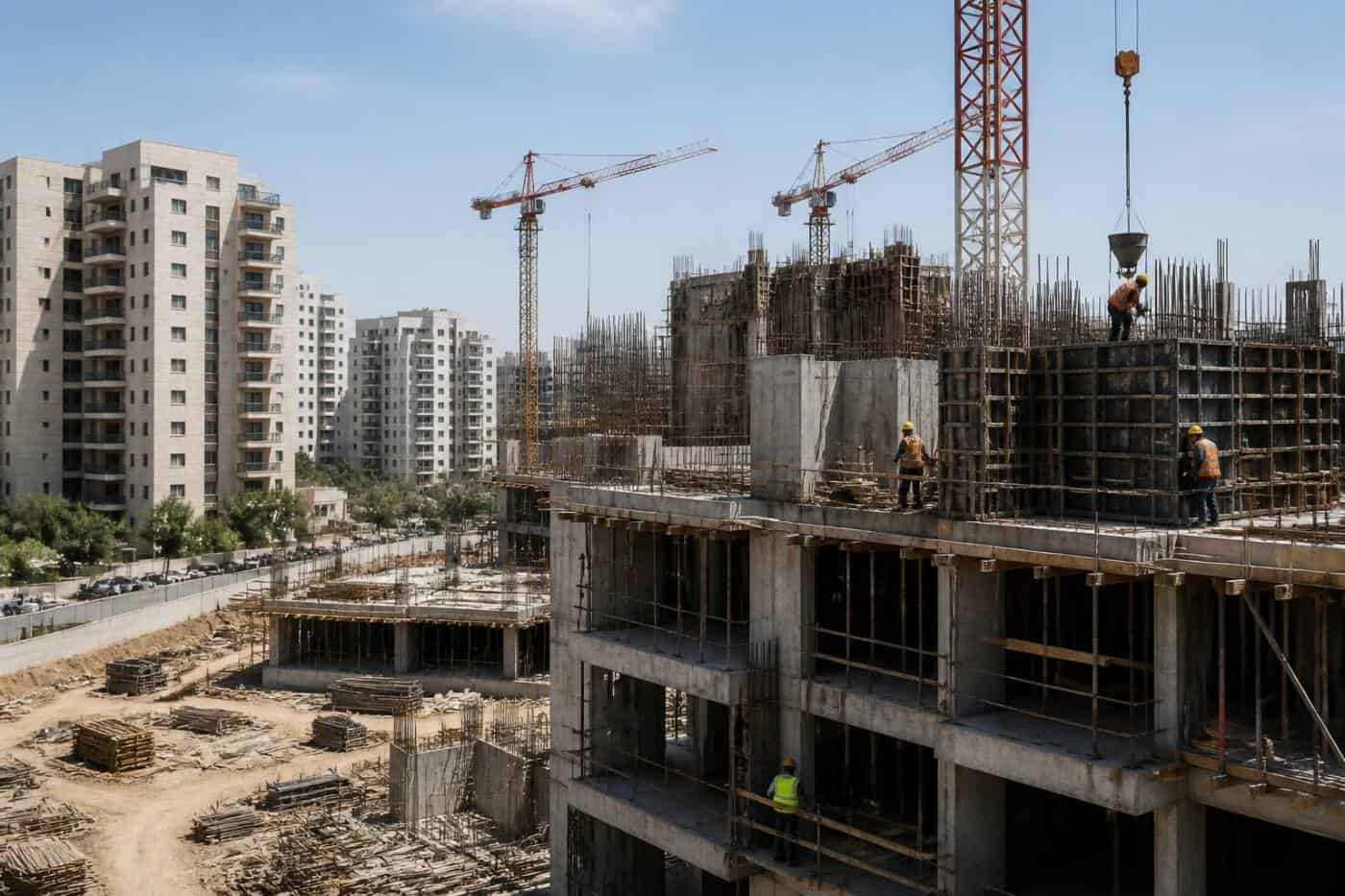
What does buying off-plan mean in Israel?
It means you buy from the developer on plans and a written specification, before the building exists. For high-end projects, see our guide to luxury new projects.
- You buy from plans and specifications; the apartment may not exist yet.
- The contract sets the payment schedule; separate statutory stage limits may apply according to the security route and project cohort. Delays are possible.
- Legal protection mechanisms are critical.
A second-hand flat can be inspected today, sits in an established neighborhood and is easier to benchmark against nearby transactions.
New buildings usually follow modern standards and often include parking, an elevator, a mamad (protected room), storage and energy-efficient systems. For the full comparison, read new construction or resale.
How does a presale purchase run from reservation to keys?
It runs in five steps: reservation, contract, staged payments, delivery and registration.
- Reservation. The process often starts with a reservation form and a deposit. Ask whether the deposit is refundable.
- Contract. Your lawyer reviews the sale contract and the legal specification, and checks the guarantee and the permit before you sign.
- Staged payments. Follow the agreed schedule and any applicable statutory stage limits. In a financially accompanied project subject to the statutory voucher arrangement, payments go through the official vouchers to the project accompaniment account. Verify the route before transferring money.
- Delivery. You inspect the finished apartment, list defects in writing and receive the keys.
- Registration. The title is registered in your name, which can take time after delivery.
Developers sometimes change the unit or the terms after you reserve, so read what happens when a developer changes the specs after reservation before you commit. The full sequence is in our new-construction purchase process.
Price, payment timing and indexation
The contract sets when payments fall due. Where the money is not secured by a qualifying guarantee or insurance under section 2(1) or 2(2) of the investment-security law, section 3 also restricts collection to the applicable statutory construction stages. The schedule depends on the project’s contract dates and construction type; do not assume every project uses the same milestones. Our payment-stage tables and scope conditions explain that distinction. [1] [3]
For a sale covered by Amendment 9, with a contract made on or after 7 July 2022, the first 20% of the contractual price, paid at signing or before any other payment, is unlinked. The parties may agree to link up to 50% of each remaining payment to the relevant CBS construction-inputs index. Linkage is not automatic, and this price rule does not permit collecting money without the required security. Older contracts need the earlier legal rules checked. [4]
For that cohort, permitted indexation ends no later than the contractual delivery date, except for the statutory delay cases in section 5A(c): a delay caused solely by the buyer’s act or omission, or circumstances satisfying all the conditions of section 18(a) of the Contracts (Remedies for Breach of Contract) Law. A later actual handover does not by itself extend indexation. Ask your lawyer to identify the applicable contract cohort, index, base date, linked share and end date in writing. [4]
Our guides to split-payment deals and to payment-plan pressure explain how to read them. Get the full schedule and the linkage rule in writing.
A developer’s price is usually quoted with VAT included; confirm it in the contract. The rules are in VAT on Israeli property. Understand purchase tax early too, because it sits on top of the developer’s price.
What must you check before signing?
Check the permit, the developer, the guarantee, the specification and the delivery date. Never assume marketing material is proof of any of them.
Documents to compare before signing
Use this comparison with your independent lawyer. Record the document date and the exact apartment, building, block and parcel identifiers; a similar project name is not enough. The aim is to resolve a mismatch before you commit. [2]
| Check | Documents to compare | Question to resolve |
|---|---|---|
| Seller and authority | Reservation papers, sale contract, company identity and land-rights documents or development agreement | Is the named seller entitled to sell this specific apartment, and is the person signing authorised? |
| Executing contractor | Named contractor, current register entry and licence, professional branch and financial classification | Does the actual contractor have the relevant registration, classification and permitted project status? |
| Permit and apartment | Permit file, contractual plans and signed specification, including parking, storage and shared areas | Do the legal identifiers and the apartment being sold agree with the approved project and promised rights? |
| Price, payment and security | Full payment schedule, indexation clause, written security notice, voucher details where required and the proposed security instrument | What may be collected, where must it be paid, and what document protects each payment? |
| Delivery and registration | Contractual delivery terms, applicable approvals, inspection arrangements and registration obligations | What must happen for handover, any security replacement or release, and registration of your rights? |
For the entity checks, use our builder and contractor evidence checklist. For the rights documents, see Tabu extracts and certificates of rights. These checks complement the payment-security review; none replaces the others.
Is there a valid building permit?
- Ask whether the project already has a valid building permit.
- Some projects market units before permits are final, and delays affect delivery.
- Urban renewal projects add tenant coordination and approvals, and can run longer.
What is the developer’s track record?
- Check that the developer completed similar projects on time.
- Research prior lawsuits and defect complaints, and look at older buildings by the same contractor.
- Ask how many apartments are still unsold: see why unsold inventory matters.
What do the technical specifications say?
- The seller must attach the contractual specification, signed by the seller, when the sale contract is signed; amendments to that specification require both parties’ signatures. Compare its apartment plans and items with the brochure rather than treating marketing material as the agreed specification. [5]
- Check flooring, windows, kitchen suppliers, parking rights, storage rights and balcony measurements.
- Clarify upgrade pricing before signing. Our note on unfinished upgrades lists what to ask.
- Obtain the seller-signed maintenance and use instructions as part of the contract documents. Only where the necessary details are not yet available does the law allow those instructions to be supplied when the apartment is made available. [5]
What is the contractual delivery date?
Get one date and the delay compensation terms in the contract. Delay is a top risk. Permit changes, labor shortages, war conditions and financing problems can all push the date, and buyers sometimes have to extend a rental or a mortgage approval.
What should you ask the developer?
- Does the project already have full bank financing, and what exact legal protection secures buyer payments?
- Has the permit been issued, and what registration stage is complete?
- What is the delivery date, and what compensation applies if it slips?
- How much exposure is there to construction index linkage?
- What are the expected maintenance fees, and what rights exist for parking and storage?
The longer lists are in questions for developers on new projects. To judge the area, read how to evaluate a new neighborhood.
Compare projects on delivery record, financing strength, specification and total planned supply nearby, not one building. Our guide to comparing presale projects goes further.
What protects your money?
In a covered sale, the seller may not collect more than 7% of the apartment price in aggregate without a permitted statutory security. That threshold is not a deductible, a recovery ceiling or an assurance that an unsecured first payment is safe. A bank guarantee is one route; other forms qualify only on their statutory conditions. At signing, the seller must give written notice of your security rights and the lawful methods, and must disclose in writing by then if it has no financial-accompaniment agreement with a bank or insurer. The legal background and payment flows are in our guide to off-plan buyer protections. [1]
- Check the named buyer, apartment and payment coverage on the security. The defined VAT component has a separate statutory repayment mechanism under the qualifying guarantee or insurance route; reconcile the documents with your lawyer. [1]
- Where the statutory financial-accompaniment voucher arrangement applies, use that project’s official vouchers and verify the project account and apartment details. A bank account number or receipt on its own does not establish that the required security has been provided. [1]
- Keep every guarantee and receipt with your lawyer.
What can you negotiate?
Price, payment timing, upgrades and delivery terms can all be negotiated: negotiate before you sign; what is still open near delivery is on the pre-delivery negotiation page. Read hidden concessions and unpublished concessions, and see how a soft hold and a free upgrade offer work.
Our notes on extended launch prices, reopened units, changed financing and stake sales explain what each signal can mean. Current deals are collected in developer offers explained.
What happens at delivery and registration?
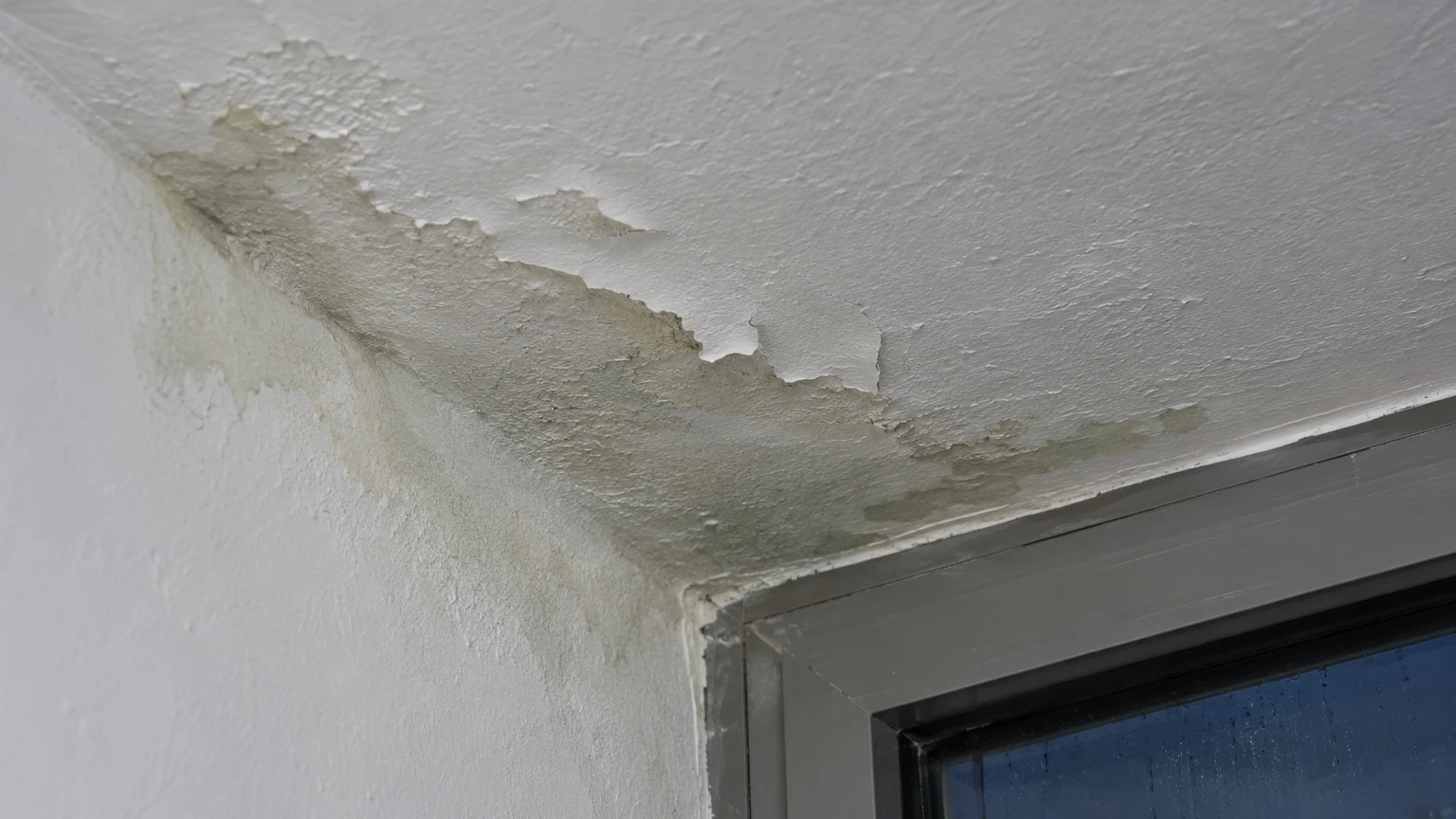
At delivery you inspect the apartment against the specification and record every defect in writing before you accept it. Quality disputes and gaps between the brochure and the final result are common risks. Registration of your title can be slow after delivery, so ask early which stage is complete and who handles the rest. For background on what is being built, read exploring new home construction.
What needs a lawyer or an engineer?
Use an independent lawyer who does not represent the developer. Do not rely only on online marketing material, and review the financing bank structure carefully.
- A lawyer should review the contract, the guarantee, the permit status and the compensation clauses before you sign, in writing.
- A lawyer or tax adviser should confirm purchase tax and VAT for your status.
- An independent engineer or inspector should check the finished apartment at delivery.
- Visit the area at different times of day, and do your own market due diligence.
Where do you check a project and a developer?
Check the building permit at the local committee, the developer’s record on past projects, and the contract and the securities with your lawyer, then use the sources listed at the end. See current options on our New Projects in Israel hub.
Frequently asked questions
Is buying a presale apartment in Israel safe?
It can be relatively protected when proper legal guarantees and financing structures exist. You still face timing, construction and execution risks.
What is the most important protection for buyers?
The bank guarantee system tied to the project financing structure is one of the main protections under Israeli law.
Should presale buyers expect a delivery delay?
Yes. Assume some possibility of delay and review the compensation clauses carefully.
Is a new apartment always a better investment than a second-hand apartment?
Not necessarily. The answer depends on location, supply pipeline, pricing, delivery timing and resale competition.
Sources
The payment, indexation and document-check additions above were checked on 27 October 2026 against the following primary sources. They are subject to the stated contract and project cohorts; the remaining source entries and topics retain their own scope.
- Sale (Apartments) (Assurance of Investments) Law, Bank of Israel 2025 consolidation, especially sections 1–3B and 3C1–3C2, read with section 31 and the commencement provision in section 37 of the 2026 Economic Plan Law.
- Housing Ministry buyer guide: checks before purchase, and official contractor-register guidance.
- 2019 stage-payment regulations amendment, Gazette 8208, pages 3154–3156, including its project-cohort provision.
- Sale (Apartments) Law Amendment 9, Gazette 2983, pages 914–915: sections 5C, 5A(c), the preserved older-contract cohort and commencement.
- Sale (Apartments) Law, section 2(a)–(b), official 2025 consolidated lawbook, pages 364–365, on signed specifications, maintenance instructions and amendments; see also the Housing Ministry law collection.
- Nefesh B’Nefesh housing guide: https://www.nbn.org.il/life-in-israel/community-and-housing/buying-and-renting/buying-an-apartment-on-paper-protect-your-money/
- RNC Law: https://www.rnc.co.il/en/buying-off-plan-israel/
- Epstein Law: https://www.epsteinlaw.co.il/15-terms-to-know-before-buying-a-home
- DDGIL Legal Insights: https://ddgil.com/insights/checklist-before-buying-new-apartment-israel
- Ynet Real Estate: https://www.ynetnews.com/real-estate/article/s198gn5kwx
- EKW Law: https://ekw.co.il/en/amendment-9-sale-law-apartments-assurance-investment-apartments-purchasers/
Related pages
- New versus second-hand property in Israel
- How to compare presale projects
- Split-payment new-build deals
- Questions for developers on new projects
- VAT on Israeli property
Your next step: have your lawyer check the guarantee, permit and contract before you pay anything. Tell the Semerenko Group team what you are looking for and we will help you compare projects and risks. This is general information, not legal or tax advice; confirm with a licensed professional.
Is this page useful?